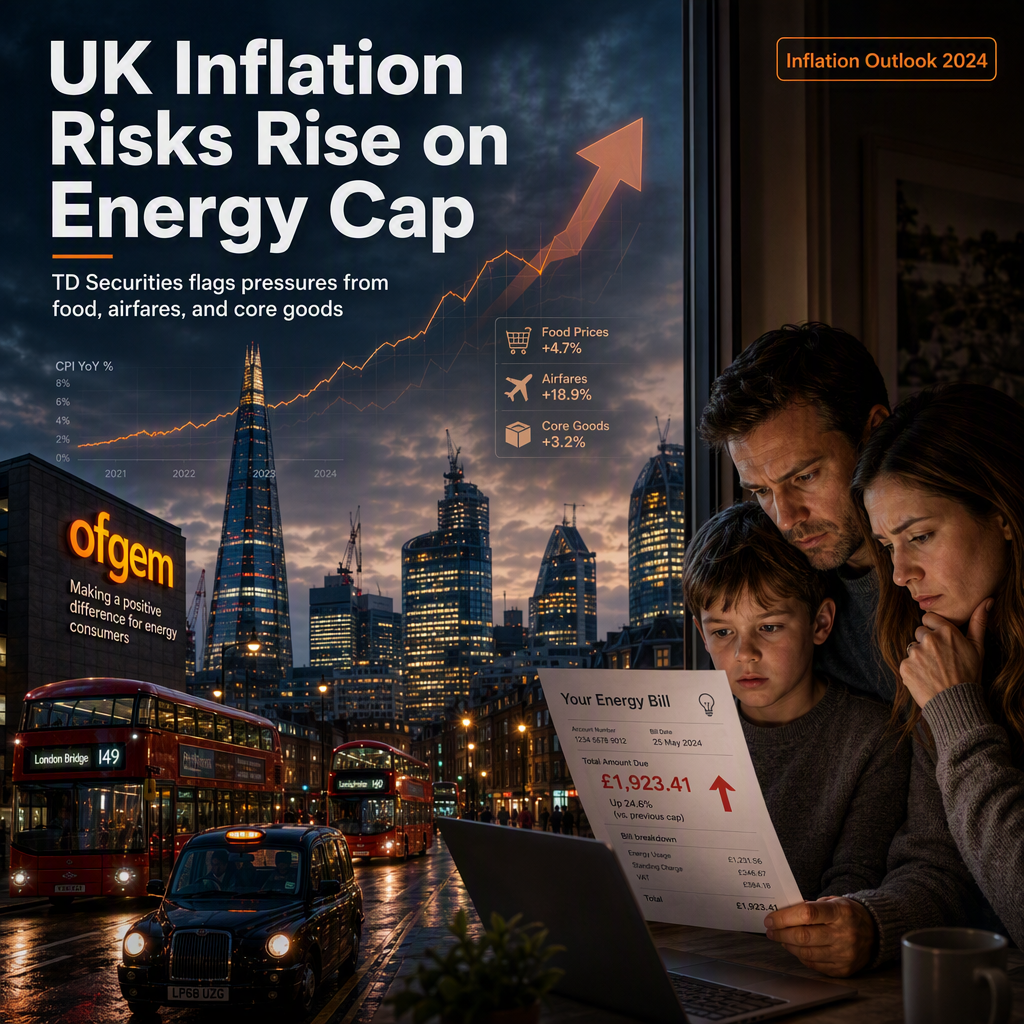
TD Securities, through analyst Julie Ioffe, projects that the United Kingdom's headline Consumer Price Index (CPI) will rise to 2.9% year-on-year in July, primarily due to the Ofgem energy price cap adjustment. This forecast aligns with market expectations of 2.9% and is slightly above the Bank of England's (BoE) estimate of 2.8%, up from the prior reading of 2.6% [1]. Services inflation is expected to temporarily ease to 3.4% year-on-year, compared to the market's 3.3% and the BoE's 3.4%, down from the previous 3.6%. However, core goods inflation is anticipated to increase to 1.0%, matching the BoE's forecast, which should offset the dip in services inflation and keep core CPI steady at 2.6% year-on-year, just above the market's 2.5% expectation [1].
TD Securities highlights several upside risks to the inflation outlook, including potential increases in food prices due to higher fertilizer costs and adverse weather conditions, as well as the possibility of airfare inflation re-accelerating as airlines look to recover higher fuel expenses through post-summer ticket prices. Additionally, core goods inflation is showing signs of turning higher, with electronics price increases and renewed supply chain pressures reducing the scope for discounting. These factors suggest that further progress in reducing inflation may become increasingly difficult to sustain in late 2026 [1].
Looking ahead, TD Securities notes that while there are concerns about whether wages will respond to the slightly higher path for headline inflation, the loosening labor market and reduced worker bargaining power may limit wage growth. As a result, the BoE is more likely to maintain its current restrictive Bank Rate for a prolonged period rather than opt for further rate hikes, provided wage pressures remain subdued [1].
CONCLUSION
TD Securities anticipates a rise in UK headline inflation in July, driven by energy price adjustments and several upside risks in food, airfares, and core goods. While the BoE is expected to hold rates steady, persistent inflationary pressures could challenge the recent disinflation trend. Market participants should monitor upcoming data for signs of sustained inflation or wage responses.