
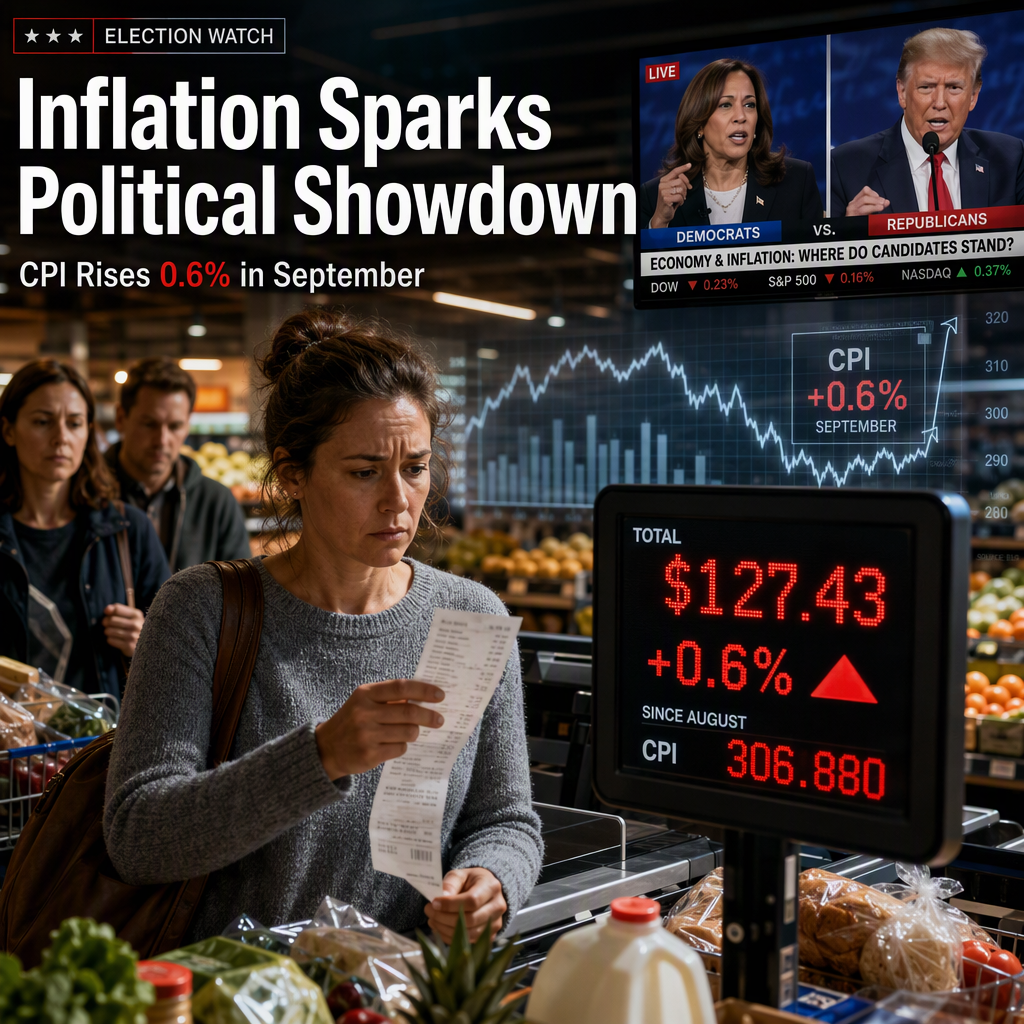
The release of the latest Consumer Price Index (CPI) report has intensified political debate as the U.S. approaches the 2026 midterm elections. According to the U.S. Bureau of Labor Statistics, the CPI for All Urban Consumers (CPI-U) increased by 0.6 percent on a seasonally adjusted basis in September, following a 0.4 percent rise in August. Over the past 12 months, the all items index rose by 3.7 percent before seasonal adjustment [1].
Democratic leaders sharply criticized President Donald Trump, attributing persistent inflation and rising costs of essentials such as gas and groceries to his economic policies. House Democratic Caucus Chair Pete Aguilar stated, 'Inflation is up. The cost of gas and groceries is soaring. Inland Empire families are paying more for everything. This Trump economy has been a total failure.' House Democratic Whip Katherine Clark echoed these sentiments, emphasizing that 'inflation remains too high, as families struggle to afford the basics' [1]. Senate Minority Leader Chuck Schumer and former Transportation Secretary Pete Buttigieg also blamed Trump’s policies, citing tariffs, tax breaks, and other measures as drivers of higher prices [1].
In contrast, the White House defended President Trump’s economic agenda, claiming it has helped reduce inflation from previous highs under President Biden and contributed to economic growth, wage increases, and job creation. A White House official highlighted that 'food prices remain stable, unchanged, month-over-month,' a point supported by the CPI report, which noted that the food index was unchanged in September after modest increases in the prior two months [1].
The CPI data and the ensuing political responses underscore the heightened focus on inflation and economic performance as key issues in the upcoming elections. Both parties are leveraging the latest economic figures to support their narratives, with Democrats seeking to regain control of Congress and Republicans defending their majority [1].
CONCLUSION
The latest CPI report, showing a 0.6% monthly increase and 3.7% annual rise, has become a focal point in the political battle over inflation and economic management. With both parties citing the data to bolster their positions ahead of the midterms, inflation remains a central concern for voters and markets alike.