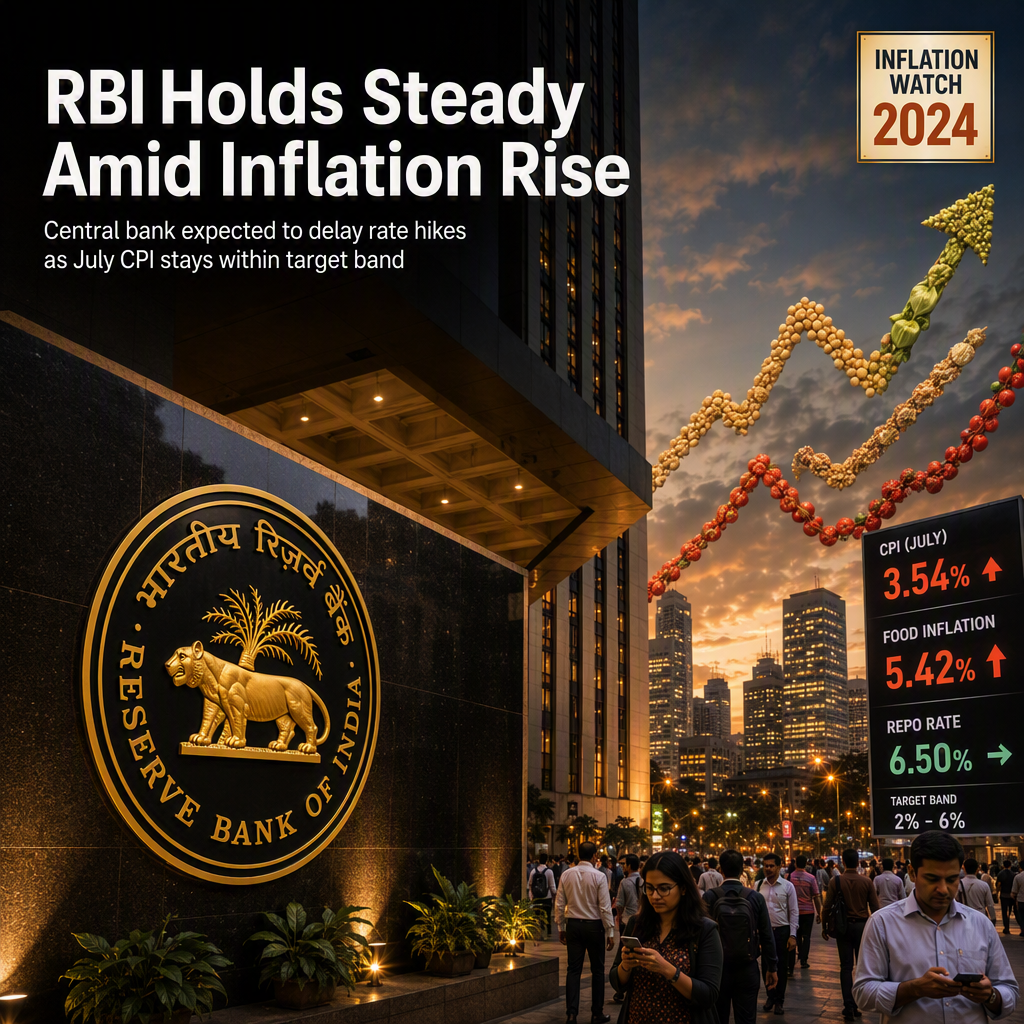
India's July Consumer Price Index (CPI) increased to 4.45% year-on-year, slightly below consensus estimates of 4.5% but higher than June's 4.38%, according to Michael Wan at MUFG [1]. The uptick in inflation was primarily driven by rising food prices, with consumer food inflation climbing to 5.52% year-on-year from 5.32% in June, underscoring the sector's vulnerability to weather and external shocks [1]. Despite headline inflation remaining above the Reserve Bank of India's (RBI) maintenance level of 4.0% for the second consecutive month, it is still within the central bank's target band of 2–6% [1].
Wan notes that the RBI is expected to maintain its neutral policy stance for now, given that inflation remains within the target range [1]. However, there are indications that inflation could broaden further due to strong domestic demand, accelerating credit growth, and a supportive fiscal position [1]. As a result, MUFG has revised its forecast, now expecting the RBI to delay its projected 50 basis points rate hike cycle to begin in December 2026, rather than earlier [1].
No immediate market reactions or analyst opinions beyond MUFG's outlook were discussed in the article [1].
CONCLUSION
India's July inflation data suggests that while price pressures are rising, they remain within the RBI's comfort zone. As a result, the central bank is likely to delay rate hikes, with MUFG now projecting the next tightening cycle to start in December 2026. This signals a continued neutral monetary policy stance in the near term.