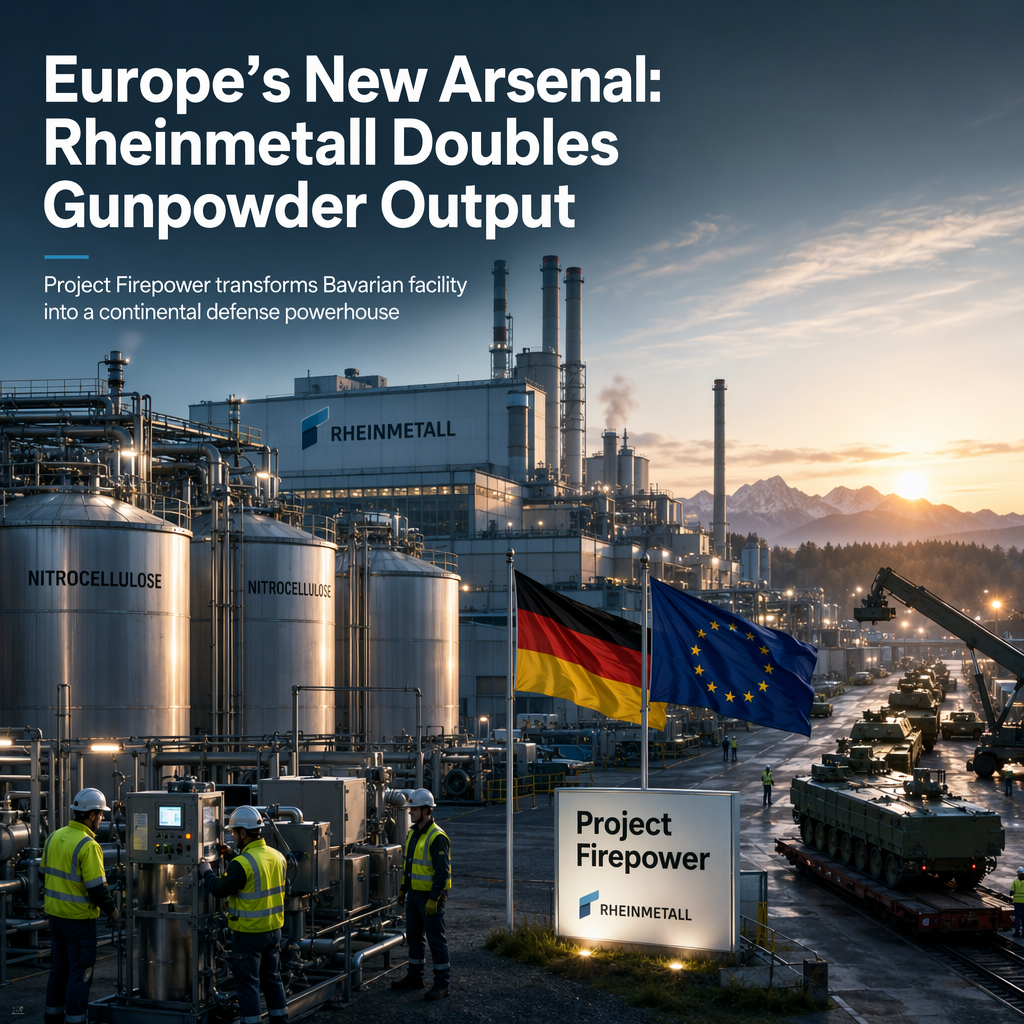
Rheinmetall is undertaking a major expansion of its facility near Munich, aiming to double its gunpowder production capacity in response to surging demand for ammunition across Europe. This initiative, dubbed 'Project Firepower,' comes as European governments significantly increase defense spending following Russia's invasion of Ukraine, which has led to depleted ammunition stockpiles and a spike in gunpowder prices [1].
CEO Armin Papperger emphasized the critical role of gunpowder in defense, stating, 'Without gunpowder, it's impossible to protect our people because at the end of the day, you need gunpowder for ammunition... Without gunpowder, no warhead will go out of the barrel' [1]. The scarcity of gunpowder, particularly nitrocellulose (guncotton), has been a major bottleneck for ammunition production and a barrier to European defense sovereignty. However, Papperger reported that shortages of nitrocellulose are no longer an issue for Rheinmetall, as the company has secured its own supply and built reserves sufficient for the next four years [1].
Europe has historically depended on China for cotton linters, the raw material for military-grade nitrocellulose, but exports have slowed in recent years. To address this, Rheinmetall is also working to qualify wood-derived cellulose as an alternative source for nitrocellulose production [1]. The expanded Bavarian facility will include a research and development center focused on advanced gunpowder, such as high-energy smokeless propellants that offer greater energy density than traditional black powder [1].
The expansion is expected to transform the site into one of Europe's largest gunpowder plants, reinforcing Rheinmetall's strategic importance in the continent's defense supply chain [1].
CONCLUSION
Rheinmetall's expansion marks a significant step in addressing Europe's ammunition shortages and reducing reliance on external suppliers for critical materials. With reserves secured and production capacity set to double, the company is positioned to play a pivotal role in meeting the continent's heightened defense needs.