
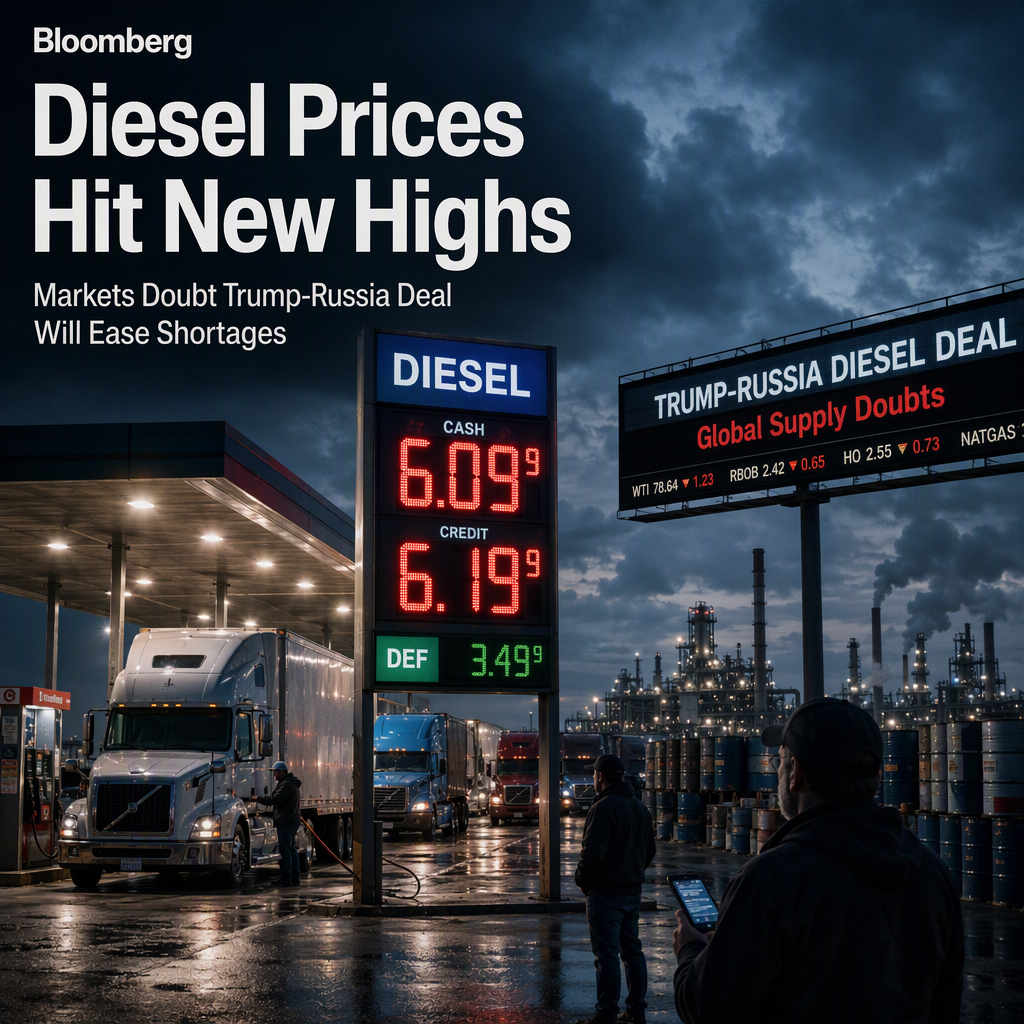
On Tuesday, U.S. diesel futures surged by 5% to their highest level in weeks, reflecting market skepticism about the effectiveness of the Trump administration's recent efforts to lower prices through a deal with Russia [1]. European diesel futures also climbed by approximately 3.8%, and gas futures reached their highest levels of the year [1]. The average nationwide price of diesel has increased by 70% since the U.S. and Israel attacked Iran on February 28, while unleaded gas prices have risen by more than 45% in the same period [1]. Brent crude traded around $106 per barrel and U.S. crude oil neared $95 per barrel, both up about 70% since the start of the year [1].
The Trump administration announced a controversial agreement with Russian President Vladimir Putin to increase U.S. diesel supplies by purchasing previously sanctioned Russian reserves, which Trump claimed would add millions of metric tons of diesel to the global market [1]. However, analysts have calculated that this would cover less than two weeks of U.S. demand at best [1]. The market's reaction, with diesel futures spiking, indicates skepticism that Russian oil will arrive in sufficient quantities to ease supply constraints [1].
Regional price spikes have been particularly acute, with wholesale diesel up 18 cents per gallon on the Gulf Coast and East Coast, 28 cents in Southern California, and 25-30 cents in the Great Plains and Great Lakes [1]. Tom Kloza, Gulf Oil adviser, noted that the U.S. retail diesel price record of $6.53 per gallon could be surpassed by the midterm elections [1]. Patrick de Haan of GasBuddy stated that '$6/gal diesel may be here to stay for now,' and warned that truckers and farmers are unlikely to see relief soon [1].
The Trump-Putin deal required suspending longstanding sanctions on Russian energy purchases, which were imposed after Russia's 2022 invasion of Ukraine. The suspension, set to last until April of next year, has drawn significant backlash domestically and internationally [1]. Trump also pressured European allies to release more diesel reserves, and while a temporary release was announced on October 2, the lack of further details led to only a brief cooling of prices [1].
CONCLUSION
Diesel and gas prices have soared despite the Trump administration's deal with Russia to boost supply, as markets remain unconvinced that the measures will provide meaningful relief. With futures and retail prices at or near record highs, and skepticism from analysts, the outlook for lower diesel costs in the near term appears bleak.