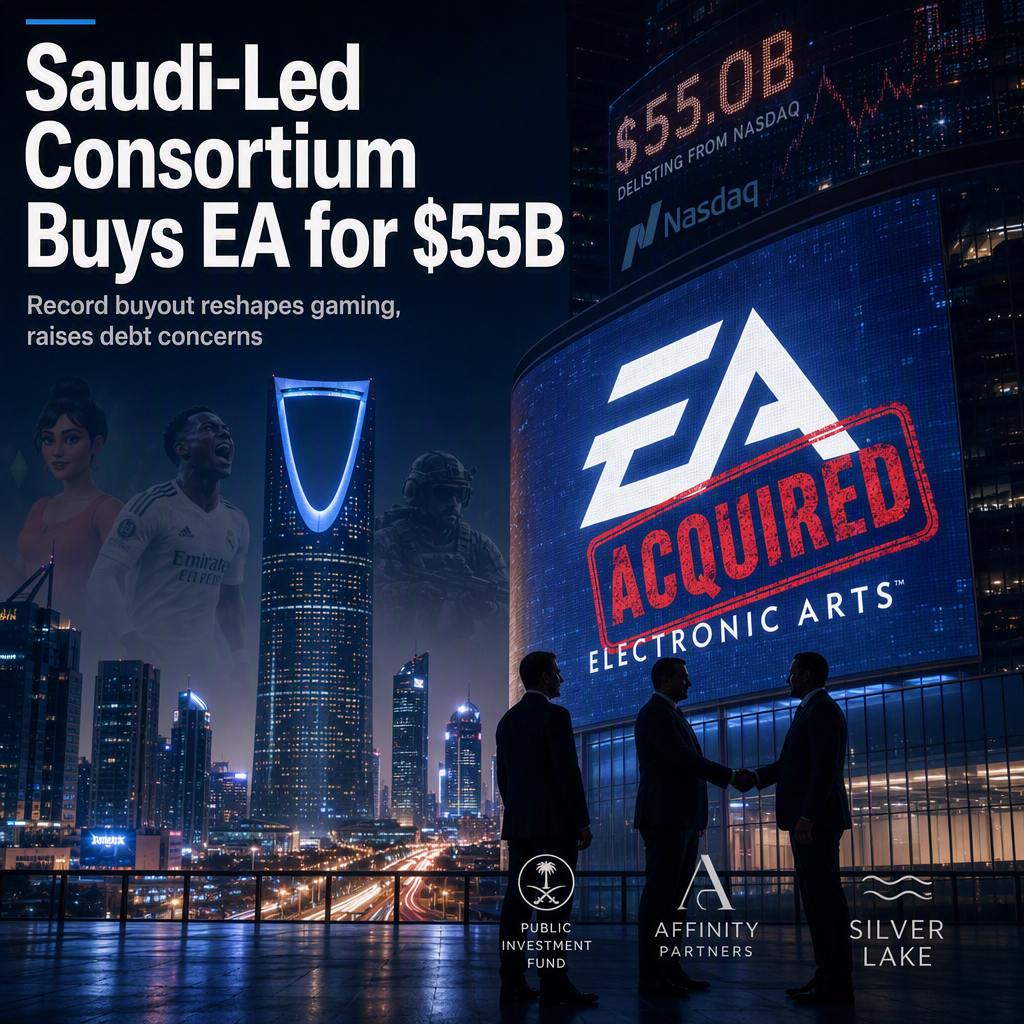
A Saudi-led consortium, spearheaded by the Public Investment Fund (PIF) and including Jared Kushner's Affinity Partners and private equity firm Silver Lake, has completed the acquisition of video game maker Electronic Arts (EA) in a deal valued at $55 billion [1]. EA shareholders will receive $210 in cash per share as part of the transaction, and the company's stock will be delisted from the Nasdaq [1].
The acquisition marks a significant expansion of Saudi Arabia's investments in the sports and gaming sectors, with PIF's head of international investments, Turqi Alnowaiser, stating that 'entertainment and sports are key areas of strategic focus' for the fund [1]. To finance the deal, PIF is reportedly borrowing $20 billion from JPMorgan, making this the largest leveraged buyout in history [1].
Analysts have raised concerns about the substantial debt EA is taking on as a result of the acquisition, suggesting that the company will likely consolidate around its most successful franchises, such as The Sims, Battlefield, and its sports titles, rather than invest in new intellectual property [1]. Michael Futter, founder of F-Squared, commented that the debt burden is unlikely to shift EA's strategy but may lead to leadership focusing on titles with the largest revenue potential, even if they carry significant risk [1]. Futter also expressed doubts about EA's ability to service the debt without resorting to significant layoffs, studio closures, or possibly selling off intellectual property [1].
CONCLUSION
The $55 billion acquisition of Electronic Arts by a Saudi-led consortium represents a major shift in the gaming industry, with significant financial and strategic implications. While shareholders benefit from a premium cash payout, analysts warn that the heavy debt load could force EA to streamline operations and focus on established franchises, potentially leading to layoffs and asset sales. The market impact is expected to be high, given the scale and leverage involved.