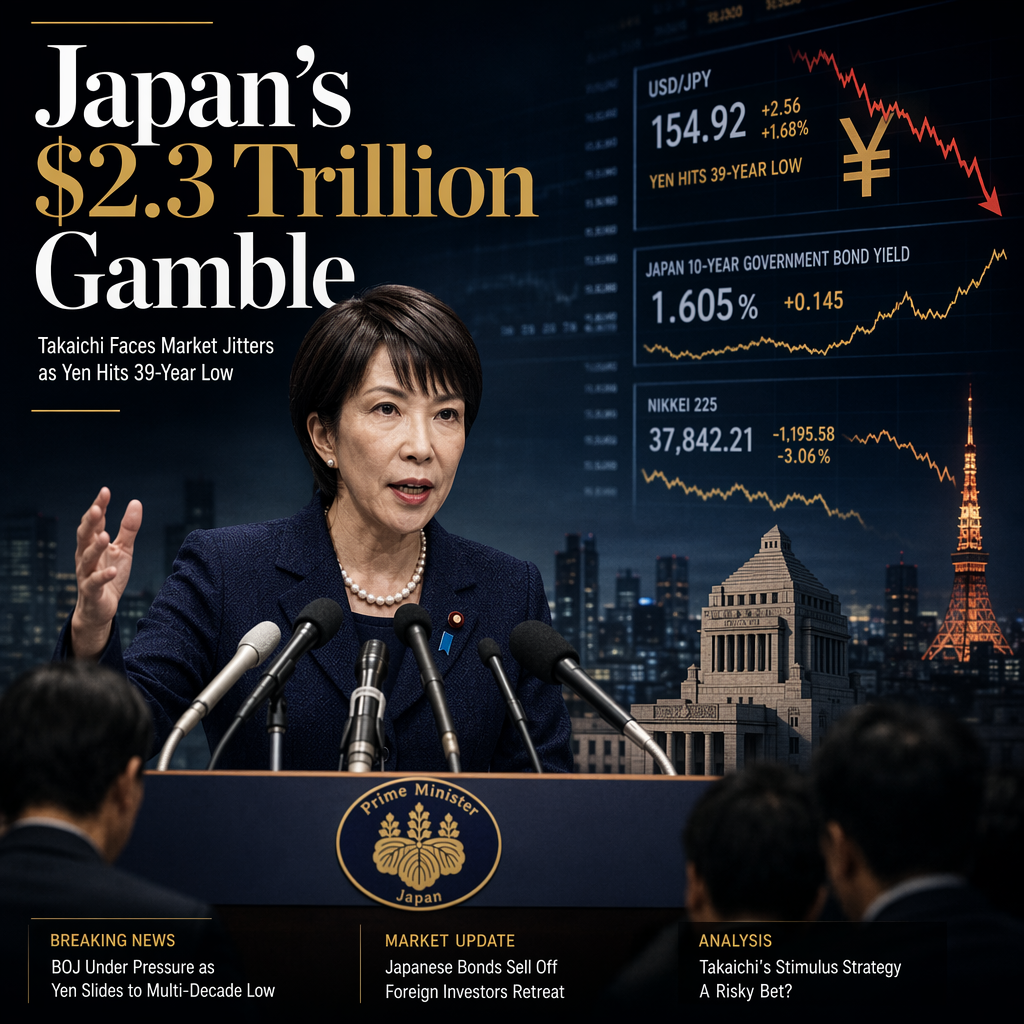
Japanese Prime Minister Sanae Takaichi has publicly defended her administration's 370 trillion yen ($2.3 trillion) growth initiative in the face of increasing market unease and skepticism from investors and economists. At a news conference on July 27, Takaichi emphasized that the plan is intended to foster sustainable economic growth while maintaining fiscal discipline, stating, 'Our policies are designed to ensure sustainable growth while maintaining fiscal discipline' [1]. She highlighted that, despite rising prices, Japan has not 'escaped deflation,' and argued that targeted investments in infrastructure, green technology, and digital transformation would enhance productivity and generate high-quality jobs [1].
The announcement has sparked significant debate among market participants. Some investors and analysts have expressed concerns that the large-scale spending could fuel inflation and undermine confidence in Japan's fiscal position, given that public debt already exceeds twice the size of the economy [1]. Market sentiment has reflected these worries: the yen recently depreciated to a 39-year low of 163 per dollar, a move attributed in part to apprehensions over the growth drive and rising geopolitical tensions [1]. Additionally, Japanese government bond yields have risen, signaling expectations of a potential early rate hike by the Bank of Japan as oil prices reached $100 per barrel [1].
A recent Nikkei survey of economists revealed skepticism regarding Japan's ability to grow its way out of its mounting debt burden. Some experts warn that the government's plan could further exacerbate the already high public debt levels [1]. Despite these concerns, Takaichi reiterated her administration's commitment to fiscal prudence and stated, 'We are closely monitoring market reactions and will adjust our policies as needed to maintain stability' [1].
CONCLUSION
Prime Minister Takaichi's $2.3 trillion growth plan has triggered mixed reactions, with markets showing signs of concern through a weaker yen and higher bond yields. While the government insists on fiscal discipline and strategic investment, skepticism remains high regarding Japan's ability to manage its debt and inflation risks.