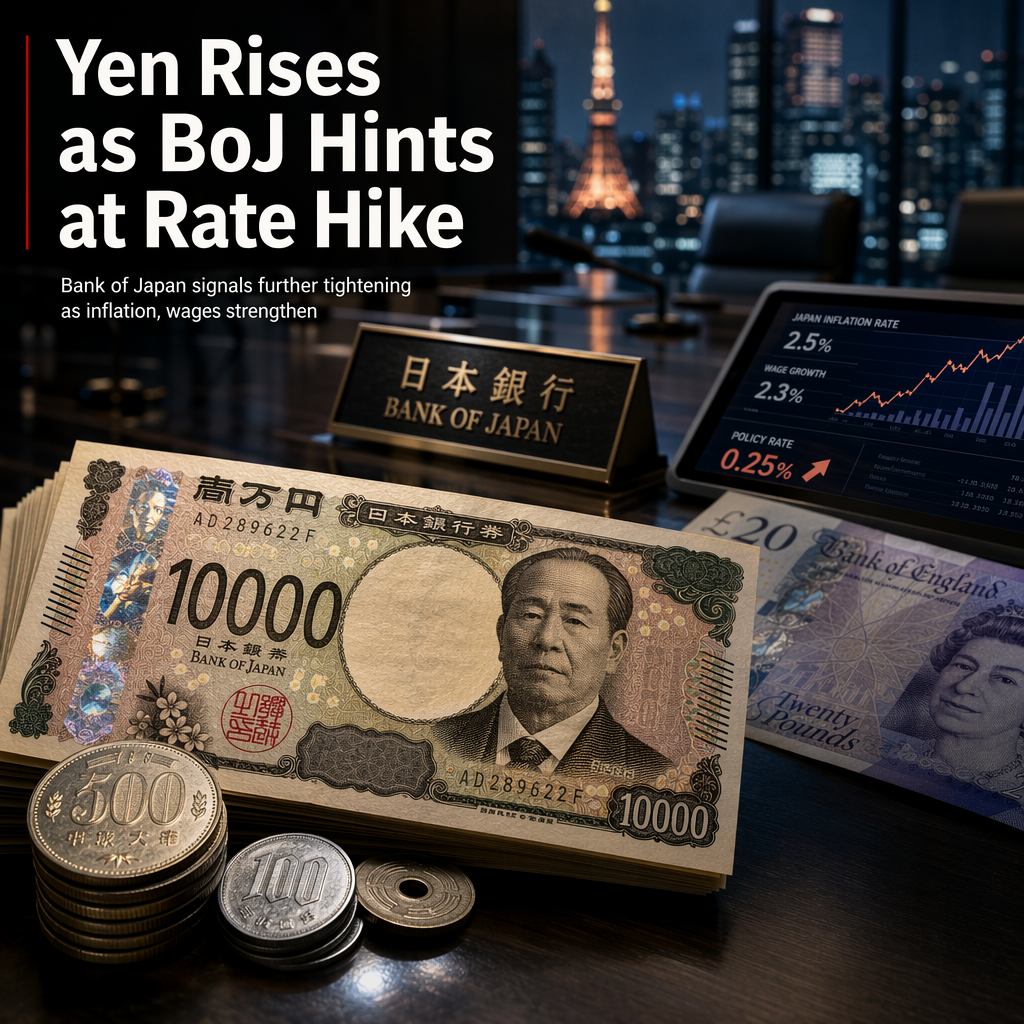
The British Pound (GBP) traded lower against the Japanese Yen (JPY) on Wednesday, with GBP/JPY quoted around 212.90, marking a decline of 0.20% as the Yen outperformed its major peers following hawkish signals from the Bank of Japan (BoJ) [1]. BoJ Governor Kazuo Ueda, through remarks delivered by Deputy Governor Ryozo Himino, reiterated the central bank's tightening bias, stating, 'With underlying inflation moving towards 2% and financial conditions remaining accommodative, we expect to continue increasing the interest rate and adjusting the degree of monetary accommodation in response to economic activity, prices and financial conditions' [1].
The BoJ's latest Summary of Opinions indicated that a majority of policymakers remain inclined toward further rate hikes, although the gradual pace of policy normalization and the still-wide interest-rate differential with other major economies continue to limit deeper gains for the Yen in cross-currency pairs [1]. Despite the Yen's broad intraday strength, it has struggled to gain traction against the US Dollar (USD), which has strengthened sharply on expectations that the Federal Reserve (Fed) could raise interest rates later this year. The USD/JPY pair remains above the 160.00 mark, and traders are wary of potential intervention by Japanese authorities [1].
The British Pound remains under modest pressure as traders reassess the Bank of England's (BoE) monetary policy outlook, influenced by less hawkish remarks from BoE policymaker Alan Taylor and weaker-than-expected flash PMI readings released on Tuesday [1]. According to the latest data, the Japanese Yen was the strongest against the New Zealand Dollar among major currencies, while its performance against the Pound and other currencies reflected the market's reaction to central bank policy signals [1].
CONCLUSION
The Japanese Yen's gains against the British Pound were driven by hawkish signals from the Bank of Japan, while the Pound faced pressure from a less optimistic Bank of England outlook and weak economic data. Market participants remain attentive to further BoJ policy moves and potential interventions, especially as the Yen's strength is tempered by global interest rate differentials.