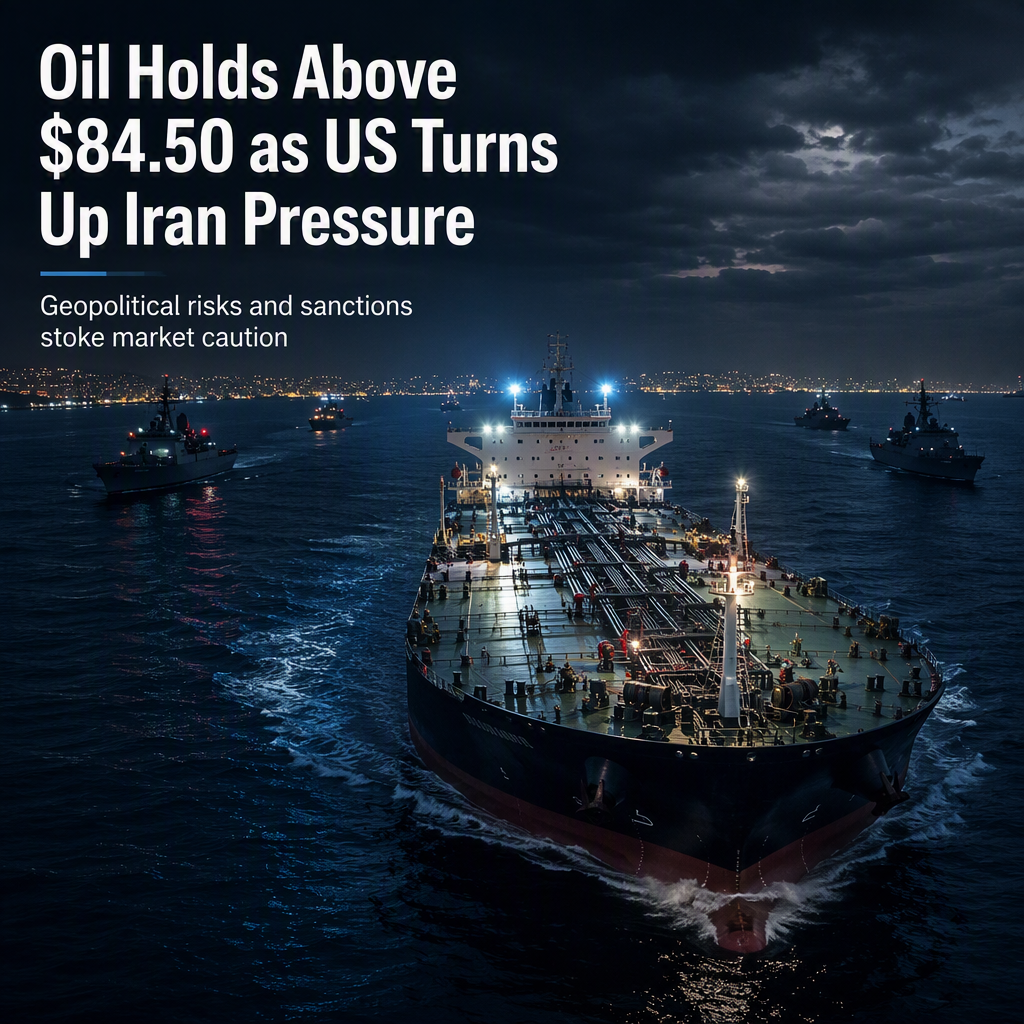
West Texas Intermediate (WTI) oil prices rebounded, trading around $84.70 per barrel during Asian hours on Tuesday after falling over 2% the previous day [1]. The recovery in crude prices is attributed to the United States intensifying economic pressure on Iran and its trading partners, with the aim of forcing the reopening of the Strait of Hormuz [1]. US Treasury Secretary Scott Bessent announced plans to further isolate Iran by penalizing countries that continue business ties with Tehran, while President Donald Trump stated that these nations will be given a specific timeline to sever ties or face unilateral US penalties [1].
BNY’s Geoff Yu highlighted that the US is broadening its economic confrontation with Iran, warning that the latest measures are intended to deepen Tehran’s financial isolation and could have 'potential spillovers well beyond Tehran.' Investors are increasingly focused on the extent of Washington’s willingness to tighten restrictions and the risk that a tougher stance could affect relations with key trading partners in Europe and Asia [1]. Despite these aggressive measures, there is uncertainty among market participants regarding whether the US strategy will accelerate or delay a resolution to the conflict and the reopening of the vital waterway [1].
Geopolitical risks to Middle East energy flows have escalated further. The UK Navy reported that an oil tanker was struck and disabled near Oman, and Iran-backed Houthi militants claimed responsibility for firing on a Saudi Arabian supertanker in the Red Sea [1]. These incidents have contributed to heightened concerns over the security of energy shipments in the region, supporting oil prices [1].
CONCLUSION
WTI oil prices have stabilized above $84.50 per barrel as the US intensifies sanctions on Iran and geopolitical risks in the Middle East escalate. Market participants remain cautious, focusing on the potential for broader economic and diplomatic repercussions as well as ongoing uncertainty regarding the resolution of the conflict.