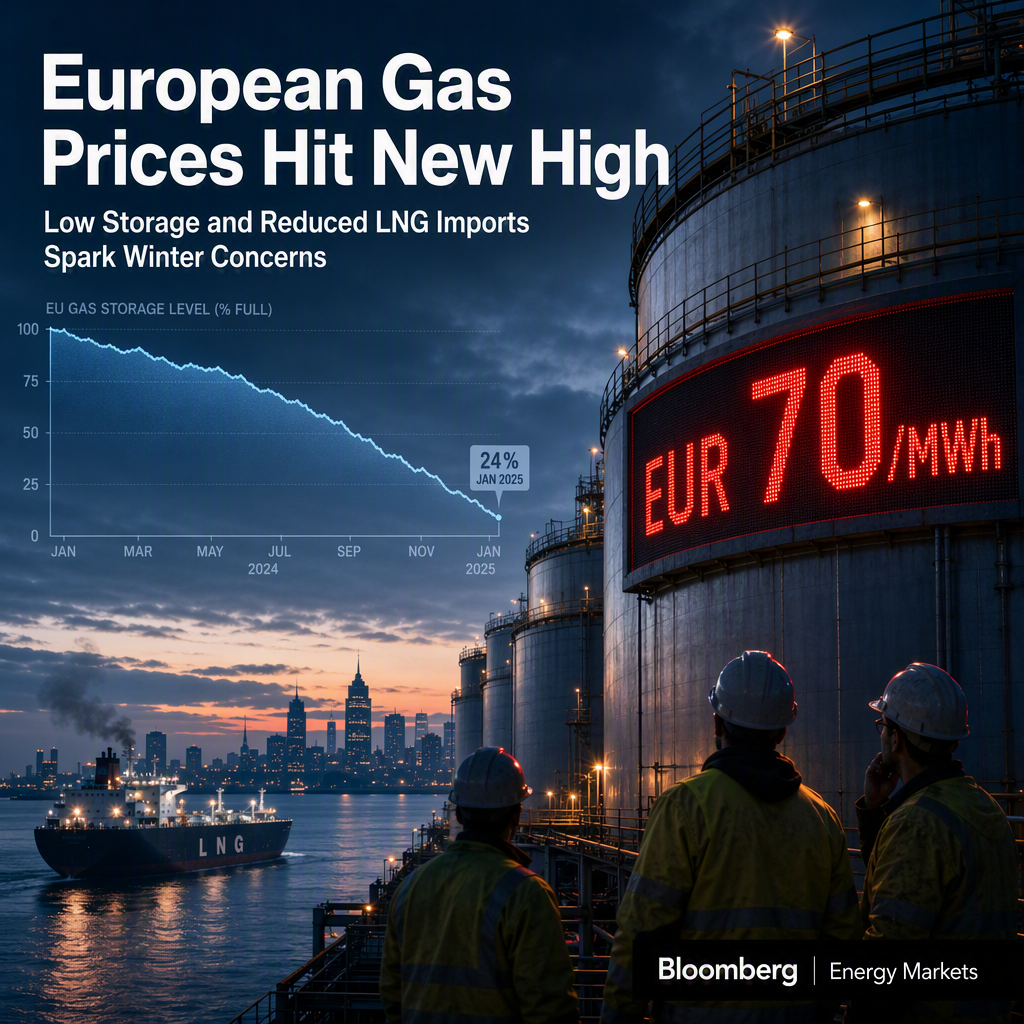
European gas prices have recently climbed above EUR70 per megawatt-hour (MWh), reaching their highest level since March, according to ING’s Warren Patterson [1]. This increase is attributed to a combination of lower liquefied natural gas (LNG) supply from the Persian Gulf and robust Asian spot market demand, which together have reduced EU LNG imports by approximately 16% year-on-year between April and July [1].
As a result of these supply constraints and strong external demand, EU gas storage levels were around 65% full at the end of August, significantly below the five-year average of 82% and also lower than 2021 levels [1]. ING projects that inventories will reach only 72–73% at the start of the heating season, which is well below the EU’s headline 90% target and potentially even below the flexible 75% threshold [1].
The report notes that some EU member states may need to accelerate gas purchases to ensure adequate supply for winter, a move that would further support prices as the heating season approaches [1]. ING analysts believe that low storage levels will continue to limit any downside for European gas prices, regardless of future Persian Gulf supply scenarios [1].
Looking ahead, ING expects EU LNG imports to stabilize and recover on a month-on-month basis, as current freight economics now favor sending spot cargoes to Europe [1].
CONCLUSION
European gas prices are being supported by low storage levels and reduced LNG imports, with inventories projected to remain well below target as winter approaches. This situation is likely to keep prices elevated and may prompt accelerated purchases by some EU member states, reinforcing upward pressure on the market.