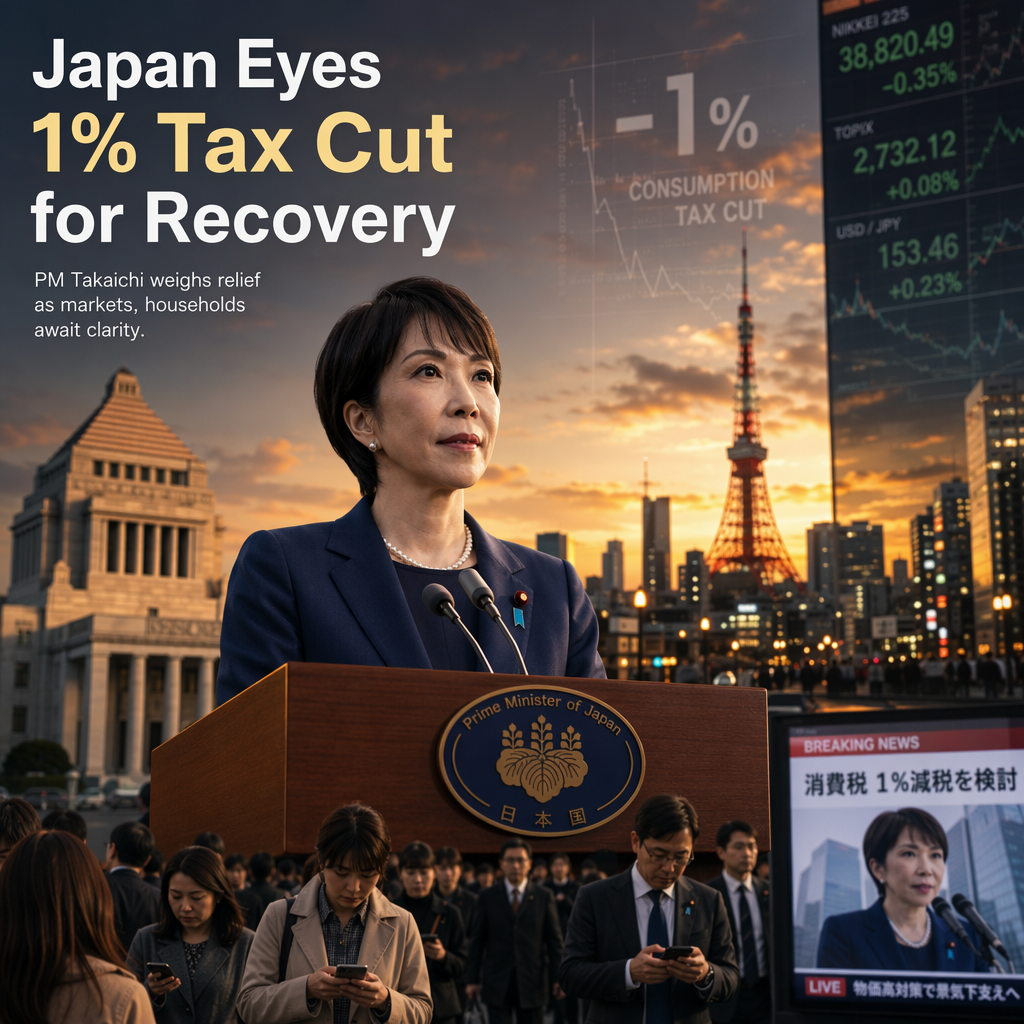
Prime Minister Takaichi is reportedly moving towards a final decision on a proposal to reduce Japan's consumption tax rate by 1%, as part of efforts to balance economic recovery with measures against rising prices [1]. According to government sources, the 1% reduction is considered the most likely scenario, aiming to support both the economy and counteract inflation [1].
Within the ruling party, some lawmakers are advocating for a larger tax cut of 2% or more. However, concerns about fiscal soundness and the need to secure stable funding for social security have led to a majority opinion that a 1% reduction is the most realistic option at this time [1].
Market analysts suggest that if the consumption tax cut is implemented, it could provide some support for personal consumption. However, there are also views that a modest reduction may have only a limited effect as a fundamental measure against high prices. As a result, the stock market is closely watching the scale and effectiveness of the policy [1].
Prime Minister Takaichi is expected to consolidate opinions within the ruling party and make a final decision on the policy direction by early August [1].
CONCLUSION
The Japanese government is leaning towards a 1% consumption tax cut to address economic recovery and inflation, though some within the ruling party seek a larger reduction. Market participants are focused on the policy's scale and effectiveness, with a final decision anticipated by early August.