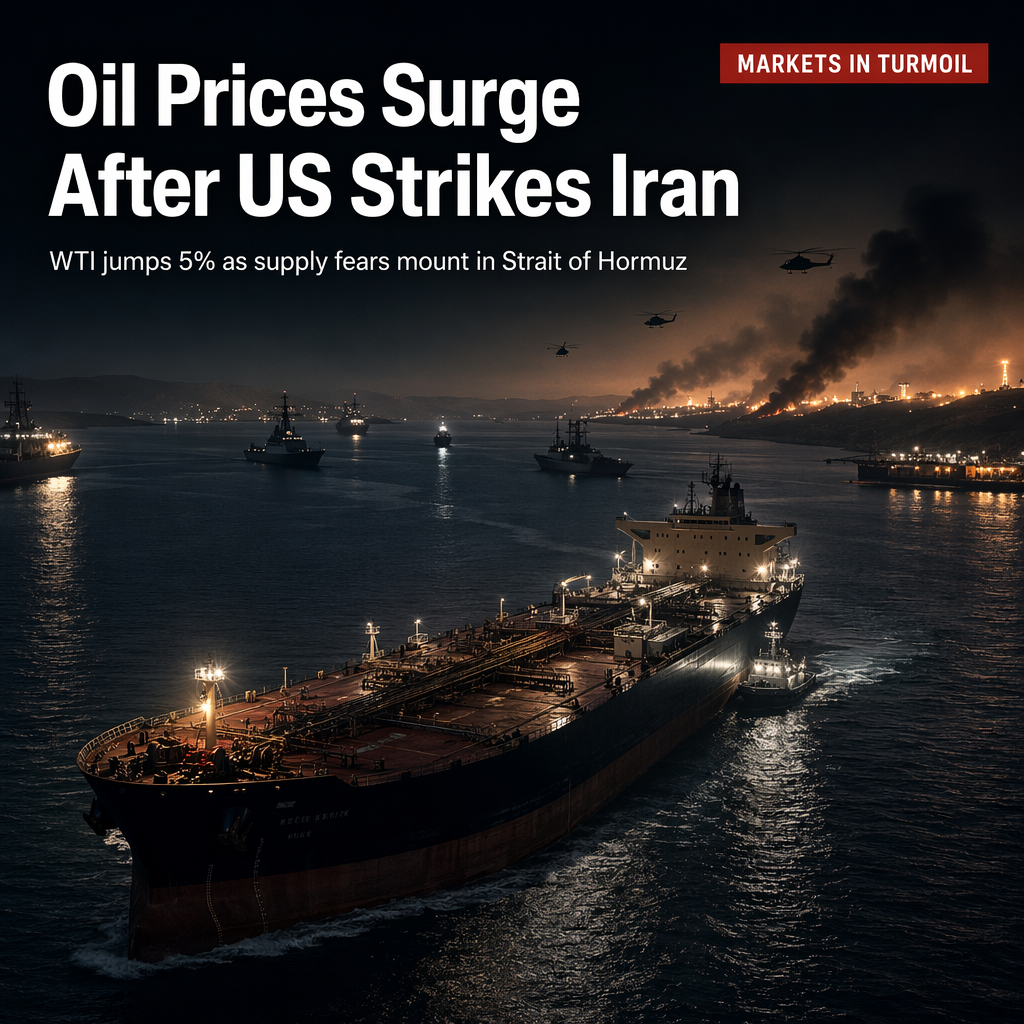
West Texas Intermediate (WTI) oil prices experienced a significant spike, advancing nearly 5% in the previous day and trading around $72.20 per barrel during Asian hours on Wednesday, following fresh US military airstrikes against Iran and the revocation of a key sanctions waiver that had previously allowed Iran to sell oil internationally [1]. This escalation in geopolitical tensions comes after a series of Iranian attacks on commercial vessels in the Strait of Hormuz, including incidents involving a Qatari LNG carrier and a Saudi oil tanker [1].
The renewed hostilities have heightened concerns over potential disruptions to global energy supplies, as shipowners and regional producers become increasingly cautious about navigating the critical Strait of Hormuz route [1]. This instability marks a sharp reversal from earlier market expectations of a supply glut, which had been anticipated due to OPEC+ raising production quotas and Middle Eastern producers preparing to increase output [1].
The market reaction has been immediate and pronounced, with WTI oil prices surging in response to the perceived risk of supply disruptions and the breakdown of a fragile, interim US-Iran peace agreement [1]. No forward-looking statements or analyst opinions are provided in the source article.
CONCLUSION
The US airstrikes on Iran and the revocation of a sanctions waiver have triggered a sharp rally in WTI oil prices, reflecting heightened fears of supply disruptions in the global energy market. The situation represents a dramatic shift from prior expectations of oversupply, underscoring the oil market's sensitivity to geopolitical developments.