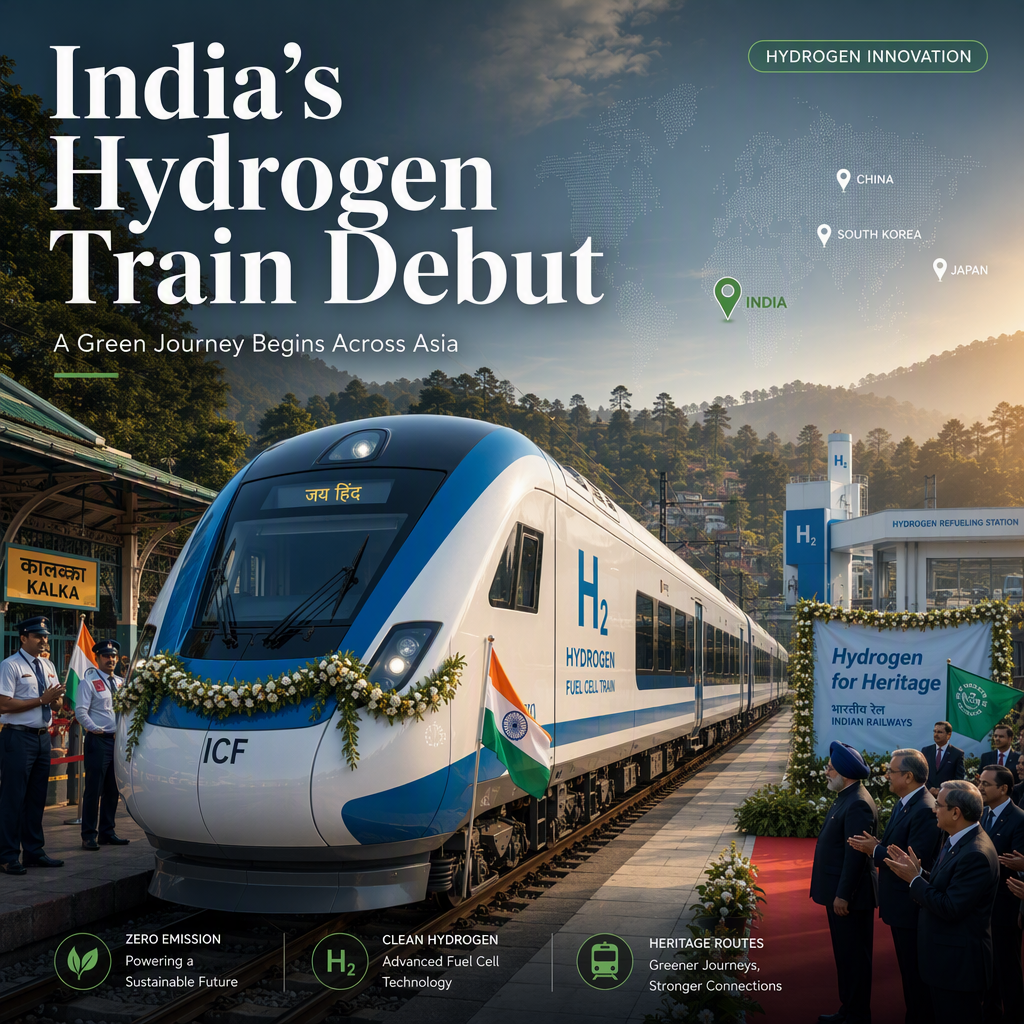
India launched its first hydrogen-powered train on July 17, 2026, marking a significant step in the country's efforts to decarbonize rail transport and reduce dependence on fossil fuels [1]. This move places India among a select group of nations, including Japan, China, and South Korea, that are actively testing hydrogen technology as part of broader strategies to develop sustainable transportation solutions [1].
The initiative is part of India's 'Hydrogen for Heritage' program, with Indian Railways previously announcing plans in 2023 to operate 35 hydrogen trains on heritage and hill routes [1]. In July 2026, India also initiated 12 pilot projects involving 70 hydrogen-powered vehicles—27 buses and 43 trucks—and the establishment of 16 hydrogen refueling stations across 21 routes [1].
According to Rajeev Pandey, senior analyst for hydrogen research at Rystad Energy, hydrogen's potential to decarbonize hard-to-abate industries is clear, but its commercial feasibility at scale is likely to be realized only in 'defined lanes' during the 2030s and 2040s [1]. South Korea and India are identified as the most probable markets for meaningful commercial adoption of hydrogen trains over the next decade, while Japan may see a smaller rollout [1].
Industry experts, such as Vivek Lohia, managing director at Jupiter Wagons, describe India's hydrogen train as a 'technology demonstration' that may be suited for niche routes, particularly in hilly areas, and suggest that a broader shift to hydrogen-powered rail could take over two decades [1]. Under the National Green Hydrogen Mission, India aims to become a global hub for the production, usage, and export of green hydrogen and its derivatives, with potential investments in green hydrogen and green ammonia capacity projected to reach around $34 billion by 2030 based on current plans [1].
CONCLUSION
India's launch of its first hydrogen-powered train highlights the country's commitment to green transport and its ambition to become a leader in the hydrogen economy. While commercial adoption is expected to be gradual and focused on specific routes, significant investments and pilot projects signal a medium-term market impact and growing momentum for hydrogen technology in Asia.