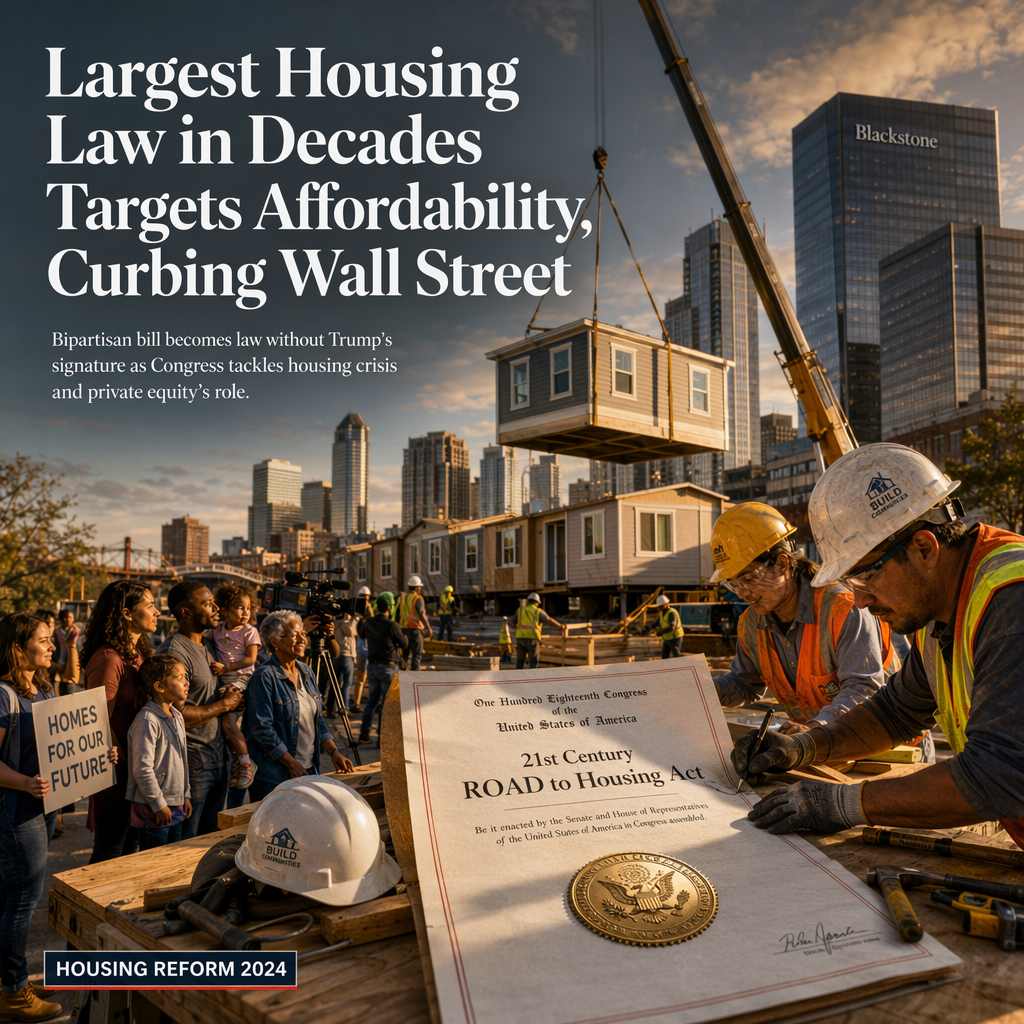
The 21st Century ROAD to Housing Act, described as the largest housing bill in over 30 years, has officially become law without President Donald Trump’s signature after he declined to sign it for more than two weeks. According to Sen. Elizabeth Warren, President Trump did not oppose the bill but showed little interest in addressing the housing affordability crisis, which he has referred to as a 'hoax' and labeled the legislation as 'minor' [1]. Despite this, the bill garnered overwhelming bipartisan support, with nearly 90% of voters backing the law, and was championed by leaders such as Sen. Tim Scott (R-S.C.) and Rep. Maxine Waters (D-Calif.) [1].
The new law introduces significant federal incentives to encourage communities nationwide to build more housing, removes outdated regulations to expedite construction, and reduces costs for manufactured housing. A notable provision is the restriction on private equity firms purchasing single-family homes, marking the first time Congress has taken direct action to hold private equity accountable in the housing market [1].
Sen. Warren emphasized that while the passage of this bill is a major step, further action is needed to address housing prices and broader affordability issues. She proposed additional measures such as capping credit card interest rates at 10% and cracking down on grocery price gouging, citing that families are paying $368 million daily due to unfulfilled promises on interest rate caps [1]. The article underscores bipartisan support for further reforms, particularly in antitrust enforcement against dominant food corporations [1].
Market implications are significant, as the law is expected to accelerate housing construction, potentially increase supply, and curb speculative activity by private equity in the single-family home market. The bipartisan nature and high public support suggest strong momentum for continued legislative action on affordability issues [1].
CONCLUSION
The enactment of the 21st Century ROAD to Housing Act marks a major legislative intervention in the U.S. housing market, with provisions aimed at boosting supply and curbing private equity activity. Despite the president’s lack of engagement, Congress demonstrated bipartisan resolve to address the affordability crisis. The law’s passage signals potential for further reforms targeting financial and consumer costs.