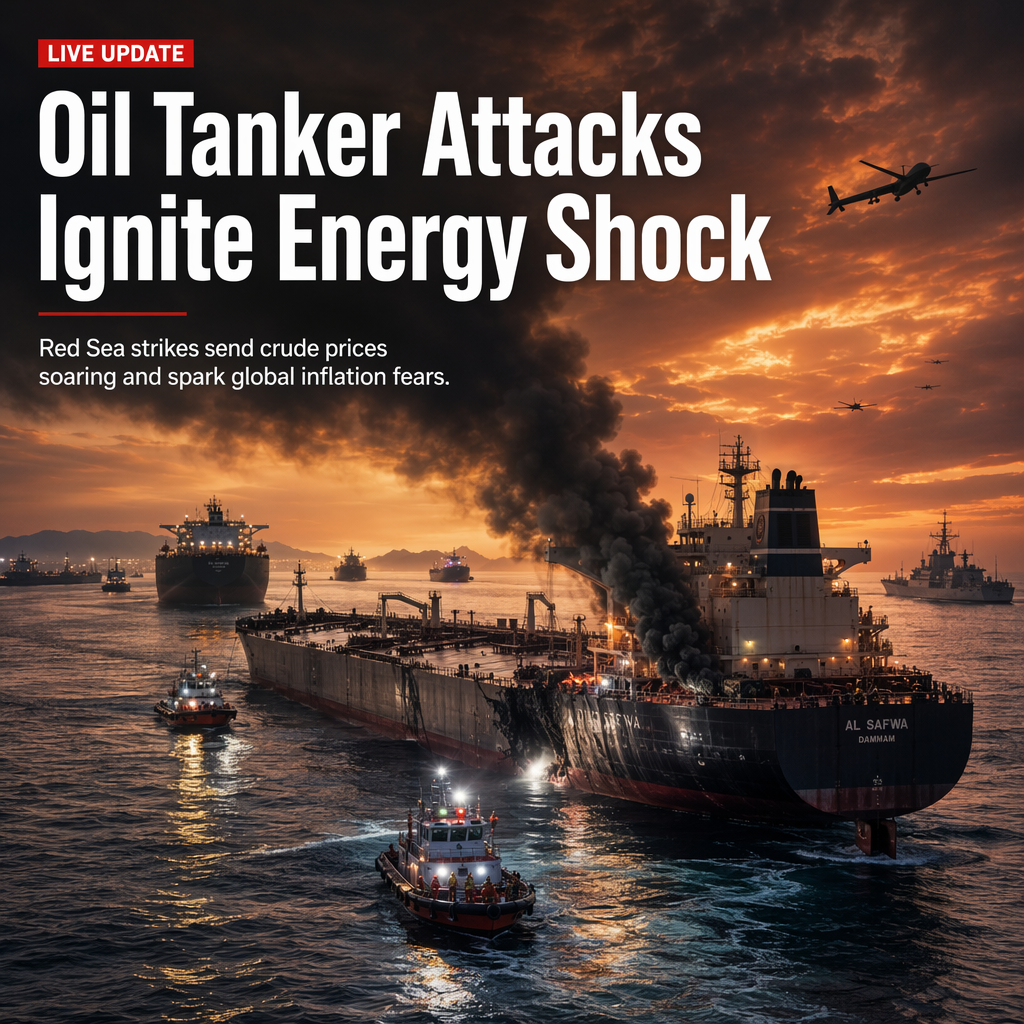
A significant escalation in Middle Eastern tensions occurred after Yemen-based Houthi rebels, reportedly backed by Iran, attacked two Saudi Arabian oil tankers in the Red Sea, according to both BNY's Geoff Yu and NBC News [1][2]. The attacks have heightened concerns about the stability of oil supplies from this critical region, with the Red Sea serving as a key shipping corridor for global crude exports, especially as tensions around the Strait of Hormuz persist [1][2]. BNY's Geoff Yu notes that the reported tanker strike off the coast of Saudi Arabia pushed Brent crude above $96 per barrel, reflecting market fears that the conflict is evolving from a regional military escalation into a broader energy and inflation shock [1].
Bond markets are reacting to the situation as an inflation shock, with Treasury, Bund, and gilt yields rising as investors anticipate a more persistent energy shock and price in additional tightening across global yield curves [1]. Yu warns that oil prices near $100 per barrel, combined with rising yields, create a stagflationary environment that dampens risk appetite and tightens financial conditions before central banks have resolved the trade-off between inflation and growth [1].
NBC News highlights that even the threat of supply disruption can send oil futures higher, with analysts closely monitoring the situation for any sustained threat to tanker traffic [2]. Technical analysts cited by NBC are watching resistance at recent highs, with some predicting that crude could test $90 per barrel if shipping through the Red Sea is substantially affected [2]. Christine Romans of NBC notes that the United States could see a spike in gasoline prices if tensions continue or escalate, as the market remains highly sensitive to geopolitical risks involving major oil producers like Saudi Arabia and Iran [2].
While no immediate price surge was reported by NBC, both sources emphasize the cautious sentiment prevailing in the market, with investors advised to closely follow developments in the region due to the potential for further escalation and heightened volatility in oil and gas prices worldwide [1][2].
CONCLUSION
The Houthi attacks on Saudi oil tankers have triggered a sharp rise in Brent crude prices and increased concerns about global energy supply disruptions. Both sources indicate that markets are bracing for further volatility, with the potential for higher oil and gasoline prices if tensions persist or escalate.