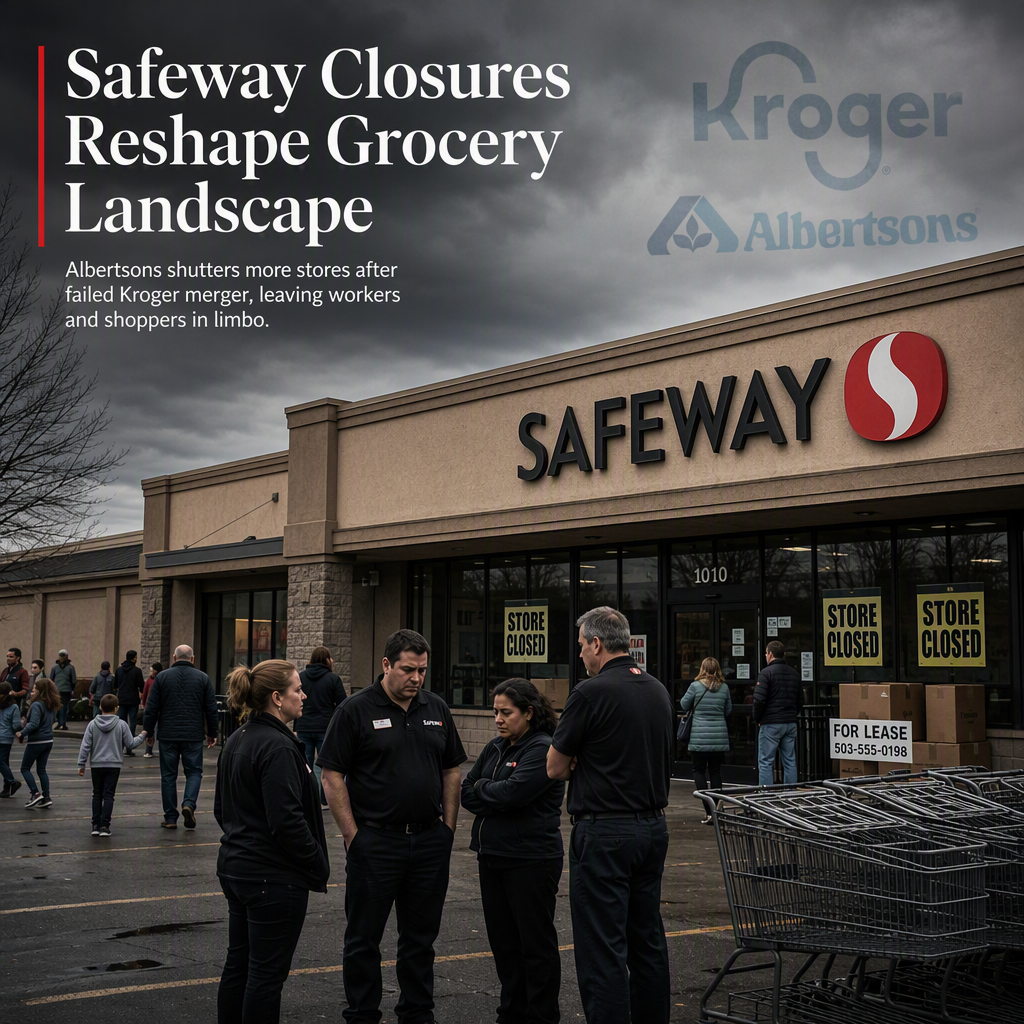
Albertsons Companies is closing additional Safeway stores as it reassesses its retail footprint following the collapse of its proposed $24.6 billion merger with Kroger [1]. The company had slowed its 'portfolio optimization' efforts while the Kroger transaction was pending, but resumed evaluating its store network after the deal fell apart. This process has included opening stores in areas with long-term demand and making difficult decisions to close certain locations [1].
During fiscal 2025, Albertsons closed 35 stores, more than triple the 10 closures in the previous year and up from eight in fiscal 2023, according to its latest annual filing [1]. The company opened nine stores in fiscal 2025 and ended the year with 2,244 locations across 35 states and Washington, D.C. Store closures, net of new openings, reduced fiscal 2025 sales by $63.4 million, while costs associated with closed stores and surplus properties climbed to $45.1 million from $15.9 million a year earlier [1].
Albertsons continued investing in its store base, completing 94 remodels and opening nine new stores during fiscal 2025 as part of approximately $1.83 billion in capital expenditures, which also included investment in digital and technology platforms [1]. The company operates 22 grocery banners, including Safeway, Vons, Jewel-Osco, ACME, Shaw’s, and Tom Thumb, and employed approximately 280,000 workers as of Feb. 28, 2026 [1].
Specific Safeway locations closed in 2026 include stores at 231 W. Jackson St. in Hayward, California; 2220 N. Coast Highway in Newport, Oregon; and 1601 Maryland Ave. in Washington, D.C. Albertsons stated it is working to place as many affected employees as possible in jobs at other stores [1]. The store review follows the breakdown of the planned combination with Kroger, which was blocked by the Federal Trade Commission and nine state attorneys general, leading to litigation between the two companies [1].
CONCLUSION
Albertsons' decision to close more Safeway stores after the failed Kroger merger has led to reduced sales and increased costs, but the company continues to invest in remodeling and new store openings. The closures are part of a broader reassessment of its retail footprint, with efforts to reassign affected employees. The market impact is medium, reflecting both negative sales effects and ongoing capital investment.