
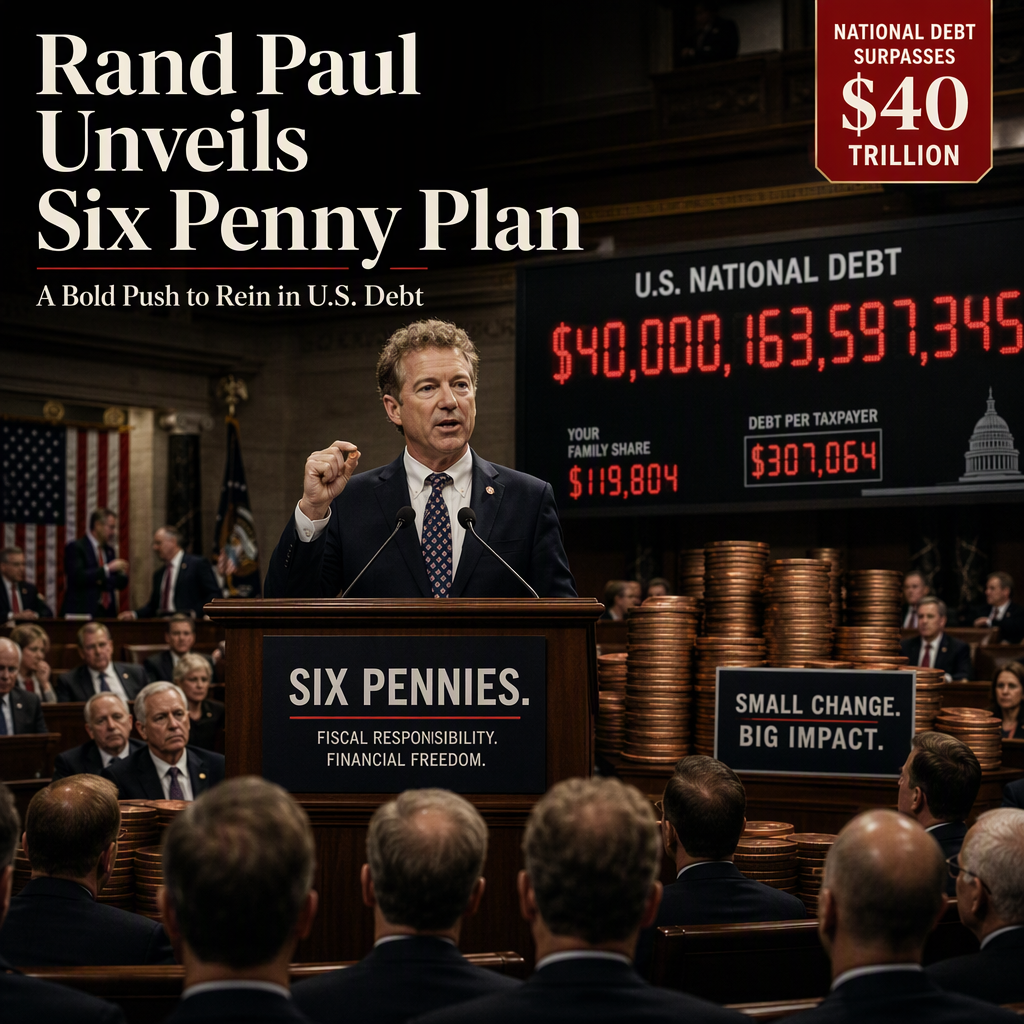
Senator Rand Paul has raised concerns over the escalating U.S. national debt, which he states has now surpassed $40 trillion, with Congress spending over $1 trillion annually on interest payments—an amount that exceeds national defense spending [1]. Paul argues that this growing debt is contributing to rising interest rates and inflation, negatively impacting Americans across the country [1].
In response, Senator Paul is advocating for his Six Penny Plan, which he intends to force to a vote later this year [1]. The plan calls for Congress to implement a six-percent cut in federal spending each year for five years, after which, once the budget is balanced, spending could increase in line with additional revenue from economic growth [1]. Notably, the plan does not specify which programs or budget categories should be cut and explicitly exempts Social Security from reductions [1]. Instead, it sets a maximum spending level, leaving the allocation of cuts up to Congressional debate [1].
Paul criticizes Congress for continuing to pass continuing resolutions that maintain the status quo, warning that such actions only perpetuate the fiscal crisis [1]. He emphasizes that the Six Penny Plan is the only balanced budget proposal expected to come up for a vote and challenges lawmakers to support it if they are serious about fiscal responsibility [1].
The article does not mention any immediate market reactions or analyst opinions regarding the Six Penny Plan, nor does it reference specific ticker symbols or companies [1].
CONCLUSION
Senator Rand Paul is urging Congress to adopt his Six Penny Plan to address the rapidly growing national debt and associated fiscal challenges. The plan proposes significant annual spending cuts to balance the budget within five years, with future spending increases tied to economic growth. The market impact is medium, as the proposal highlights ongoing concerns about U.S. fiscal sustainability.