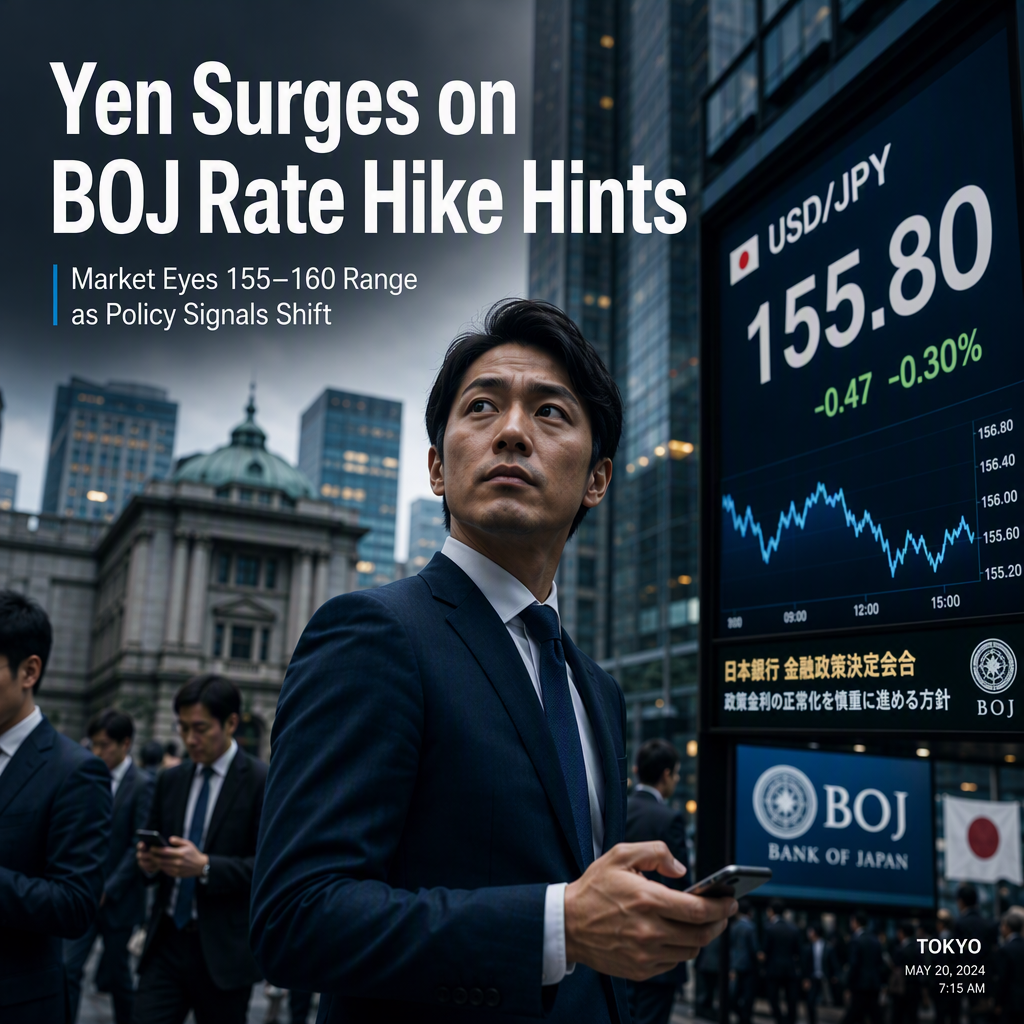
The Japanese yen has recently strengthened to trade in the upper 155 range against the US dollar, a notable appreciation from the previous day's 157 yen, driven by speculation that the Bank of Japan (BOJ) may accelerate the pace of interest rate hikes beyond earlier expectations [1]. This movement follows a period where the yen briefly touched the low 158 level before firming, with technical analysis identifying 155 as a strong support and 158 as resistance [1]. The anticipation of more aggressive monetary tightening by the BOJ has led to speculation of a reversal in carry trades, where investors unwind positions that previously benefited from low Japanese interest rates [1].
Market participants are also closely monitoring a rare August meeting by Japan's pension fund, which is believed to increase the likelihood of heightened yen asset buying [1]. The BOJ chief has stated, "Rate hikes are on the table at every meeting, including this month's," reinforcing expectations for continued yen strength [1]. Japan's recent $96 billion yen-buying intervention during July-August further underscores the government's commitment to stabilizing the currency [1].
According to Commerzbank’s Thu Lan Nguyen, the impact of recent interventions by Japanese authorities and the US Treasury has largely dissipated, with the yen surrendering part of its gains against the dollar and US Treasury yields returning to pre-intervention levels [2]. She notes that the effectiveness of interventions lies not only in asset transactions but also in their signaling effect, as policymakers use them to indicate potential policy changes [2]. Despite these interventions, fiscal concerns remain a headwind for the US dollar, and the market continues to view the 160 USD/JPY level as a key threshold, especially after the BOJ adopted a more hawkish tone when that level was recently reached [2].
Analysts are advising caution due to the potential for further volatility if the BOJ signals additional rate hikes or if intervention risks escalate [1]. The overall sentiment in the short term remains bullish on the yen, with technical indicators suggesting continued strength if policy expectations persist [1]. However, Commerzbank highlights ongoing credibility issues and unclear policy objectives, suggesting that unless governments address public debt concerns, investors will continue to demand a risk premium on both the yen and the US dollar [2].
CONCLUSION
The yen's recent appreciation is fueled by expectations of more aggressive BOJ rate hikes and significant government intervention, with technical and policy signals supporting further strength. However, the effectiveness of interventions is questioned, and fiscal concerns continue to influence both the yen and the dollar. Markets remain focused on key support and resistance levels, with volatility likely if policy signals shift.