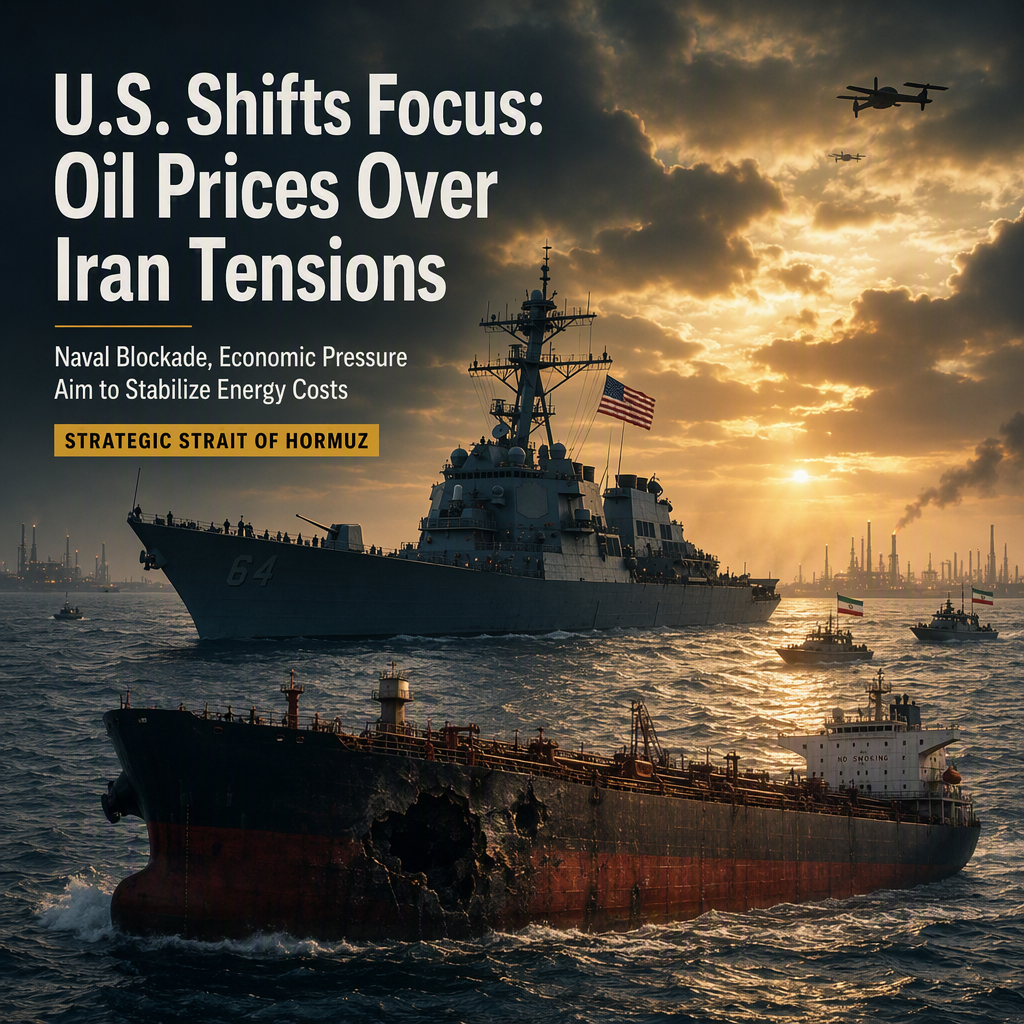
The United States has shifted its primary objective in the ongoing conflict with Iran to keeping oil prices low, according to Vice President JD Vance. Vance stated that maintaining affordable oil and gas for Americans is now 'goal number one,' with preventing Iran from acquiring a nuclear weapon as the secondary priority. These remarks come as the Trump administration signals an indefinite naval blockade and plans to intensify economic pressure on Tehran, moving away from direct military engagement following a series of tit-for-tat attacks that have strained U.S. military resources and domestic support ahead of the Midterm elections [1].
Oil and gas prices experienced a significant spike worldwide after the U.S. and Israel attacked Iran on February 28. While markets have calmed since the initial surge, prices remain considerably higher than pre-conflict levels and saw another increase early Friday in response to the latest U.S. rhetoric. Vance acknowledged that oil prices had decreased from their peak in the early days of the conflict but emphasized the administration's focus on keeping energy costs low for Americans [1].
The conflict has increasingly centered on control of the Strait of Hormuz, a critical waterway that previously handled 20% of global energy supplies. President Trump claimed the U.S. had 'total control' over the strait and described the blockade of Iranian ports as a 'wall of steel.' However, vessel traffic through the strait has dropped sharply from the typical 130-140 ships per peacetime day, with ongoing threats as Iran continues to fire on ships attempting passage. On Thursday, a tanker sustained minor damage from a drone strike while trying to exit the strait, according to the United Kingdom Maritime Trade Operations Center [1].
Iranian military spokesman Ebrahim Zolfaghari asserted that 'no vessel can safely transit the Strait of Hormuz without Iran’s authorization and supervision,' highlighting the ongoing risks and tensions in the region [1].
CONCLUSION
The U.S. administration has made stabilizing and lowering oil prices its top priority in the Iran conflict, shifting focus from military action to economic pressure and a naval blockade. Despite some easing from initial price spikes, energy markets remain volatile, and the situation in the Strait of Hormuz continues to pose significant risks to global supply chains.