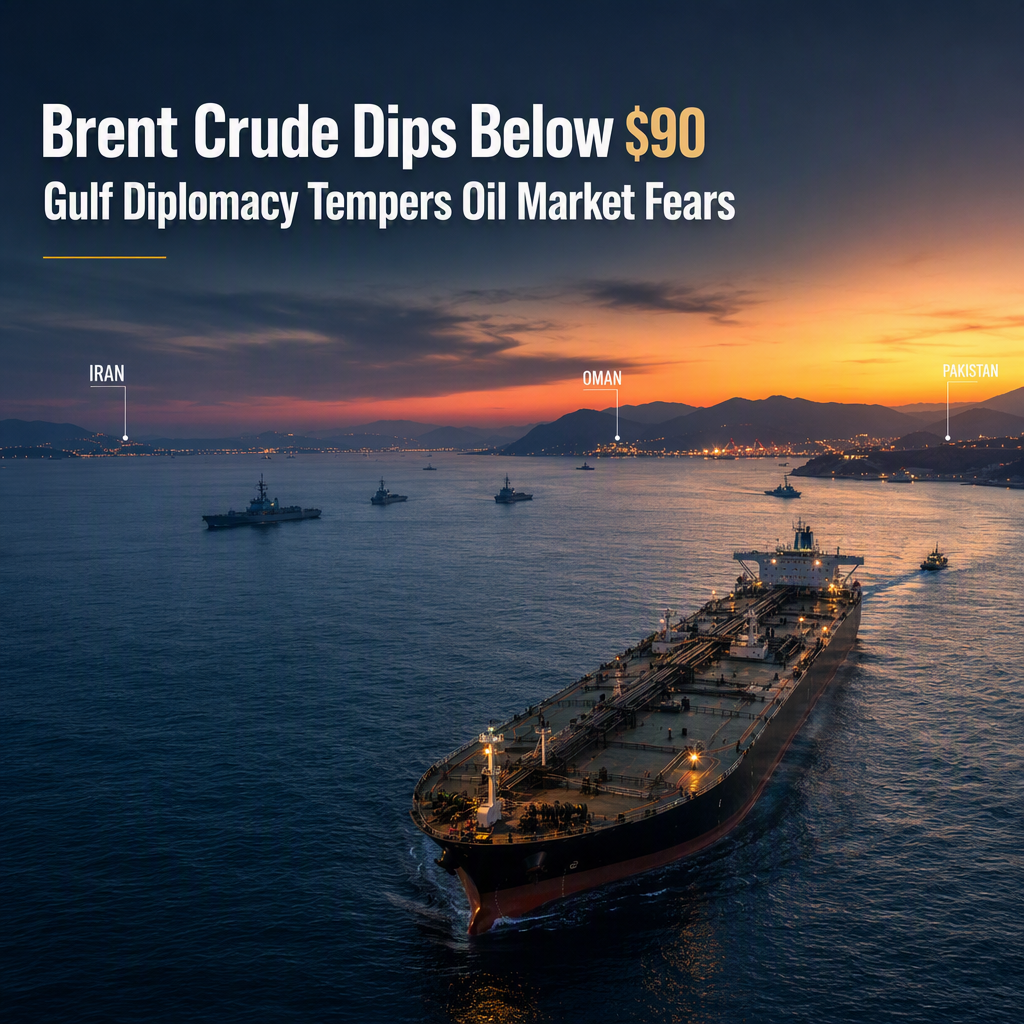
Oil prices experienced renewed downward pressure, with ICE Brent crude settling 3.89% lower and breaking below the $90 per barrel mark, according to ING analysts Warren Patterson and Ewa Manthey [1]. The decline continued into early morning Asia trading, driven by positive signals from diplomatic talks involving Iran, Oman, and Pakistan regarding the Strait of Hormuz and the ongoing Middle East conflict [1]. Despite these talks, ING analysts caution that normalization of oil flows through the Strait of Hormuz is unlikely without the US lifting its blockade on Iranian ports and easing sanctions on Iran [1].
The article highlights discrepancies in reported oil flow volumes through the Strait of Hormuz. While the US claims an average flow of 8-9 million barrels per day (b/d), ship-tracking estimates suggest a lower range of 2 million to 6 million b/d over longer periods [1]. This uncertainty adds to the fragility of oil flows in the region.
On the supply side, overnight API inventory data revealed that US crude oil inventories increased by 4.2 million barrels over the last week. However, the US products market tightened, with gasoline inventories falling by 3.2 million barrels and distillate inventories dropping by 500,000 barrels [1].
Overall, the combination of evolving Gulf diplomacy, uncertain Hormuz flows, and mixed US inventory data has contributed to heightened volatility and a notable retreat in oil prices [1].
CONCLUSION
Brent crude's drop below $90 reflects market optimism over Gulf diplomatic efforts, though analysts warn that significant supply normalization hinges on US policy changes. Discrepancies in oil flow estimates and tightening US product markets add to ongoing uncertainty. The market remains sensitive to both geopolitical developments and inventory data.