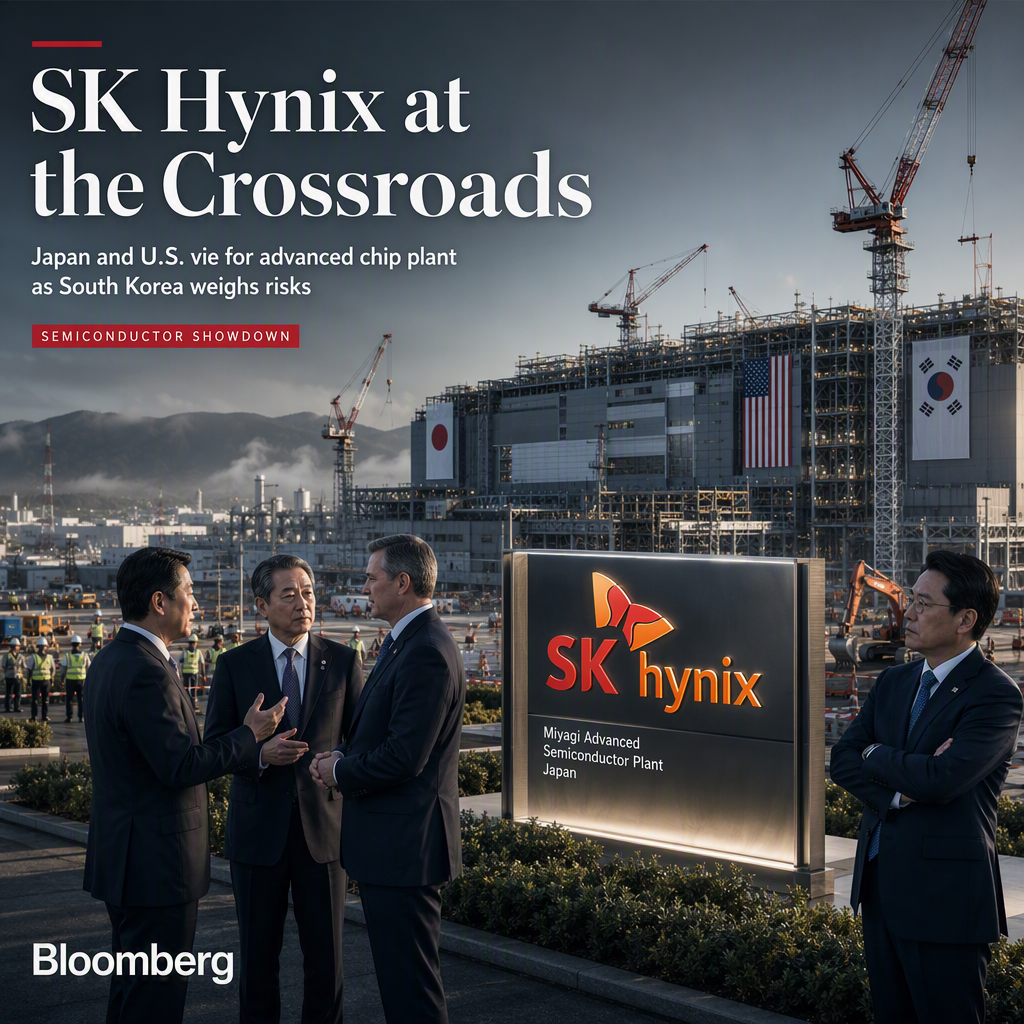
Northeast Japan's Miyagi prefecture is actively seeking to attract South Korea's SK Hynix to build a cutting-edge memory chip plant in the region, reflecting Japan's broader ambitions to secure advanced semiconductor manufacturing and strengthen its position in global supply chains [1]. However, this initiative faces significant challenges, as the South Korean government remains hesitant to approve new foreign facilities due to concerns over potential technology leaks and the safeguarding of sensitive intellectual property [1].
The competition for SK Hynix's investment is not limited to Japan. The United States government has also been lobbying SK Hynix to establish advanced chip production facilities on American soil, aiming to bolster U.S. supply chain resilience in the semiconductor sector [1]. This intensifying rivalry underscores the strategic importance of SK Hynix, which, alongside Samsung, is recognized as one of the world's largest memory chip makers [1].
Despite the incentives offered by Miyagi and the strong interest from both Japan and the U.S., South Korean officials are weighing the risks associated with technology transfer and the potential impact on their domestic semiconductor ecosystem. SK Hynix is considered a strategic player in the global memory chip market, and any decision regarding overseas investment is being scrutinized for its implications on national security and technological sovereignty [1].
The ongoing situation highlights the geopolitical sensitivities and policy hurdles that complicate cross-border semiconductor investments, as governments around the world prioritize securing their own technological leadership and supply chain security in the high-stakes chip industry [1].
CONCLUSION
The efforts by Japan and the U.S. to attract SK Hynix's advanced chip plant are being met with caution by South Korean authorities, who are concerned about technology leaks and the impact on their domestic industry. The outcome of these negotiations will be closely watched, as it could influence the global landscape of semiconductor manufacturing and supply chain security.