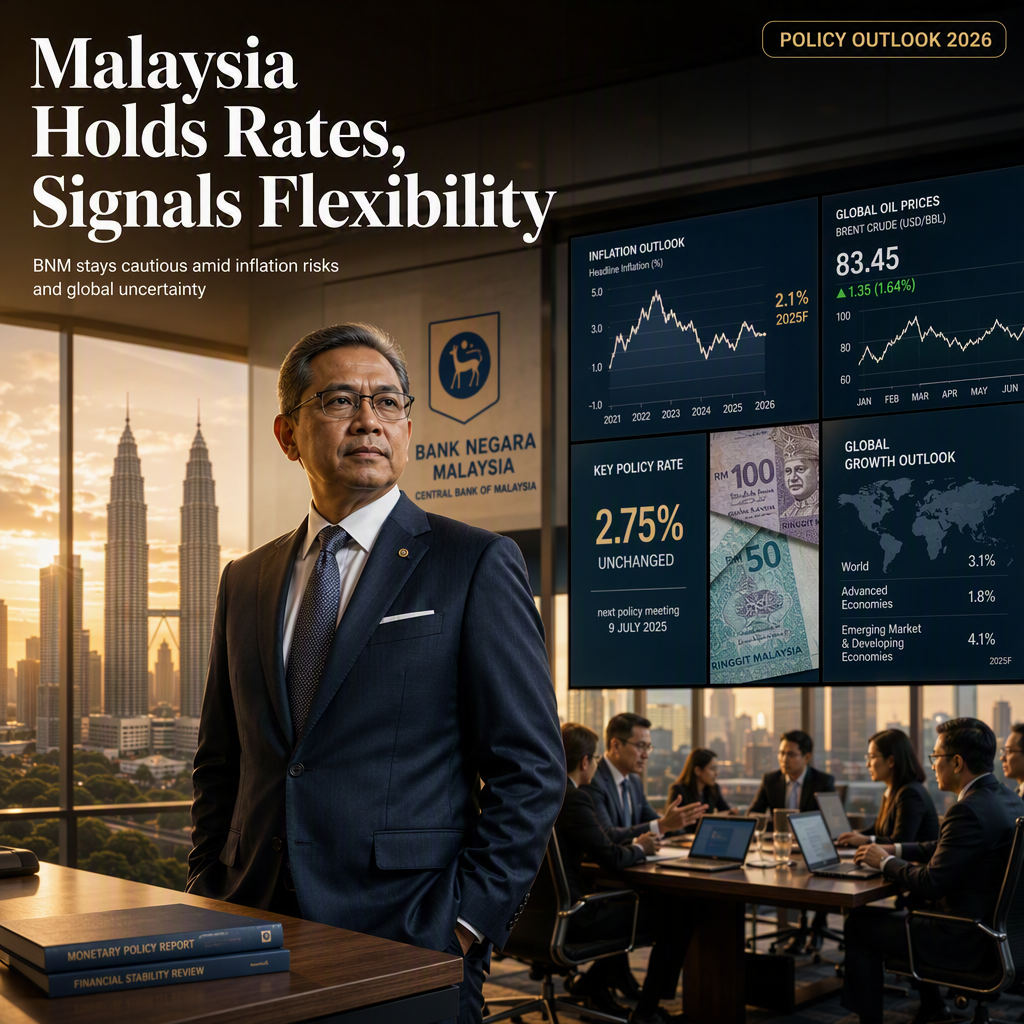
Bank Negara Malaysia (BNM) held its Overnight Policy Rate (OPR) steady at 2.75% on September 3, marking the seventh consecutive pause in its monetary policy decisions [1]. According to DBS Group Research economist Chua Han Teng, BNM dropped language indicating that the current rate is appropriate, suggesting increased flexibility in its policy stance [1]. DBS expects the OPR to remain unchanged through 2026, citing contained inflation and a resilient economy, but notes that risks are tilted towards a possible one-off policy normalisation [1].
BNM's monetary policy statement highlighted two key areas of concern for inflation: the ongoing conflict in the Middle East, which is likely to keep global commodity and energy prices elevated, and the potential for strong economic growth—projected at around 5% in 2026 and resilient into 2027—to drive demand-pull price pressures through rising wage growth [1]. However, the capital-intensive nature of Malaysia's current economic expansion, particularly driven by artificial intelligence-related tailwinds, has so far limited spillovers to domestic inflation [1].
The central bank signaled that it may consider normalising the July 2025 25 basis point insurance OPR cut in future meetings if economic activity and external developments evolve favorably and inflationary pressures increase [1].
CONCLUSION
Bank Negara Malaysia's decision to hold rates at 2.75% while signaling flexibility reflects a cautious approach amid global and domestic inflation risks. The outlook remains stable for 2026, but the possibility of a one-off rate hike is open if inflationary pressures intensify. Market participants should monitor incoming economic data and external developments for potential policy shifts.