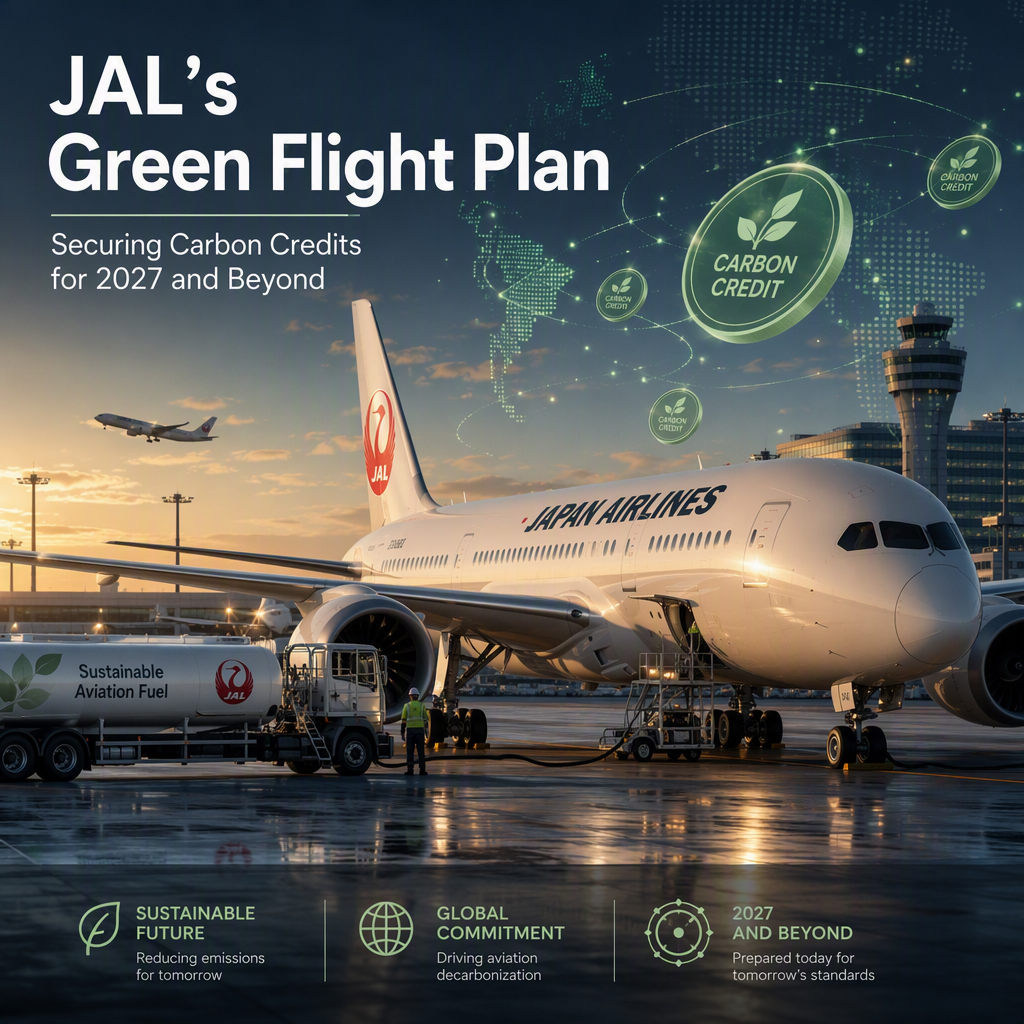
Japan Airlines (JAL) is preparing for stricter international aviation regulations by purchasing future carbon credits directly, a move designed to offset carbon dioxide emissions and mitigate anticipated cost increases [1]. The company is acting ahead of a projected surge in demand and prices for carbon credits, which are expected to rise sharply when new rules governing aviation emissions take effect in 2027 [1]. Airlines, including JAL, face significant challenges in reducing CO2 emissions, as technological improvements in fuel efficiency have yielded only limited results [1]. As a result, securing carbon credits has become a crucial strategy for compliance with international sustainability standards and maintaining operational flexibility in a tightening regulatory environment [1]. JAL's decision to buy credits directly, rather than relying on secondary markets, is intended to avoid price volatility and ensure cost-effective compliance [1].
CONCLUSION
Japan Airlines' proactive purchase of carbon credits positions the company to manage future regulatory costs and compliance risks as international aviation emission standards tighten in 2027. The move reflects broader industry challenges in reducing emissions and signals a medium market impact, with potential implications for credit prices and operational strategies across the sector.