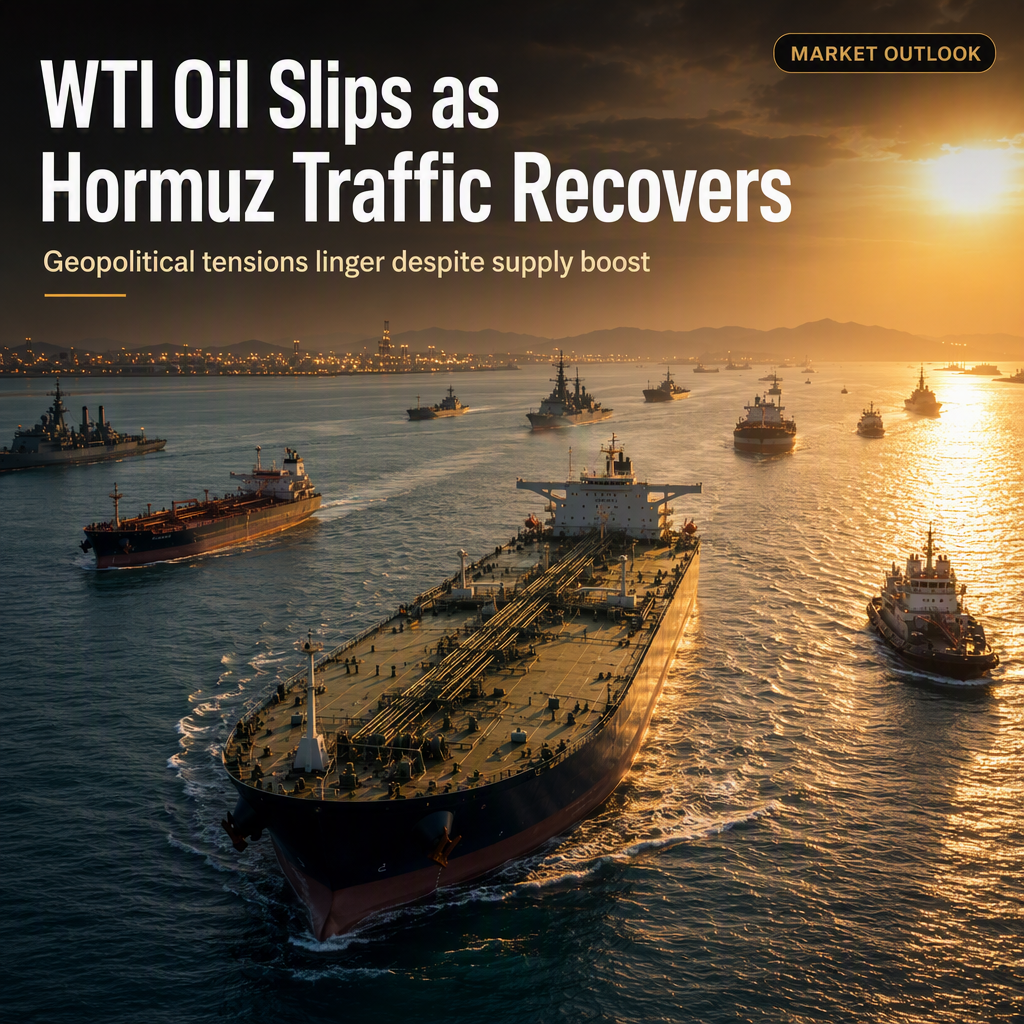
West Texas Intermediate (WTI) oil prices declined for the second consecutive day on Friday, with the benchmark barrel trading just above $80.00, following reports of a moderate recovery in sea traffic through the Strait of Hormuz [1]. Despite this short-term pullback, WTI remains on track to close the month with a gain of more than 15% [1]. According to a note from the Commonwealth Bank of Australia, oil traffic through the Strait of Hormuz has increased to approximately 30%-35% of pre-war levels. The bank further noted that if traffic rises to 50%-60% of pre-conflict volumes, it could be sufficient to reestablish oversupply conditions in the global oil market [1].
In addition, Saudi Arabia announced the formation of a coalition of 14 countries aimed at securing key maritime routes from potential attacks by Iran or its allies, which has exerted further downward pressure on crude prices [1]. However, ongoing geopolitical tensions in the Gulf continue to provide support for oil prices. Recent developments include Tehran's attack on US bases in Kuwait and the interception of missiles launched from Iran by Jordanian air defenses [1].
On the diplomatic front, US President Donald Trump claimed to have reached a deal for Hamas to disarm and for Israel to withdraw from Gaza, though significant obstacles remain before such an agreement can be implemented [1].
Analysts at TD Securities maintain a cautious outlook, emphasizing that ongoing disruptions are contributing to reduced oil flows and a tightening global energy market, which they view as supportive of further upside in crude oil prices. The bank's strategists argue that tightening physical balances are increasingly underpinning the bullish case for oil, even as market positioning remains uncertain [1].
CONCLUSION
WTI oil prices are experiencing short-term declines due to increased traffic through the Strait of Hormuz and efforts to secure maritime routes, but remain up significantly for the month. Persistent geopolitical tensions and tightening supply conditions continue to support the bullish outlook for crude oil, according to market analysts.