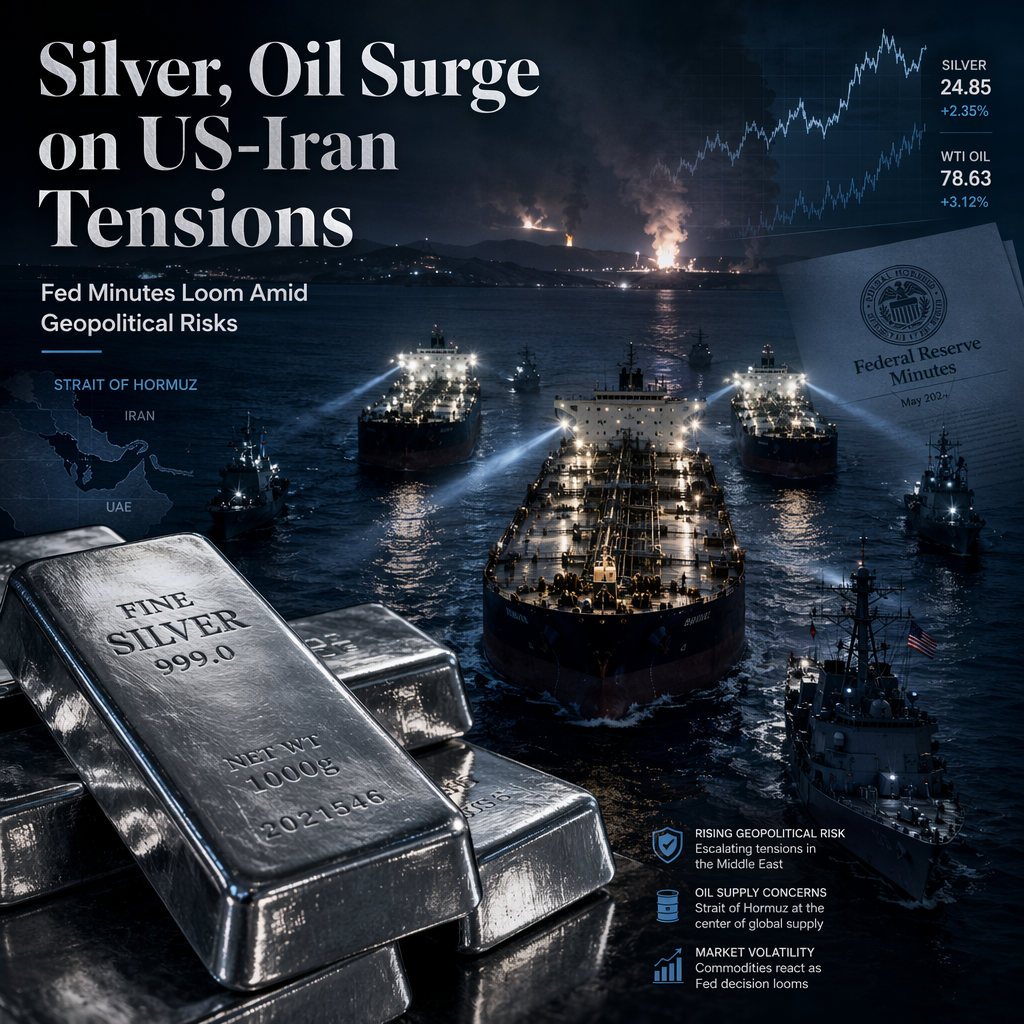
Both silver and crude oil markets experienced heightened volatility following renewed US-Iran tensions and ahead of the release of the US Federal Reserve's June FOMC meeting minutes. Silver (XAG/USD) climbed above $60.00, reaching near $60.35 and snapping a two-day losing streak during the early European session on Wednesday, supported by a softer US Dollar and geopolitical concerns stemming from US military strikes against Iran after attacks on three oil tankers in the Strait of Hormuz. This escalation threatens the fragile ceasefire and has raised fears of energy-driven inflation, potentially reinforcing the Fed's 'higher for longer' policy stance on interest rates [1].
West Texas Intermediate (WTI) crude oil also held above $72.00, near a two-week high, as traders priced in geopolitical risk premiums due to the same US-Iran hostilities. The Iranian Islamic Revolutionary Guards Corps (IRGC) claimed to have targeted 85 US military sites in Bahrain and Kuwait and reported downing a US MQ9 drone, further escalating tensions. The US also withdrew a key concession allowing Iran to sell oil internationally, intensifying concerns about supply disruptions in the Strait of Hormuz. However, gains in oil prices were limited by OPEC+'s decision to increase production targets starting in August and Saudi Arabia's unprecedented $11 per barrel cut in its August official selling price to Asia [2].
Market participants are closely watching the upcoming release of the June FOMC meeting minutes, which are expected to influence US Dollar demand and, consequently, USD-denominated commodities like silver and oil. Traders are currently pricing in over an 80% probability that the Fed will deliver at least one 25 basis points rate hike by the end of this year, according to the CME Group's FedWatch tool [1]. However, the minutes reflect a period before the weaker-than-expected June Nonfarm Payrolls report, suggesting any hawkish tone may be outdated relative to current market conditions [1].
Both articles highlight that ongoing developments in the Middle East and the Fed's policy outlook are likely to continue driving volatility in commodity markets in the near term [1][2].
CONCLUSION
Renewed US-Iran tensions have driven silver and oil prices higher, with both markets reacting to increased geopolitical risks and anticipation of the Fed's policy direction. While supply concerns and inflation fears support prices, factors such as OPEC+ production increases and Saudi price cuts may limit further gains. Market volatility is expected to persist as traders monitor both Middle East developments and the Fed's next moves.