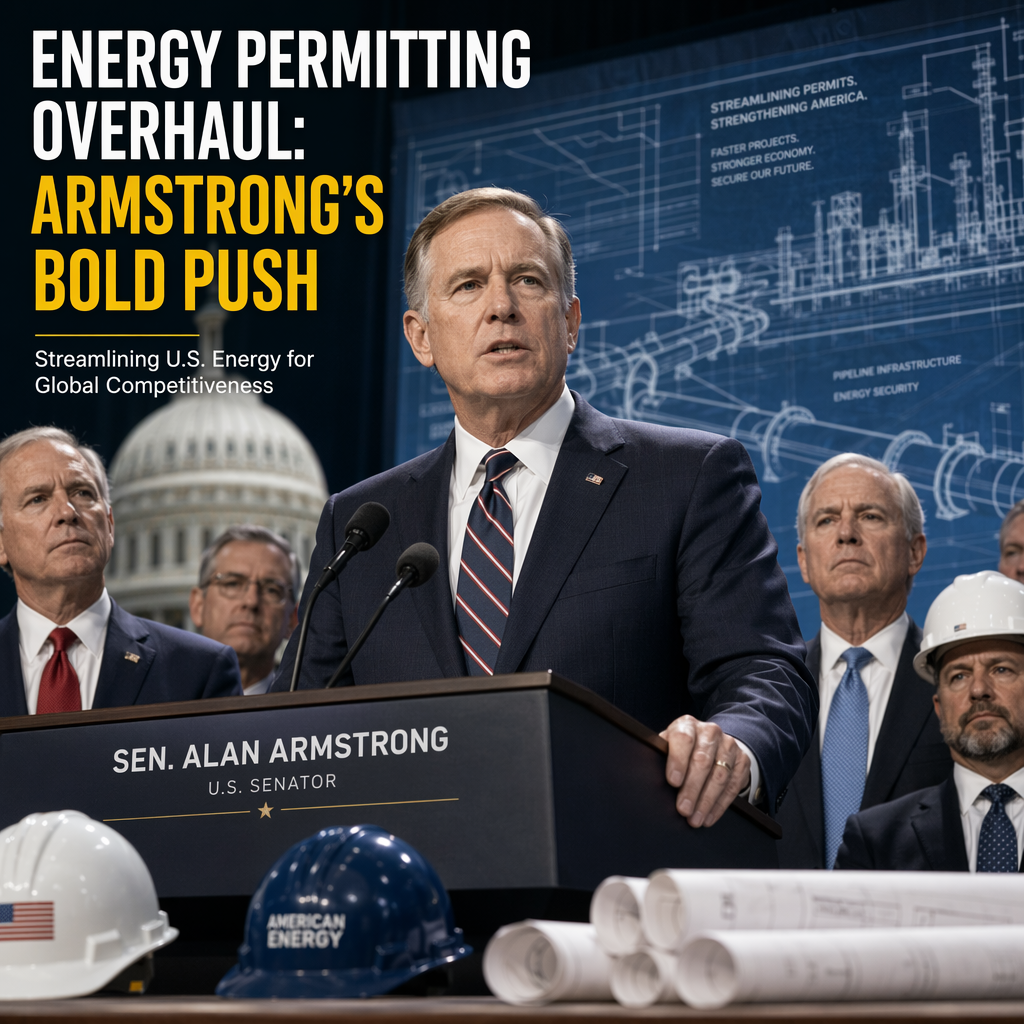
Senator Alan Armstrong, R-Okla., recently appointed to the Senate to replace Markwayne Mullin, has made energy permitting reform his top legislative priority, aiming to accelerate U.S. energy production and infrastructure development [1]. Armstrong, who previously served as CEO of Williams Companies, has introduced the American Energy and Mineral Infrastructure Act of 2026, a comprehensive package of bills designed to streamline the permitting process for pipeline developers, LNG export companies, and natural gas producers [1].
The proposed legislation seeks to reduce bureaucratic delays and legal obstacles that have historically hindered new energy infrastructure projects in the United States. Key provisions include designating the Federal Energy Regulatory Agency (FERC) as the lead authority for approving interstate pipelines and LNG terminals, thereby preventing individual states from blocking federally approved projects [1]. The package also mandates 'evidence-based' environmental reviews and expands the use of Nationwide Permits under the Environmental Protection Agency (EPA) to standardize and expedite approvals for certain projects, including those affecting wetlands and waterways [1].
Armstrong's reform efforts have garnered support from Republican Senators Cynthia Lummis, Rick Scott, and Katie Britt, as well as nearly two dozen oil and gas companies [1]. Armstrong emphasized that while there is no immediate solution to lower energy prices, comprehensive permitting reform is essential for maintaining U.S. leadership in global energy markets and reducing reliance on adversarial foreign sources [1]. He warned that continued inaction would result in higher utility bills for American consumers and diminished economic competitiveness, particularly against China [1].
Market implications discussed in the article suggest that the proposed reforms could lead to increased energy infrastructure investment and potentially lower energy costs over time, though no specific market reactions or analyst opinions were provided [1].
CONCLUSION
Sen. Armstrong's permitting reform initiative represents a significant legislative push to streamline U.S. energy infrastructure development. With bipartisan interest in the issue and backing from industry stakeholders, the proposal could have meaningful implications for American energy competitiveness and consumer costs if enacted.