
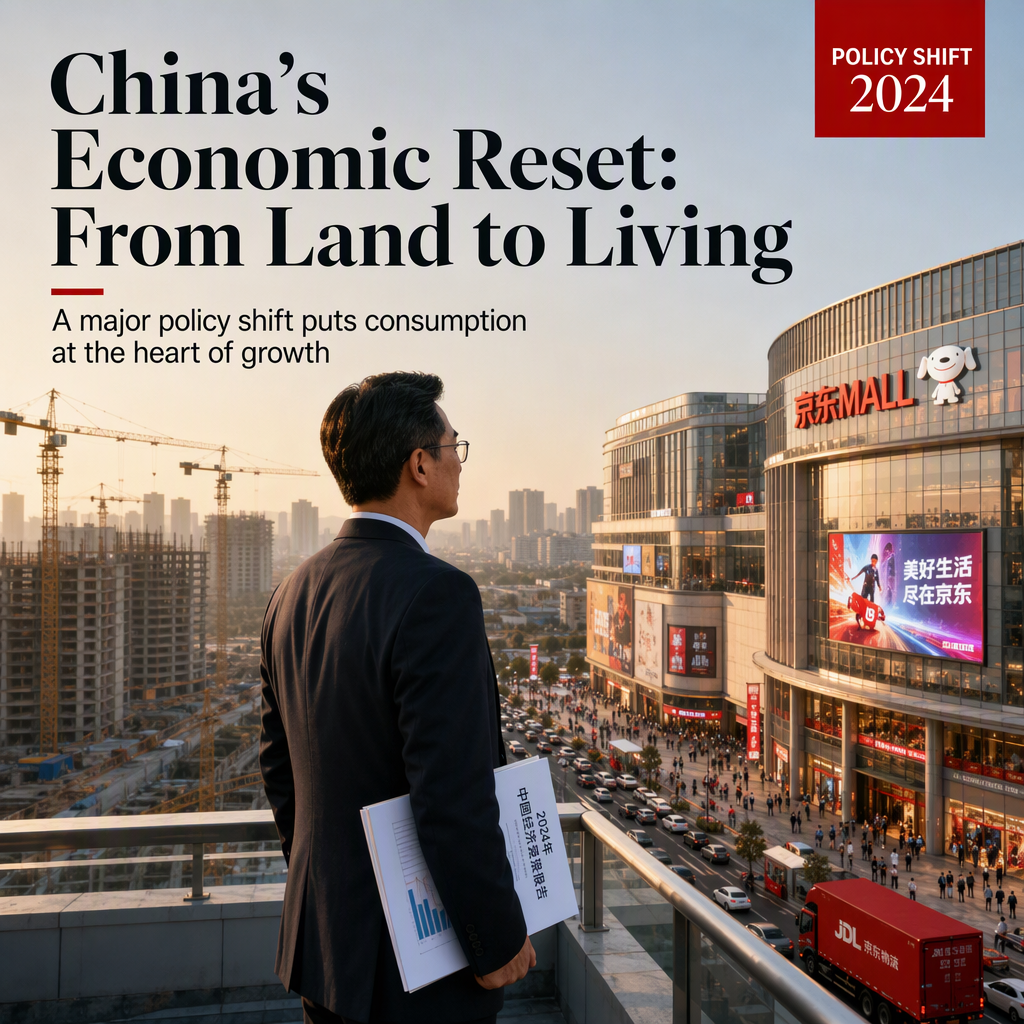
China is undergoing a significant economic policy shift, moving away from its long-standing reliance on land sales and investment-driven expansion at the local government level. For decades, city halls across China have depended on revenues from land sales to developers, which fueled construction booms and supported public finances. However, Beijing has recently signaled a fundamental change, aiming to replace land-driven growth with a model focused on revenue tied to domestic consumption [1].
The central government's new approach encourages local governments to boost domestic consumption as the primary driver of economic growth. This includes fostering local retail, services, and consumer activity, as exemplified by the recent opening of a JD.com mall for trial operation in Suzhou on October 1. By shifting local government revenue sources to consumption-based taxes and business activity, Beijing intends to incentivize city officials to prioritize sustainable economic development and move away from property speculation, which has characterized the past two decades [1].
This transition is expected to have profound implications for local government budgets, urban development, and the broader Chinese economy. However, the shift is not without challenges. Local governments, accustomed to easy income from land sales, may struggle to adapt to a slower, consumption-based model. There are concerns about potential shortfalls in public budgets and the ability of cities to maintain services and infrastructure investment during the transition period [1].
Despite these challenges, the economic reset is seen as a significant step in China's ongoing efforts to rebalance its economy and reduce systemic risks associated with property bubbles and local government debt [1].
CONCLUSION
China's move to a consumption-driven growth model marks a major policy shift with medium market impact. While the transition aims to create more sustainable economic incentives and reduce systemic risks, it presents challenges for local government finances and urban development in the near term.