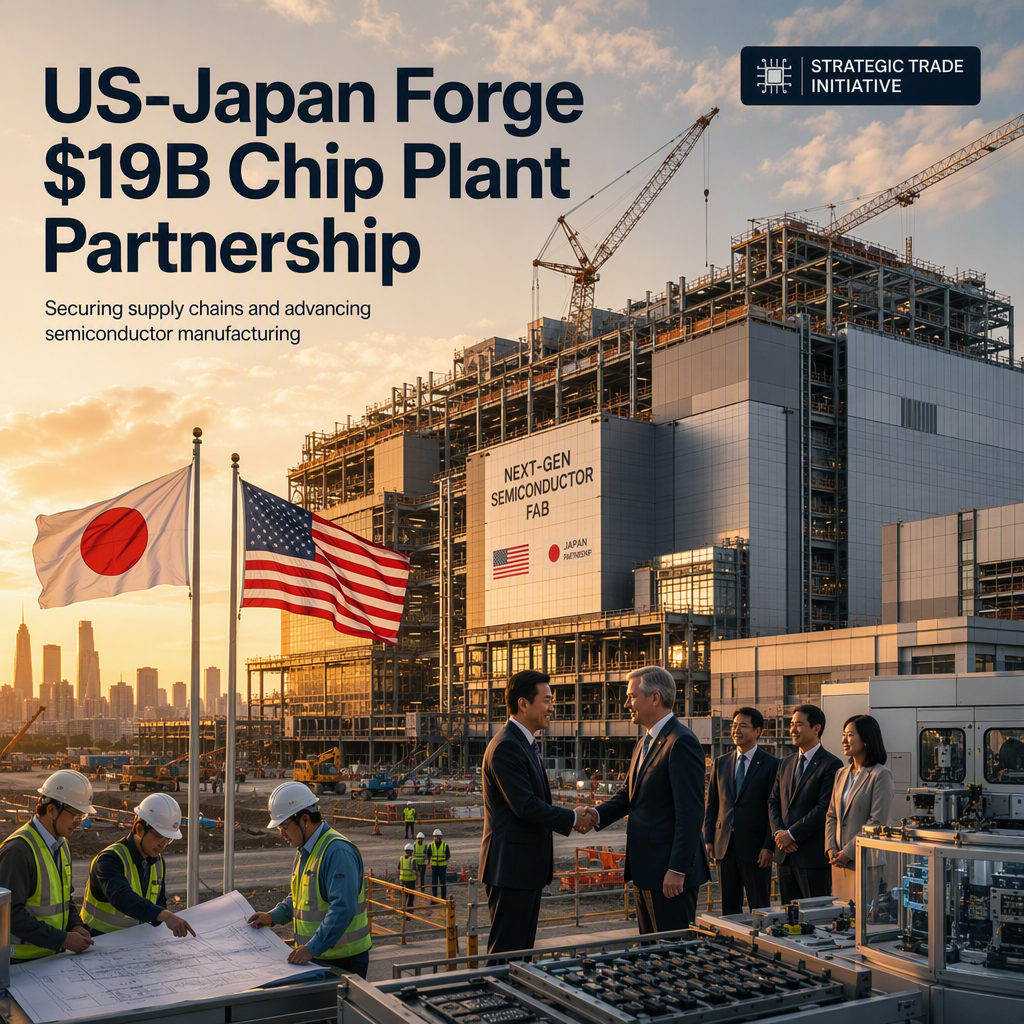
Japan and the United States are engaged in negotiations to construct a semiconductor manufacturing plant in the U.S., as part of Japan's $550 billion investment projects under the bilateral tariff agreement, according to officials from both governments familiar with the discussions [1]. The proposed semiconductor plant could have a total value of up to $19 billion, with GlobalFoundries expected to operate the facility [1].
This initiative is a significant element of Japan's broader strategy to expand its presence in the U.S. market and to reinforce economic ties between the two countries, particularly in the context of ongoing trade tensions [1]. The investment is designed to address U.S. concerns regarding supply chain security and to bolster domestic chip manufacturing capabilities [1].
Government officials involved in the negotiations have described the semiconductor plant as a strategic asset, intended to secure advanced chip production and reduce dependence on third-party suppliers amid ongoing global supply chain disruptions [1].
No specific market reactions, analyst opinions, or forward-looking statements beyond the intentions of both governments were mentioned in the article [1].
CONCLUSION
The negotiations between Japan and the U.S. for a $19 billion semiconductor plant underscore both nations' commitment to strengthening supply chain security and advancing domestic chip production. This initiative is poised to have a significant impact on the semiconductor industry and bilateral economic relations. Market participants are likely to view this development as a positive step toward addressing supply chain vulnerabilities.