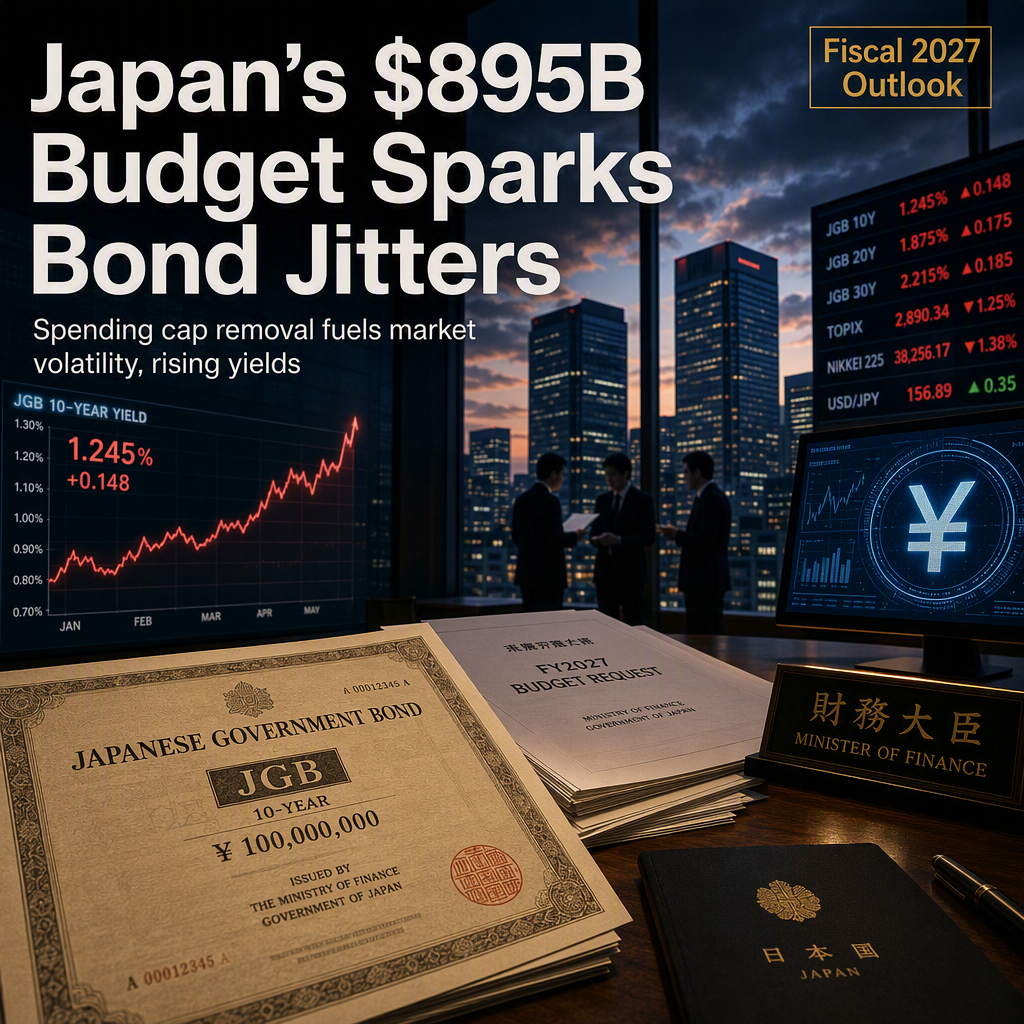
Japan's government ministries have submitted record budget requests totaling approximately 143 trillion yen ($895 billion) for fiscal 2027, marking the largest amount on record [3]. This surge is driven by Prime Minister Sanae Takaichi's administration scrapping caps on crisis spending and growth investment, with the Ministry of Finance requesting a record $229 billion for bond service expenses [3]. The removal of spending caps has shifted fiscal discipline checks to the bond market and pressure from U.S. investors, raising concerns about increased Japanese Government Bond (JGB) supply and upward pressure on yields [2][3].
Ministries are seeking new tax incentives as part of the fiscal 2027 tax code changes, targeting both retail investors and companies. Proposed measures include tax benefits for government bond purchases and breaks for wage hikes and investments in growth sectors [1]. Despite these efforts, attempts to eliminate ineffective tax breaks have made little progress, and Japan faces a persistent $63 billion fiscal shortfall linked to recent policy measures such as food tax cuts and defense buildup [1][2][3].
Market reactions have been swift, with JGB yields spiking following the announcement of the budget policy. The 10-year JGB yield recently broke above 0.8%, with resistance seen near the 1.0% level and support at 0.7% [2]. The yen has weakened, and volatility in JGB markets has increased, reflecting investor caution about the sustainability of Japan's fiscal trajectory [3]. Analysts warn that aggressive spending without caps could destabilize the bond market and increase funding costs, especially if global investors remain wary [2][3].
Forward-looking statements from market strategists advise monitoring U.S. Treasury yields for spillover effects, as increased pressure from U.S. investors could drive Japanese yields even higher [2]. Market participants and analysts are watching to see whether the proposed tax incentives will generate the intended effects, particularly in supporting government bond demand and spurring wage growth [1]. However, without substantial reform to phase out inefficient incentives or address underlying budget shortfalls, Japan may struggle to finance its ambitious spending plans [1][2][3].
CONCLUSION
Japan's record-high fiscal 2027 budget requests and removal of spending caps have triggered volatility in the bond market, with yields rising and the yen weakening. While ministries propose new tax incentives to support bond demand and wage growth, analysts remain cautious about the sustainability of Japan's fiscal policy. The market will closely monitor further policy announcements and investor sentiment, especially from the U.S., as key drivers of JGB yield movements.