
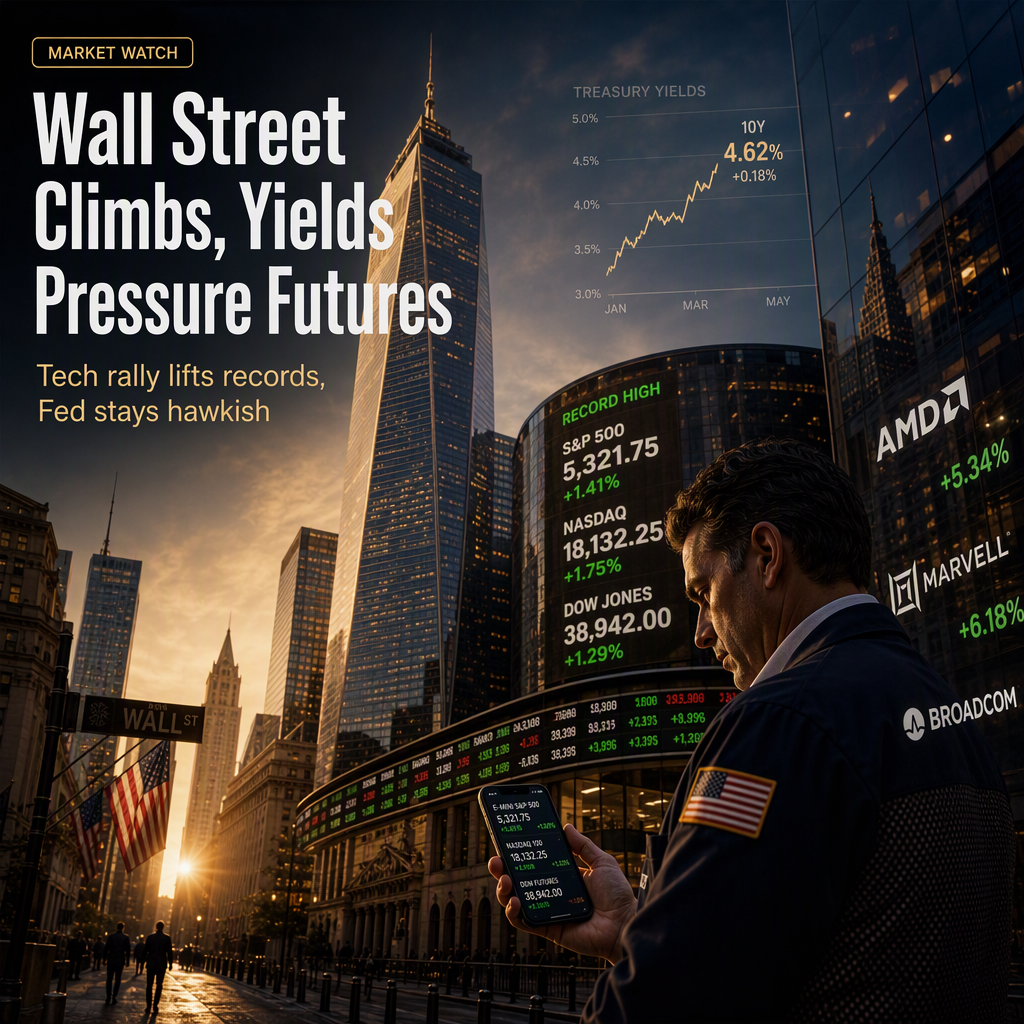
Dow Jones futures declined by 0.14% to trade near 51,750 during European hours on Wednesday, while Nasdaq 100 futures fell by 0.18% to around 31,430 and S&P 500 futures remained steady at approximately 7,870 [1]. The subdued performance in US stock futures was attributed to a rebound in US Treasury yields, with the 10-year yield rising above 5.30% and the 30-year yield staying near 5.69% [1]. This increase in yields was driven by persistent inflation concerns, expanding fiscal deficits, and a significant rise in AI-related debt issuance [1].
Crude oil prices advanced amid escalating geopolitical conflict in the Middle East, further contributing to inflationary pressures and maintaining speculation about potential rate hikes [1]. However, recent softer US labor market data has tempered expectations for aggressive monetary tightening by the Federal Reserve, with the CME FedWatch tool indicating only about a 22% probability of an interest rate increase at the Fed's upcoming October meeting [1].
The current subdued futures activity follows a bullish session on Wall Street, where major equity averages surged to fresh record highs on Tuesday. The S&P 500 gained 0.58%, the Nasdaq Composite rose 0.45%, and the Dow Jones Industrial Average added 0.49%, all closing at all-time highs. Semiconductor stocks, including AMD, Marvell Technology, and Broadcom, led the market higher [1].
Federal Reserve official Schmid delivered a speech with a slightly more hawkish tone, scoring 8/10 on the FXS Speechtracker, above the 7.5/10 historical average. Schmid emphasized that the labor force "remains in a good place," but noted that "inflation is frustrating, must be fixed" and that the Fed "still has a way to go in beating inflation." Schmid highlighted AI as "one of the largest drivers of inflation" and stressed the importance of the Fed's credibility, suggesting that further policy tightening or a prolonged restrictive stance may be necessary [1]. The FXS FedSentiment Index rose by 0.34 points to 137.91, well above the neutral 100 threshold, indicating a continued hawkish policy bias [1].
CONCLUSION
US stock futures are under pressure from rising Treasury yields and persistent inflation concerns, despite Wall Street's recent record highs led by technology stocks. The Federal Reserve maintains a hawkish stance, with officials emphasizing ongoing inflation risks and the potential need for further policy tightening. Market participants are currently assigning a low probability to an imminent rate hike, but the elevated yield environment continues to weigh on sentiment.