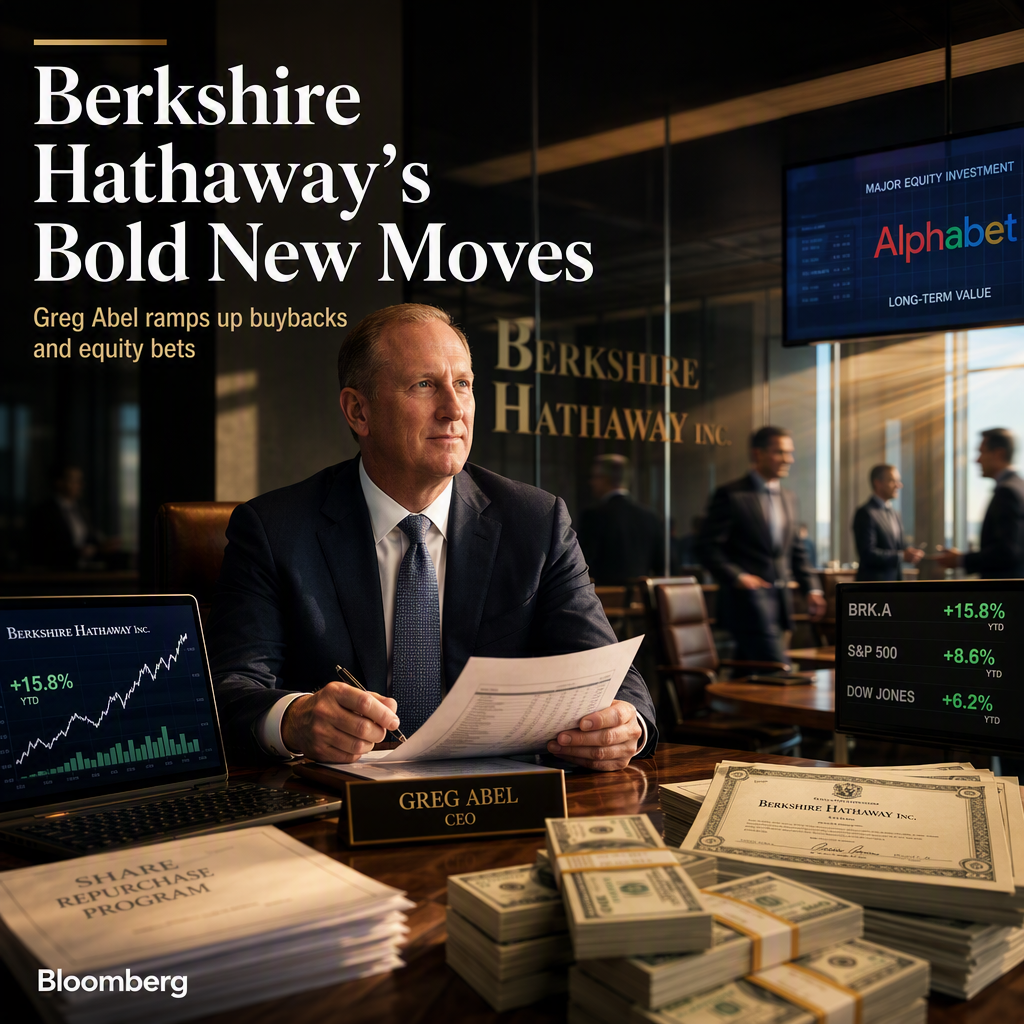
In his second quarter as CEO of Berkshire Hathaway, Greg Abel significantly increased the company's spending, resulting in a notable reduction in Berkshire's cash reserves for the first time since early 2022. As of June 30, Berkshire reported $365.5 billion in cash, down 8.0% from the record $397.4 billion on March 31. Adjusted for BNSF's cash and pending Treasury bill payments, the cash position was $359.2 billion, a 3.8% decline [1].
A substantial portion of this spending was allocated to share buybacks, with Berkshire repurchasing $4.5 billion of its own shares in the second quarter. While this figure was below analyst estimates—Barron's estimated $5 billion to $11 billion and UBS forecasted $8.5 billion—it was a significant increase from the $235 million spent in the first quarter, marking the first buybacks since 2024. Barron's further estimates that Berkshire spent an additional $3.4 billion on buybacks in July, likely before a late-month stock rally [1].
Beyond buybacks, Berkshire shifted its investment strategy by purchasing more equities than it sold, resulting in a net increase of $20 billion in equity holdings. This includes a $10 billion investment in Alphabet (Google's parent company) announced in June. This marks a reversal from the previous 14 quarters, during which Berkshire had been a net seller of equities. Details on the specific portfolio changes are expected with the upcoming Q2 portfolio snapshot [1].
Berkshire also reported strong operating earnings for the second quarter, with overall operating earnings rising 16% to $12.98 billion. Notable contributors included Berkshire Hathaway Energy (up 27%), BNSF railroad (up 6%), and manufacturing, service, and retail segments (up 24% to nearly $4.5 billion). However, insurance operations underperformed, with underwriting earnings down 13%, insurance investment income down 9%, and GEICO's underwriting profits falling 45%. Despite these challenges, analysts such as CFRA Research's Cathy Seifert and Gabelli Funds' Macrae Sykes expressed confidence in Abel's leadership and the company's capital allocation strategy [1].
CONCLUSION
Berkshire Hathaway's increased spending on share buybacks and new equity investments under Greg Abel signals a more assertive capital deployment strategy. Strong operating earnings and positive analyst commentary suggest investor confidence in the company's direction, despite some weakness in insurance results. The market is likely to view these moves as a bullish shift for Berkshire Hathaway.