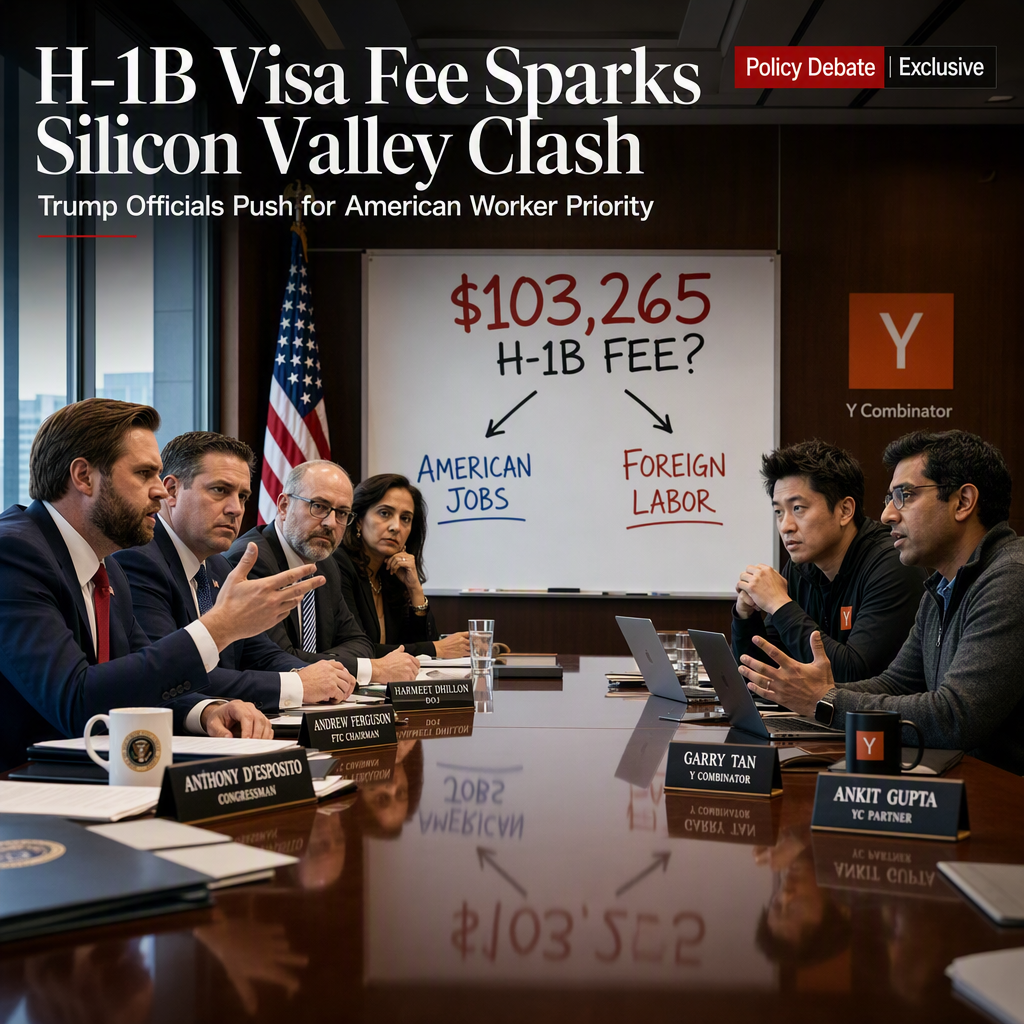
The Trump administration has proposed a new $103,265 fee for many new H-1B visa petitions, aiming to incentivize American corporations to hire and train American workers instead of relying on foreign labor. Vice President JD Vance has publicly supported this measure, stating, 'If an American corporation needs workers, it should hire and train Americans.' The H-1B visa program, which allows U.S. companies to hire foreign workers for specialty occupations, is widely used by the tech industry but has faced criticism from conservatives who argue it is abused to bring in cheap labor and replace American workers, particularly from India [1].
The proposal sparked controversy after Ankit Gupta, a general partner at Y Combinator, mocked Vance’s call to prioritize hiring Americans, referring to it as 'DEI' in purported screenshots. Gupta’s comments triggered backlash from several Trump administration officials, including Labor Department Inspector General Anthony D’Esposito, who emphasized the importance of prioritizing American workers, and FTC Chairman Andrew Ferguson, who criticized wealthy investors for attacking American workers and questioned their commitment to the welfare of U.S. citizens [1].
Y Combinator President and CEO Garry Tan responded to the criticism by affirming that 'YC supports hiring and funding Americans.' Assistant Attorney General for Civil Rights Harmeet Dhillon also weighed in, highlighting alleged abuses of the H-1B program and other foreign-worker visa categories, such as J-1 and OPT, by American tech companies. Dhillon argued that these practices undermine employment laws designed to ensure a level playing field for American workers [1].
The debate has reignited broader discussions about Silicon Valley hiring practices, the impact of foreign-worker visa programs on entry-level American tech workers, and the potential consequences of the proposed fee increase. While the market implications were not explicitly discussed, the controversy suggests heightened scrutiny of tech industry labor practices and possible shifts in hiring strategies if the fee is implemented [1].
CONCLUSION
The Trump administration’s proposed $103,265 H-1B visa fee has sparked a heated debate between tech leaders and government officials over hiring practices and the prioritization of American workers. While the tech industry relies heavily on foreign labor, the proposed changes could prompt companies to reconsider their hiring strategies. The controversy underscores ongoing tensions surrounding immigration policy and labor market dynamics in the U.S. tech sector.