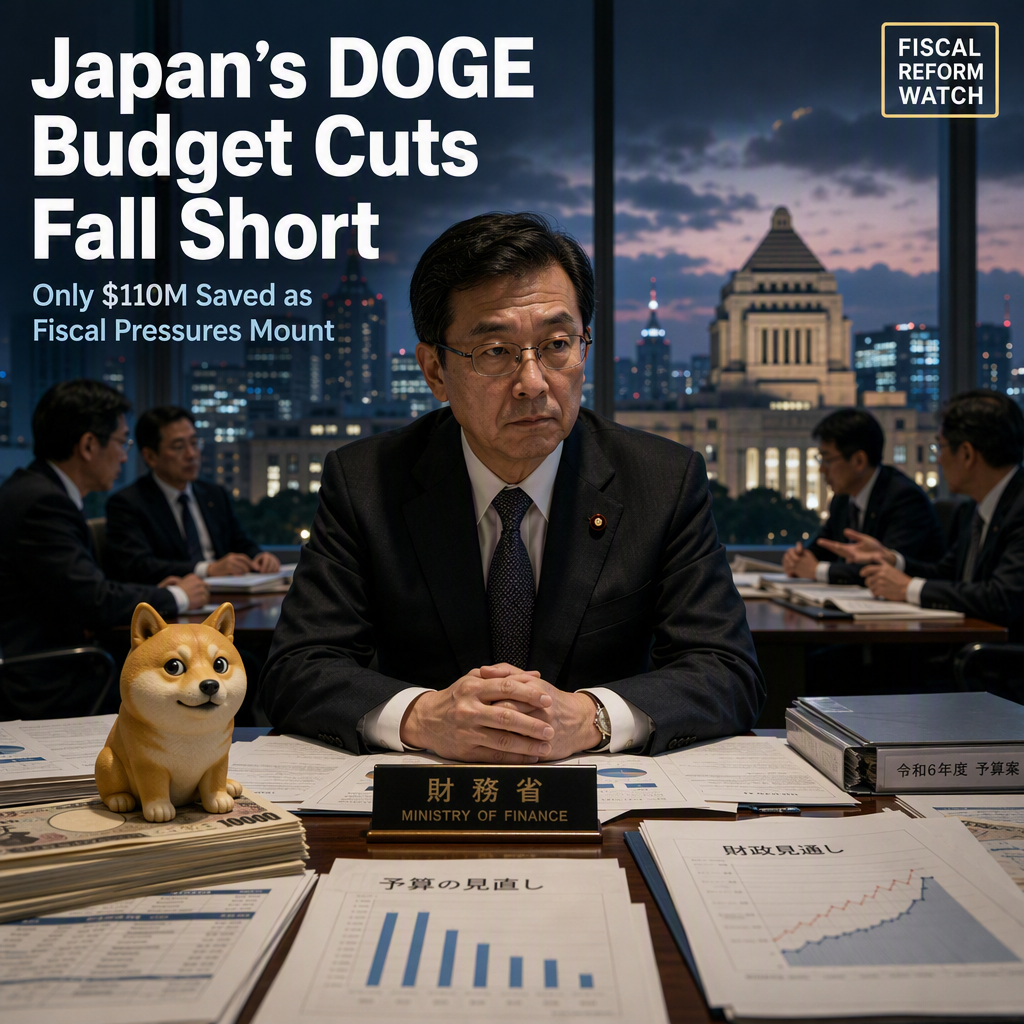
Japan's government launched a cost-cutting initiative modeled after the U.S. Department of Government Efficiency (DOGE), aiming to identify and eliminate areas of excessive government spending. As of September 15, 2026, the effort has resulted in proposed budget cuts totaling just 17 billion yen ($110 million), a figure described as meager compared to expectations and Japan's annual national budget [1]. The Finance Ministry is now under pressure to find additional programs for elimination, as the current proposals from ministries and agencies have been limited in scope [1].
Prime Minister Sanae Takaichi and ruling party leaders have called for more ambitious cost reductions, but resistance from various ministries has slowed the process, highlighting the challenges of implementing meaningful budget reforms within Japan's bureaucratic landscape [1]. Analysts cited in the article note that deeper cuts will be necessary to address Japan's mounting fiscal pressures, and the review of special tax measures and subsidies remains ongoing, with further announcements expected in the coming months [1].
While the article does not provide direct trading advice or explicit market sentiment, it suggests that the limited progress on budget cuts may impact Japan's fiscal policy outlook. This development could be monitored by investors concerned about government spending and debt levels [1].
CONCLUSION
Japan's DOGE-inspired cost-cutting initiative has so far produced only modest savings, underscoring the challenges of achieving significant budget reform. The ongoing review and calls for deeper cuts suggest continued fiscal scrutiny, which may influence investor perceptions of Japan's government spending and debt management. Further announcements are expected, and the market will likely watch for signs of more substantial fiscal tightening.