
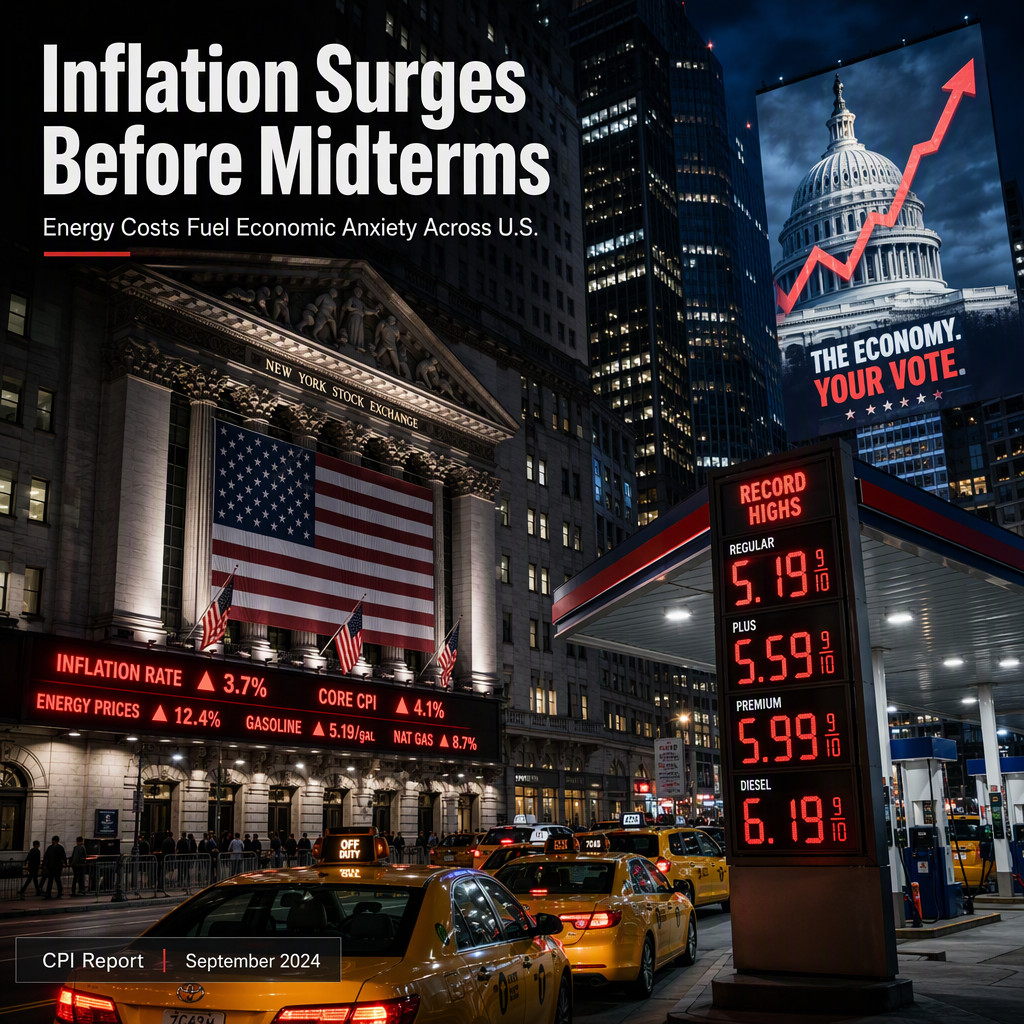
The Bureau of Labor Statistics is set to release the September consumer price index (CPI) report, which is anticipated to show a significant acceleration in inflation ahead of the midterm elections. Economists expect the annual inflation rate to rise to either 3.7% [1] or 3.6% [2], up from previous readings of 3.4% [1]. The monthly CPI is forecast to increase by 0.6% [1][2], marking one of the largest jumps in years [1]. Core CPI, which excludes volatile food and energy prices, is projected to rise 0.2% month-over-month and 2.5% year-over-year [2].
Energy costs are highlighted as a primary driver of the inflation surge. Since the start of the Iran war, diesel prices have increased by more than 75% and regular gasoline by over 45% [1]. Jet fuel prices have soared 90% compared to the previous year [1]. Brent crude oil prices climbed more than 14% in September, with a third-quarter advance of about 42%, trading around $105 per barrel [2]. Economists, including Joe Brusuelas of RSM, warn of 'real upside risk' to the September CPI, noting that models often underestimate inflation during such periods [2].
Other sectors contributing to higher core inflation include airfare, new and used autos, auto insurance, and Apple's latest iPhone [1]. Despite wage growth lagging behind inflation, consumer spending has remained steady [1].
The Federal Reserve, after its first rate hike in three years last month, signaled the likelihood of further increases, with market participants expecting the next hike at the December policy meeting [2]. Robert Sockin of PGIM noted that persistent oil prices could make it harder for the Fed to dismiss the energy price surge as temporary, potentially necessitating additional rate hikes [2].
The inflation report is the final major economic data release before the November midterm elections, which will determine whether Republicans retain control of Congress [1][2]. Economic confidence has declined across political affiliations this year, with sharper drops among Republican and independent voters, according to University of Michigan consumer sentiment data [2].
CONCLUSION
Both sources indicate that September's inflation report is expected to show a notable acceleration in price increases, driven largely by surging energy costs. The data is likely to influence Federal Reserve policy and could have significant political implications ahead of the midterm elections. Market sentiment is negative due to persistent inflationary pressures and the prospect of further interest rate hikes.