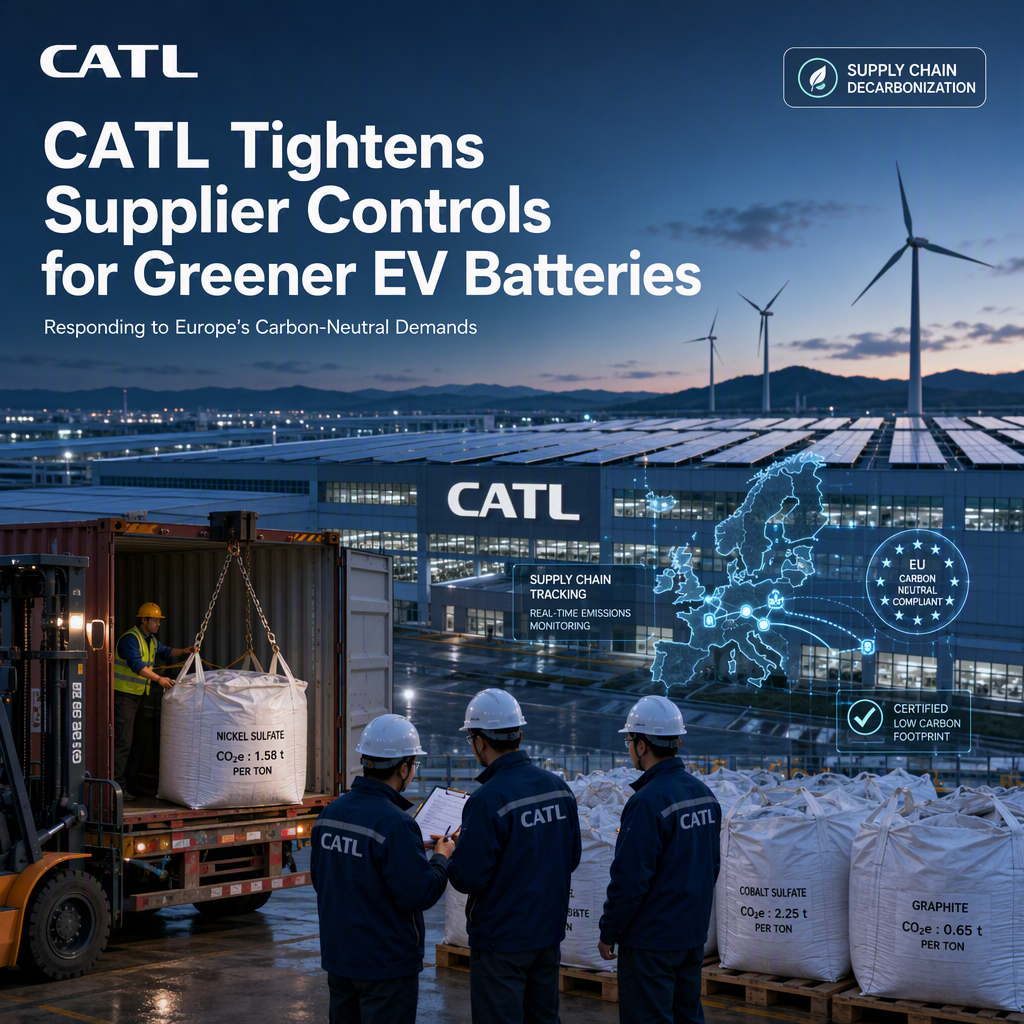
Chinese electric vehicle battery manufacturer CATL is intensifying its scrutiny of suppliers as part of a broader initiative to decarbonize its supply chain, responding to mounting regulatory pressure from European authorities regarding its operations in the region [1]. CATL currently commands 40% of the global market for EV batteries by installed capacity, underscoring its significant influence within the industry [1]. The company’s actions are driven by stricter carbon neutrality requirements and supply chain management standards imposed by European governments and the EU, which are critical for maintaining access to the European market and sustaining CATL’s dominant market share [1].
CATL’s strategy involves setting higher standards for raw materials procurement, production processes, and logistics, with suppliers now required to demonstrate reduced carbon footprints and enhanced transparency [1]. This move is part of a wider regulatory-driven decarbonization trend affecting the global electric vehicle and battery sectors [1]. Although the article does not provide specific financial data or technical analysis, it emphasizes the market pressures and compliance risks faced by industry leaders like CATL [1]. The company’s approach may prompt other battery manufacturers to adjust their supply chain strategies and cost structures to remain competitive, particularly in regulated markets such as Europe [1].
No forward-looking statements or analyst opinions were included in the article [1].
CONCLUSION
CATL’s increased supplier scrutiny reflects its response to heightened European regulatory demands for carbon-neutral EV batteries. While financial details are not disclosed, the company’s actions may reshape supply chain strategies across the industry, especially for those seeking to maintain competitiveness in regulated markets. The market impact is medium, as regulatory compliance remains a key concern for industry leaders.