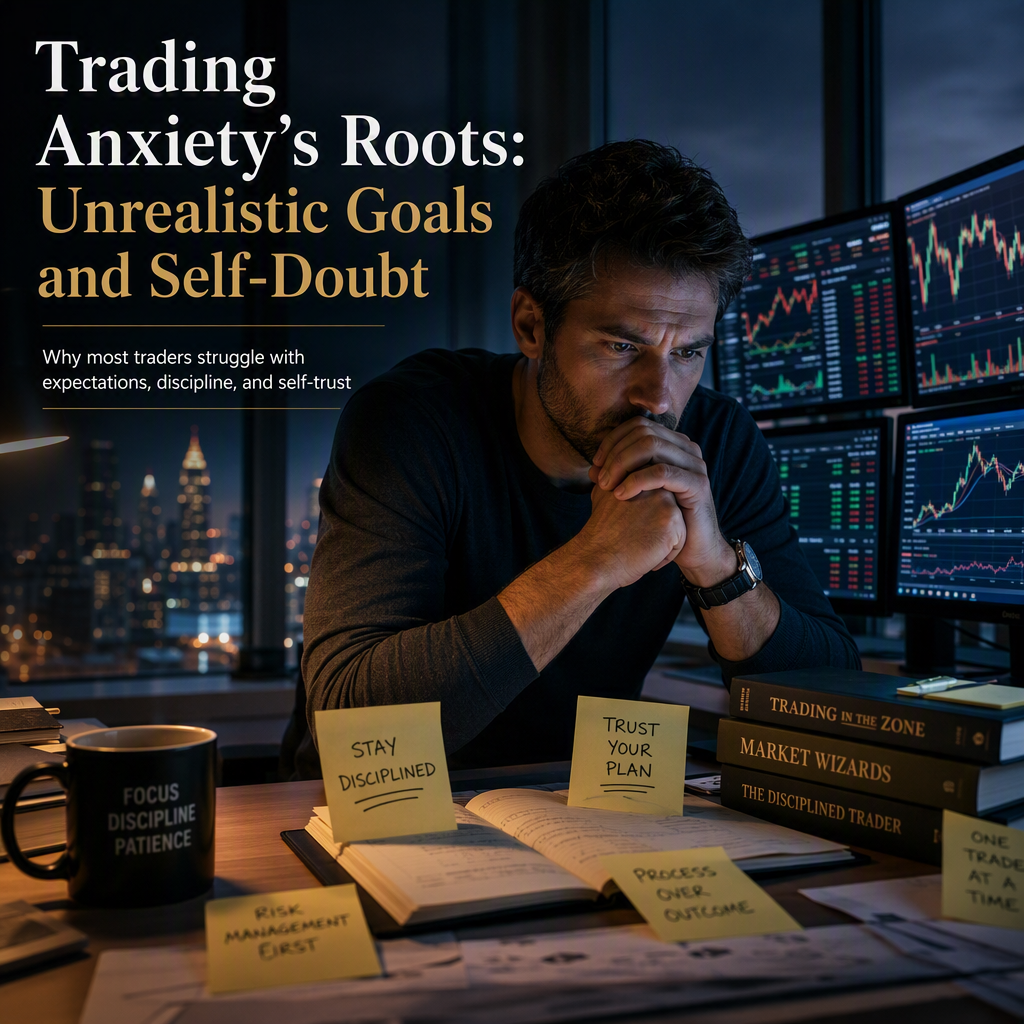
According to Dr. Pipslow, trading anxiety is a significant issue for market participants, with three primary sources identified: unrealistic expectations, lack of self-control, and lack of self-trust [1]. The article highlights that many new traders are drawn to the idea of rapid wealth, but the reality is that success in trading typically requires years or even decades of effort, and only about 10% of traders end up being successful, while 90% are likely to fail [1]. The author emphasizes the importance of setting reasonable trading goals and developing a realistic outlook based on one's resources and constraints, rather than comparing oneself to others or expecting quick riches [1].
Another major source of anxiety is the lack of self-control, where traders may abandon their strategies in response to market volatility, leading to impulsive decisions and overtrading [1]. To address this, trading psychologists recommend limiting oneself to one well-considered trade per day, which encourages discipline and careful analysis [1].
The third source of anxiety discussed is the lack of self-trust, which can manifest when traders rely too heavily on external advice or trading signals instead of developing their own market analysis skills [1]. The article suggests that building self-trust is essential for long-term trading success, as it enables traders to make independent decisions even when external guidance is unavailable [1].
No specific market reactions, analyst opinions, or forward-looking statements regarding broader market trends are discussed in the article [1].
CONCLUSION
The article identifies unrealistic expectations, lack of self-control, and lack of self-trust as the main drivers of trading anxiety. By setting realistic goals, exercising discipline, and building self-confidence, traders can better manage anxiety and improve their chances of long-term success. No immediate market impact or reactions are noted.