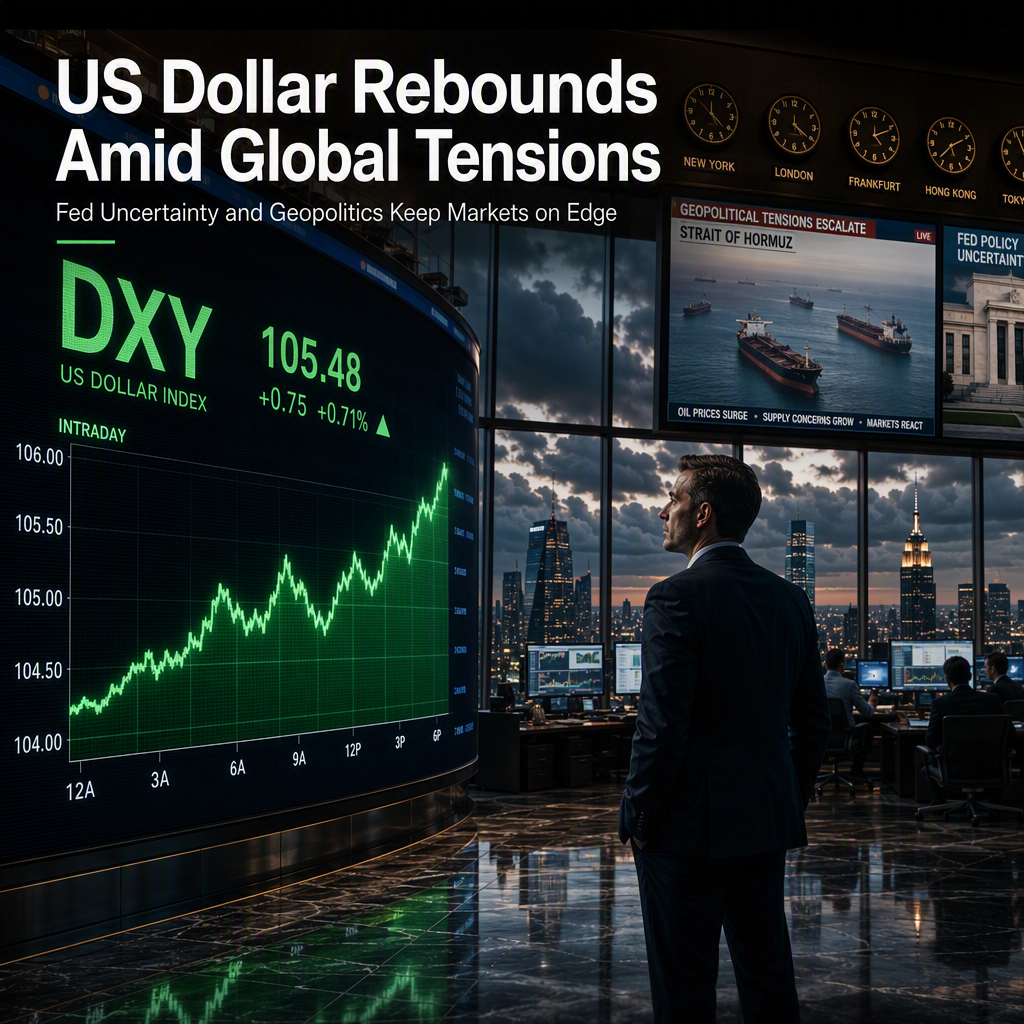
The US Dollar Index (DXY), which tracks the Greenback against a basket of currencies, extended its recovery from a two-month low, rebounding from the 99.30 area—the lowest level since June 5—and reaching a fresh daily high around 99.70 during the early European session on Tuesday [1]. Despite this upward movement, the rally lacked strong bullish conviction due to ongoing uncertainty regarding the US Federal Reserve's policy path [1]. Recent soft US inflation and weak consumer spending data released last week have diminished prospects for imminent interest rate hikes by the Fed, although investors remain concerned about inflation risks driven by higher energy prices, which could prompt a more hawkish stance from the central bank [1]. The release of the FOMC Minutes on Wednesday is expected to be closely watched for further guidance on the Fed's interest rate trajectory, which will be crucial in determining the near-term direction of the DXY [1].
Analysts at OCBC highlighted that 'oil, yields and geopolitics are keeping markets on edge,' but suggested that reduced Fed tightening expectations should keep the USD rangebound and support carry trades. They emphasized that the July FOMC minutes will be a key focus, with markets seeking clarity on policymakers' inflation views and the level of support for maintaining current rates, beyond the three regional Fed presidents who reportedly favor higher rates [1].
Geopolitical tensions are also influencing market sentiment. The US-Iran standoff has increased the geopolitical risk premium, pushing oil prices to an over two-week high and underpinning the safe-haven appeal of the US Dollar. US President Donald Trump stated he is not seeking an extension of the Memorandum of Understanding (MoU) with Iran, which expired on Monday, and reiterated his intention to declare the Strait of Hormuz as US territory, warning of potential action against Oman if it obstructs efforts to reopen the strategic waterway [1]. Meanwhile, a senior Iranian official announced that Iran has shifted to a 'fully offensive' stance, warning of 'timely and precise' attacks to break the blockade unless the US implements the June ceasefire deal within weeks. Additionally, Iran-backed Houthis in Yemen have escalated their campaign against Saudi Arabia, raising the risk of broader regional conflict and supporting further USD appreciation [1].
Despite these developments, analysts caution that strong follow-through buying is needed to confirm that the DXY has bottomed out and to justify positioning for a meaningful recovery. Upcoming US economic data releases—including Building Permits, Housing Starts, Pending Home Sales, and Industrial Production—along with comments from influential FOMC members, could provide additional impetus to the USD in the near term [1].
CONCLUSION
The US Dollar Index has rebounded from recent lows, supported by geopolitical tensions and anticipation of the FOMC Minutes, but uncertainty over Fed policy and inflation risks continue to weigh on market sentiment. Analysts expect the USD to remain rangebound unless strong buying emerges, with upcoming economic data and Fed commentary likely to influence its trajectory. Overall, the market remains cautious, awaiting clearer signals from both economic and geopolitical developments.