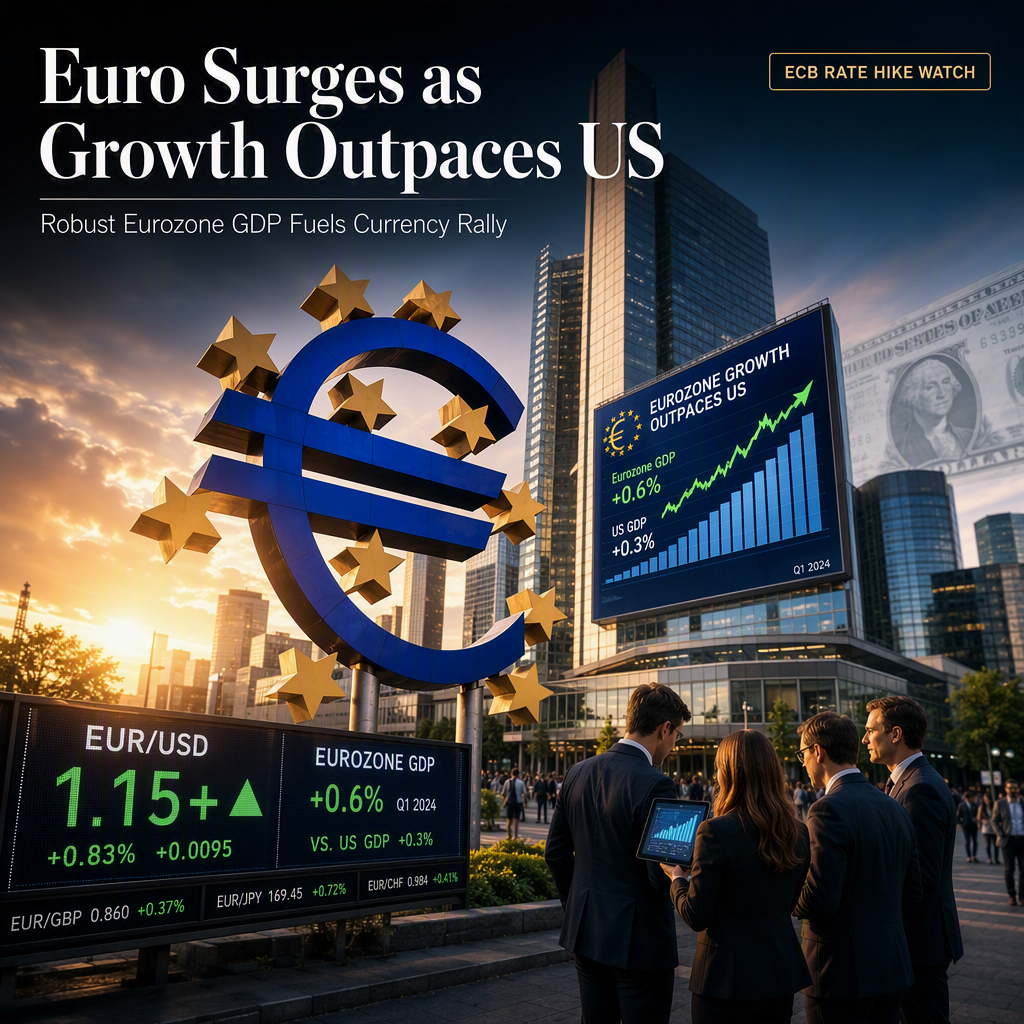
The euro experienced a notable rally, breaking back above the 1.15 mark against the US dollar for the first time since June 17, driven by a surprise in Eurozone growth figures and robust economic data releases [1]. According to Commerzbank’s Volkmar Baur, Eurozone Gross Domestic Product (GDP) grew by 0.4% in the second quarter compared to the previous quarter, which, when calculated using the US method (seasonally adjusted and annualized), equates to a 1.6% increase—outpacing the US GDP growth rate of 1.5% that fell short of consensus expectations [1]. This relative strength in Eurozone growth was a decisive factor in the EUR/USD exchange rate movement [1].
Inflation data also played a role, with the annual rates in Spain, Belgium, and Germany rising slightly, while the US PCE deflator's annual rate declined and the monthly figure was below expectations [1]. These inflation trends are seen as making it easier for the European Central Bank (ECB) to raise interest rates in September, according to Baur [1].
A significant driver of the EUR/USD movement was a sudden appreciation of the Japanese yen around 4 pm, reportedly due to an intervention by the Bank of Japan with assistance from the US Treasury Department [1]. Baur cautions that some of the EUR/USD gains may reverse if these BoJ-related flows fade, but maintains that the day was positive for the euro overall [1].
Looking forward, the low US savings rate is highlighted as a potential drag on future US GDP, suggesting ongoing challenges for the dollar, while the euro's outlook is bolstered by stronger growth and inflation data supporting further ECB rate hikes [1].
CONCLUSION
The euro's rise above 1.15 was fueled by stronger Eurozone GDP growth and supportive inflation data, positioning the ECB for potential rate hikes in September. While some gains may be reversed due to external currency interventions, the market takeaway is a positive outlook for the euro relative to the US dollar.