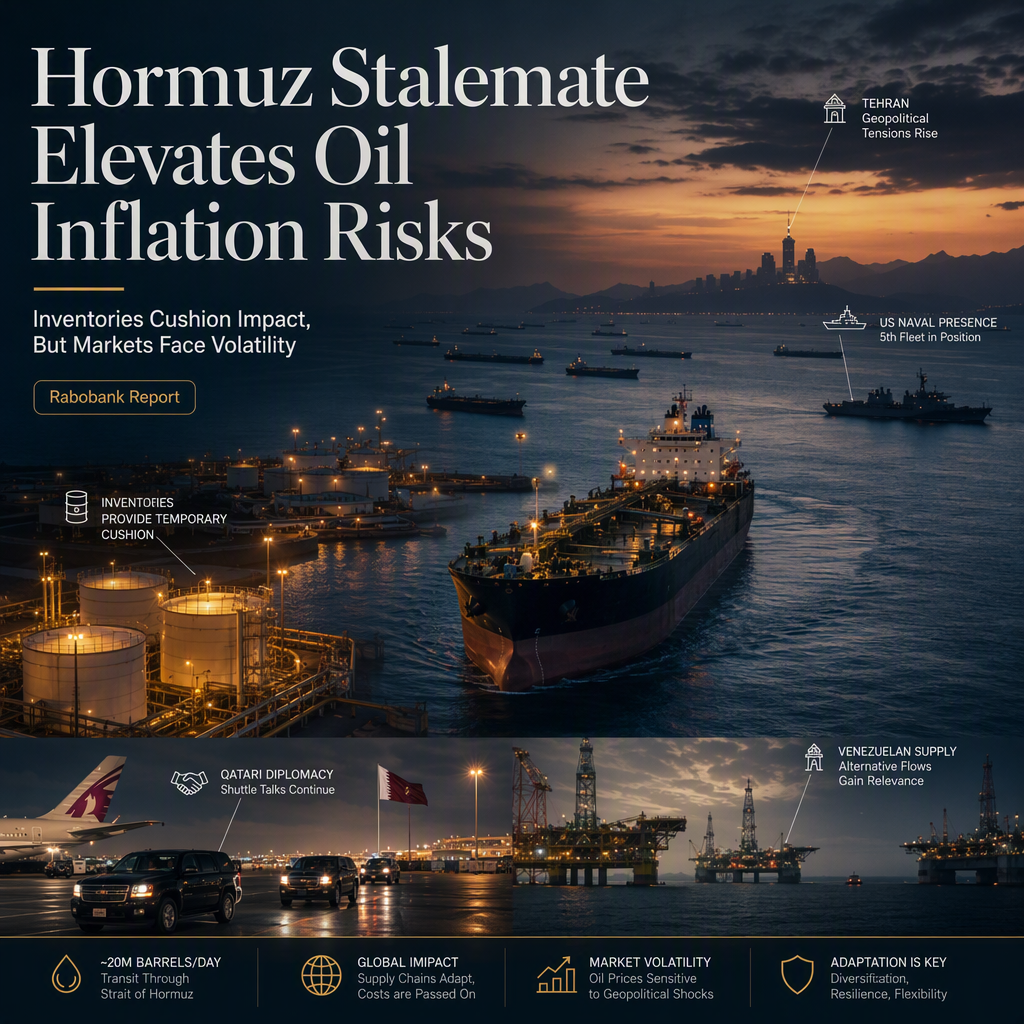
Rabobank Senior Macro Strategist Bas van Geffen highlights that ongoing tensions between the US and Iran, particularly the stalemate and disruptions in the Strait of Hormuz, are sustaining elevated oil-driven inflation risks. According to van Geffen, inventories have so far cushioned the impact of reduced oil flows, but if the stalemate persists and inventories are depleted, the effectiveness of the Hormuz closure in disrupting global oil supply will increase [1].
The report notes that the Qatari prime minister recently traveled to Tehran in an attempt to revive dialogue between Washington and Tehran, but President Trump reportedly has no interest in reviving the memorandum of understanding, thereby blocking mediators’ options to restart negotiations [1]. This diplomatic deadlock is forcing both exporting neighbors and importing countries to reconsider and adapt their oil supply lines. As alternative supply routes are developed, Iran’s leverage over the global economy is expected to diminish [1].
One such alternative discussed is the US negotiating a stake in Venezuela’s oil fields, with Venezuela reportedly considering quitting OPEC. However, Rabobank cautions that bringing Venezuelan oil online as a substitute will take time and require significant upfront investments, which could be challenging given current budgetary strains and competition for funding [1].
Overall, the analysis underscores that while inventories have provided a temporary buffer, prolonged geopolitical tensions in the region could heighten inflation risks and force structural changes in global oil supply chains [1].
CONCLUSION
The ongoing US-Iran stalemate and disruptions in the Strait of Hormuz are keeping oil-driven inflation risks elevated, with inventories providing only a temporary cushion. While alternative supply options such as Venezuelan oil are being explored, these will require time and significant investment to materialize, leaving markets exposed to continued volatility in the near term.