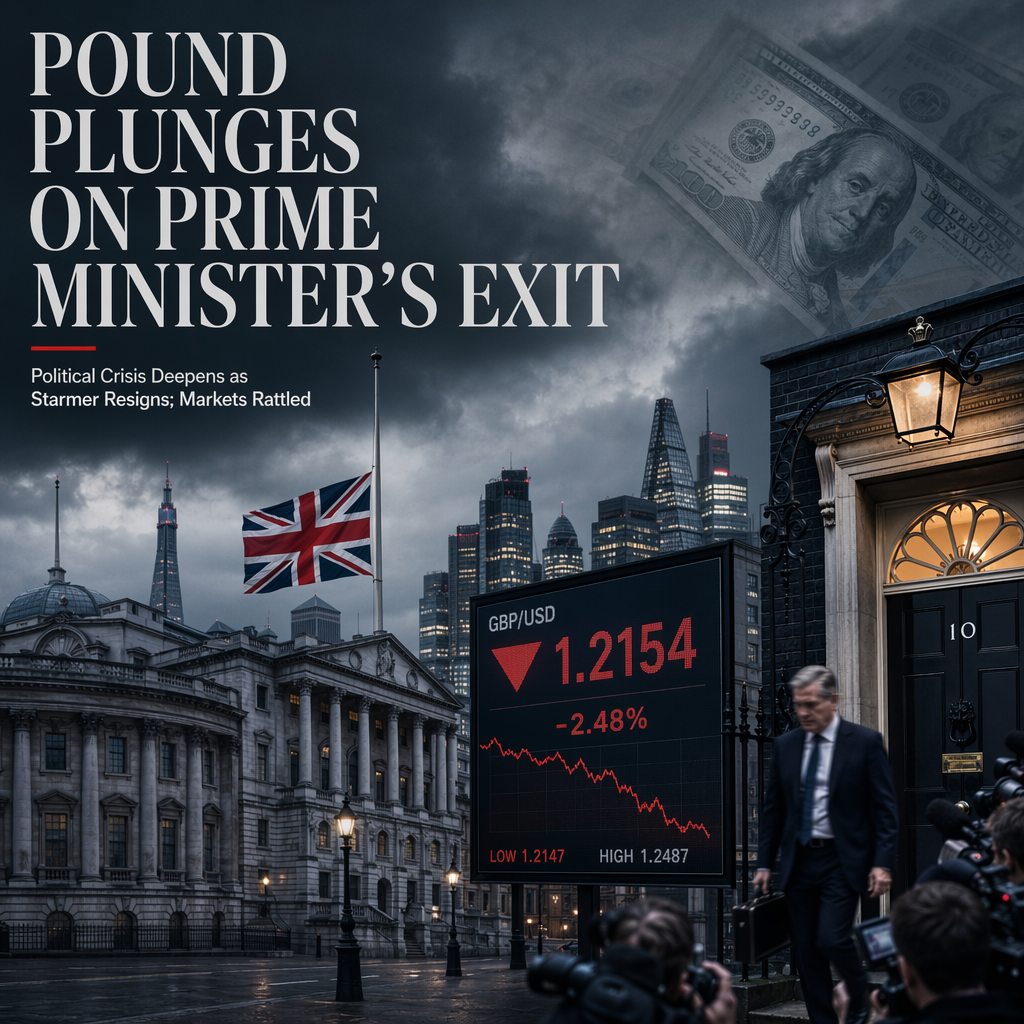
The British Pound (GBP) weakened against the US Dollar (USD), with the GBP/USD pair dropping to near 1.3245 during early Asian trading hours on Tuesday, following the resignation of UK Prime Minister Keir Starmer on Monday [1]. Starmer stepped down under intense pressure after Andy Burnham's victory in the Makerfield by-election last week, plunging the UK into another political crisis [1]. The Labour Party is now tasked with selecting a new leader to guide the country [1].
Political uncertainty is cited as a key factor weighing on the British Pound, with market participants closely monitoring Andy Burnham’s stance on fiscal policy. Commonwealth Bank of Australia strategists, including Kristina Clifton, noted that any relaxation of current fiscal rules by Burnham would likely be poorly received by the UK bond market and could further pressure the pound [1].
In addition to domestic political developments, the GBP is also facing headwinds from expectations of a US Federal Reserve rate hike later this year. New Fed Chair Kevin Warsh adopted a hawkish tone on inflation during his first policy meeting, bolstering the US Dollar [1]. According to the CME FedWatch tool, markets have now priced in nearly an 89% chance of a Fed hike in December, up from 61% before last week’s FOMC meeting [1].
Preliminary readings of the S&P Global Purchasing Managers Index (PMI) from both the US and the UK are also due later on Tuesday, which could further influence market sentiment [1].
CONCLUSION
The resignation of UK Prime Minister Keir Starmer has heightened political uncertainty, leading to a notable decline in the British Pound. With markets wary of potential shifts in fiscal policy and anticipating a US rate hike, the outlook for GBP remains pressured in the near term.