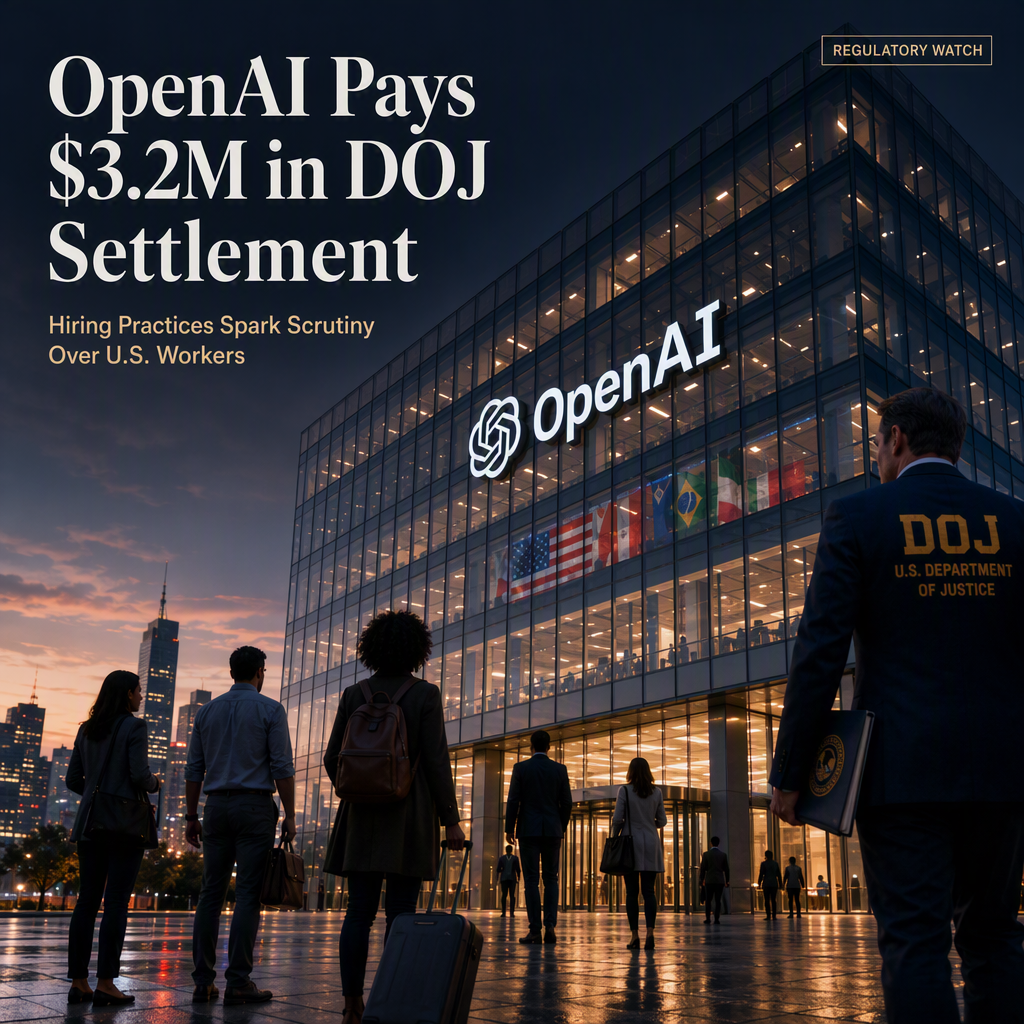
OpenAI and one of its subsidiaries have agreed to pay $3.2 million to settle allegations brought by the U.S. Department of Justice that the company discriminated against U.S. workers by favoring foreign workers with temporary employment visas. The settlement was announced by the Justice Department on Tuesday, marking a significant development in the ongoing scrutiny of hiring practices within the artificial intelligence sector [1].
The news comes amid heightened national focus on artificial intelligence, with President Donald Trump emphasizing the importance of the AI race as the most critical competition in centuries. He has urged American communities to support AI data centers to ensure technological dominance over China, highlighting the broader geopolitical and economic stakes involved [1].
The settlement and related discussions reflect growing concerns about the intersection of AI, employment, and national security. The issue of whether AI companies are prioritizing American workers or relying on foreign talent has become a focal point in policy debates, as lawmakers and regulators consider new measures to oversee the industry. Additionally, the article notes that artificial intelligence is central to debates on jobs, national security, and consumer protection, underscoring the far-reaching implications of such regulatory actions [1].
While the article does not provide specific market reactions or analyst opinions regarding the settlement, it does indicate that investors are increasingly interested in AI tools for financial guidance, though skepticism remains about their reliability compared to human advisors [1].
CONCLUSION
OpenAI's $3.2 million settlement with the DOJ highlights regulatory scrutiny over hiring practices in the AI industry and the broader debate about American competitiveness in technology. The event underscores the importance of compliance and transparency for AI companies as they navigate evolving legal and political landscapes.