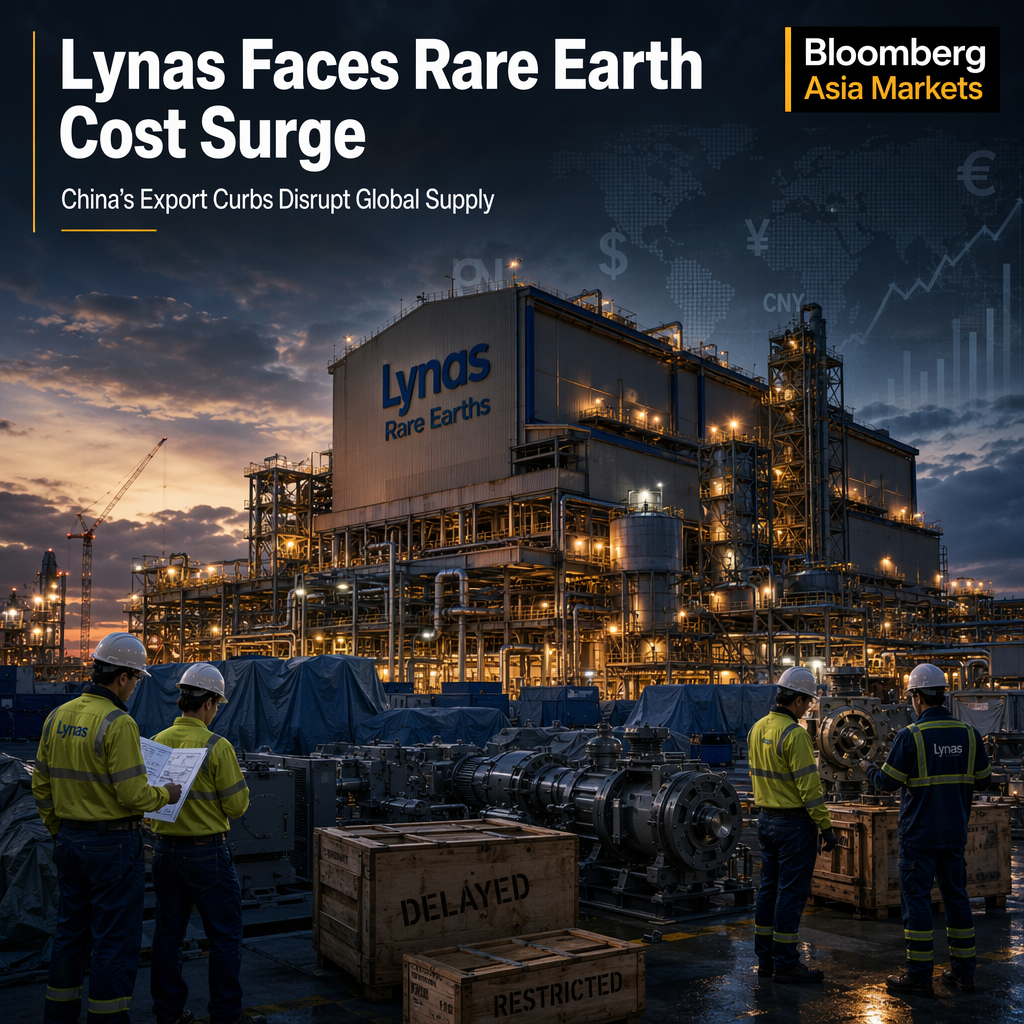
Australian miner Lynas has announced an increase of nearly $80 million in the expected cost of its new heavy rare earth facility in Malaysia, attributing the rise in part to China’s export restrictions on equipment for foreign rare earth producers [1]. The company reported that these curbs have made it more expensive and difficult to source specialized equipment essential for processing rare earths, which are critical for high-tech industries [1].
During the three months through June, Lynas experienced a higher average selling price for its rare earth products, a development the interim CEO described as occurring in a 'challenging' quarter [1]. The company emphasized that China’s export controls have forced a reassessment of project economics and timelines, reflecting the broader impact of supply chain disruptions and increased procurement costs [1].
Market analysts noted that the export curbs have created a significant price gap between Chinese and non-Chinese producers, with Western companies facing more than 20% surges in rare-earth costs compared to previous periods [1]. The International Energy Agency has warned that these restrictions could threaten $6.5 trillion worth of Western industry reliant on rare earths [1].
Technical analysis cited in the article suggests that rare earth prices are likely to remain elevated in the near term, with resistance levels at recent highs due to ongoing supply constraints. While no specific trading advice was provided, sentiment among market participants remains cautious as both producers and buyers adapt to the new landscape shaped by China’s policies [1].
CONCLUSION
Lynas’ increased cost outlook for its Malaysian facility underscores the significant impact of China’s export curbs on the global rare earth market. With prices elevated and supply chains disrupted, Western producers face mounting challenges, and market sentiment remains cautious amid ongoing uncertainty.