
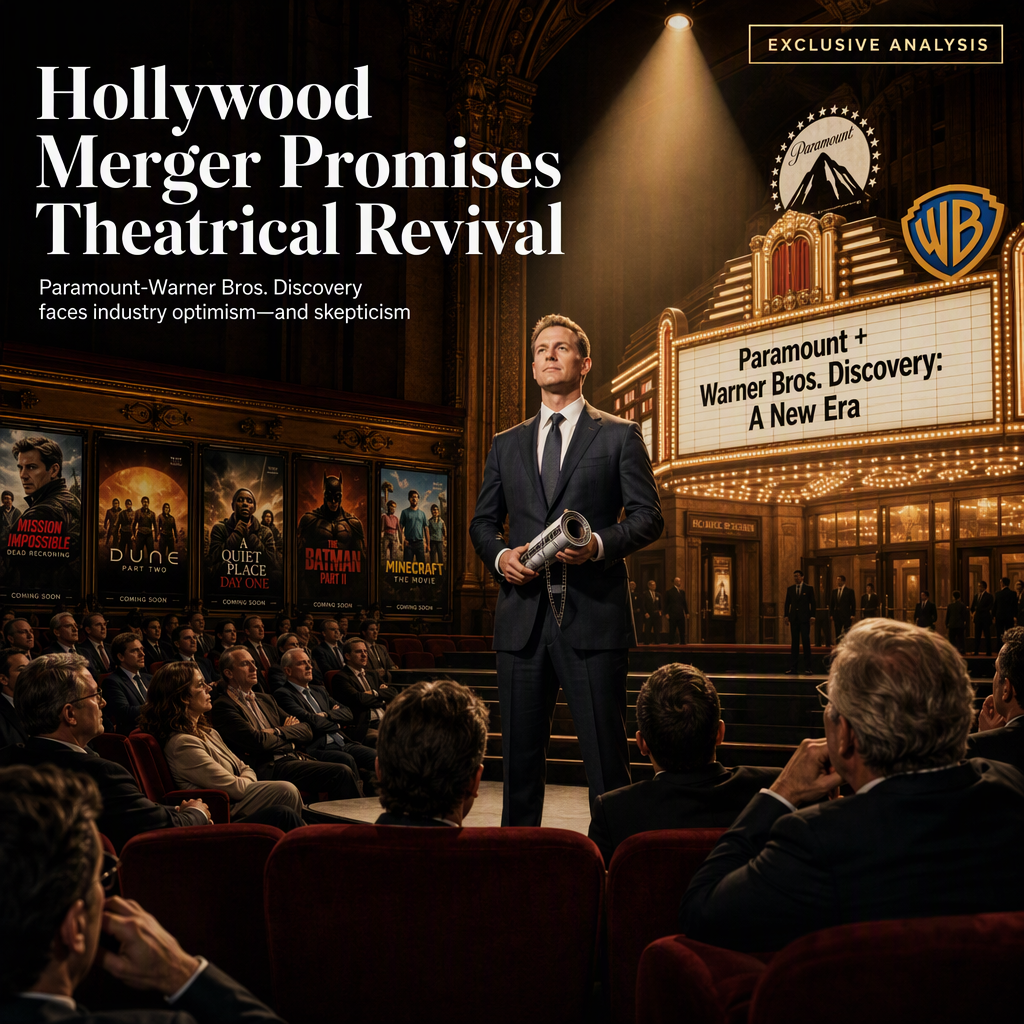
Paramount CEO David Ellison has finalized a settlement with state attorneys general to address antitrust concerns surrounding the acquisition of Warner Bros. Discovery, resulting in the merger of two major Hollywood studios [1]. As part of the agreement, the newly combined entity is required to release at least 30 films theatrically in 2027 and 2028, and at least 32 films in each year from 2029 to 2031. Additionally, the settlement specifies how many releases must be distributed widely and how many must have budgets exceeding $50 million, with steep penalties for failing to meet these thresholds [1]. Currently, the merged company has 35 films scheduled for release in the upcoming year, according to Rentrak data [1].
The commitment to a robust theatrical pipeline has been welcomed by several industry leaders. Paul Dergarabedian, head of marketplace trends at Rentrak, noted that thirty wide releases would represent a meaningful commitment to theatrical distribution, but emphasized that the ultimate test will be the performance, variety, and consistency of these releases [1]. The CEOs of AMC, Cinemark, and Regal—Adam Aron, Sean Gamble, and Eduardo Acuna, respectively—had already expressed approval for Ellison's plan prior to the settlement, and Cinema United, the lobbying group for theater owners, has now endorsed the merger, stating that the agreement with the states "accomplishes many of exhibition's objectives" [1].
Despite these endorsements, skepticism remains among some cinema operators and theater executives, who question the caliber of releases and express concerns about what will happen after the five-year agreement expires [1]. Several executives, speaking anonymously, voiced doubts about the long-term impact of the merger and whether the promised slate will deliver the quality and diversity needed to sustain the industry [1].
The merger comes at a time when Hollywood is seeking more theatrical titles following disruptions caused by the Covid pandemic, which shuttered theaters and slowed production pipelines. Ellison's commitment to theatrical releases was first highlighted at CinemaCon in April and has been seen as a positive step toward revitalizing the exhibition sector [1].
CONCLUSION
Paramount's merger with Warner Bros. Discovery and its commitment to a substantial slate of theatrical releases has garnered approval from key industry stakeholders, though skepticism persists among some cinema operators regarding the quality and long-term sustainability of the plan. The settlement's strict requirements and penalties signal a high-impact move for the industry, but the true market effect will depend on execution and audience reception.