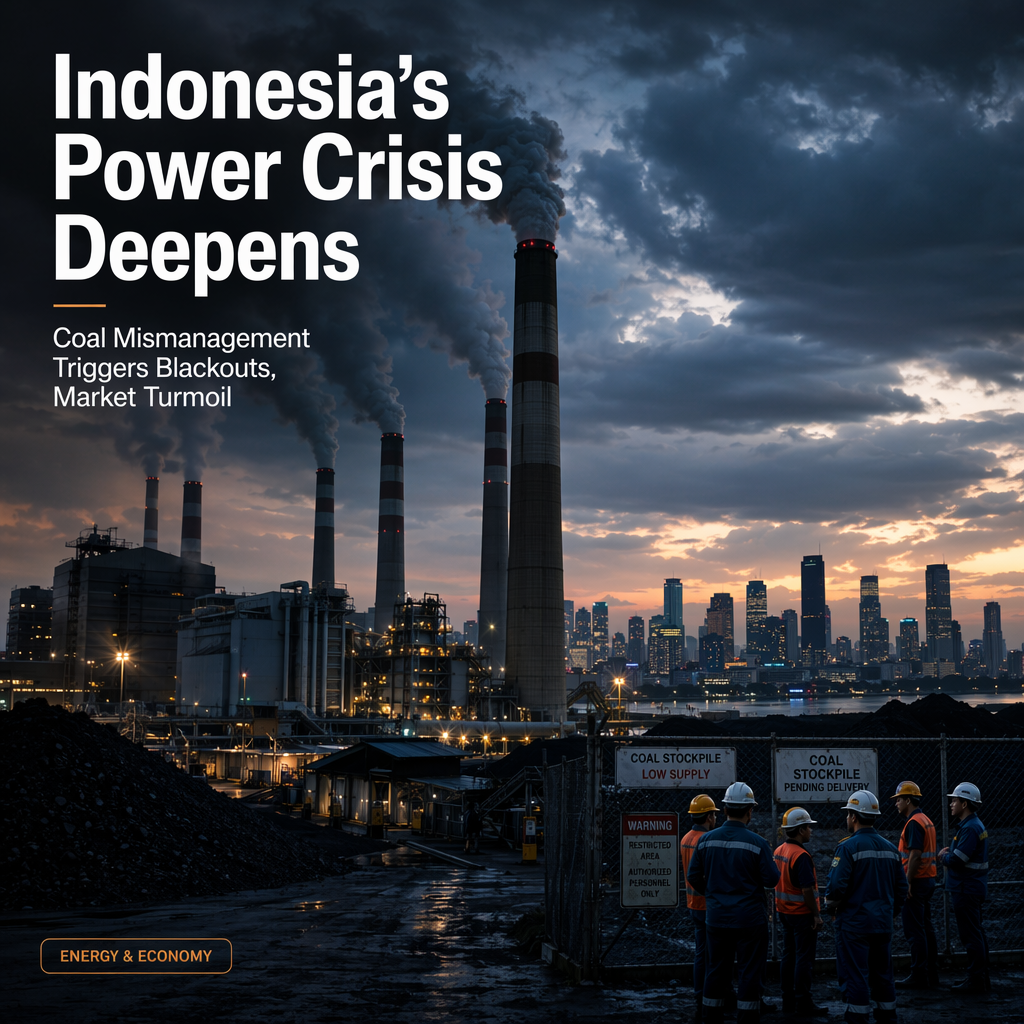
Indonesia is confronting the risk of a worsening energy crisis, following recent rolling blackouts attributed to persistent mismanagement of coal supply to power stations. Coal-fired plants generate more than two-thirds of the country's electricity, making the sector's stability critical to national energy security. Industry executives and experts have warned that coal miners are increasingly opting to export coal at higher prices and pay fines, rather than fulfill domestic obligations, which has exacerbated fuel shortages at power plants and strained the national grid [1].
The government has responded by unveiling a $1.48 billion stimulus package aimed at combating the energy crisis and supporting the currency, which has come under pressure due to the instability. Additionally, Indonesia’s central bank has raised interest rates by a total of 1% within a month as part of broader efforts to stabilize the economy amid ongoing energy and currency challenges [1].
Market sentiment remains cautious, with MSCI extending its review of Indonesia’s market classification to November and warning of a possible downgrade. This review specifically cites instability linked to energy supply and regulatory enforcement as key concerns. The crisis has also triggered increased volatility in Indonesia’s equities and currency markets, with investors closely watching the energy sector for signs of broader economic risk [1].
Analysts caution that unless the government improves supply chain management and enforces domestic market obligations for coal, the vulnerability of coal-fired generation to further disruptions will persist. An industry executive emphasized that the current situation is a structural problem that cannot be resolved with short-term measures [1].
CONCLUSION
Indonesia’s energy crisis, driven by coal supply failures and regulatory challenges, is causing significant market volatility and economic uncertainty. The government’s stimulus and rate hikes have yet to restore confidence, and the risk of a downgrade by MSCI underscores the seriousness of the situation. Without structural reforms, the crisis is likely to persist, keeping investors on edge.