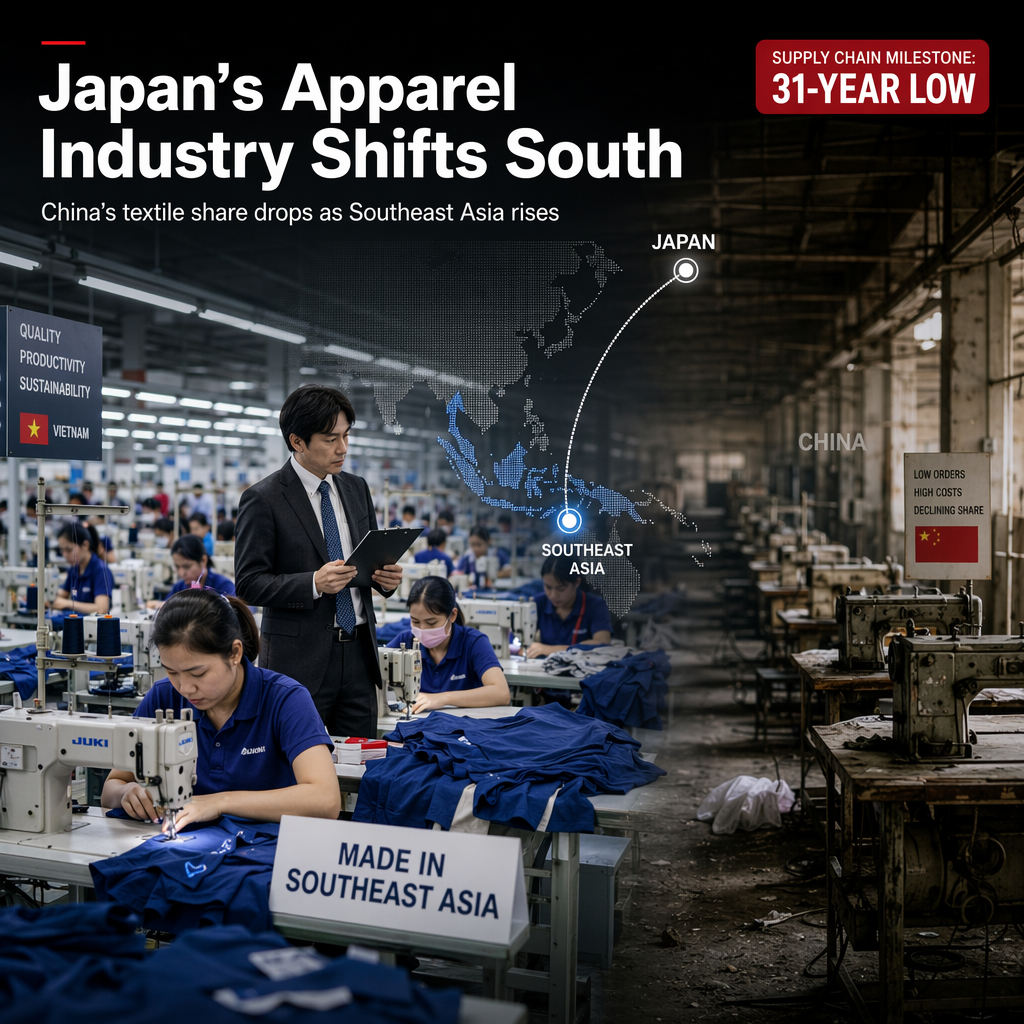
Japan's apparel industry is undergoing a significant transformation, as the country's textile imports from China dropped below the 50% mark in 2025, reaching a 31-year low. This shift is attributed to Japanese companies, including Uniqlo suppliers such as Matsuoka, increasingly relocating production to Southeast Asian countries like Vietnam and Indonesia, where labor costs are lower and geopolitical risks are perceived to be less severe [1]. Matsuoka, for example, is expanding its manufacturing footprint by building a second factory in Indonesia, signaling a broader trend among Japanese brands to diversify their supply chains [1].
The move away from China is driven by rising labor costs and concerns about supply chain vulnerabilities, prompting Japanese apparel manufacturers to seek cost efficiencies and greater stability in Southeast Asia [1]. Industry experts believe this structural change will persist, as companies aim to reduce exposure to geopolitical risks and enhance sustainability and human rights practices in their new supply chains [1].
Trade data underscores the magnitude of this shift, with China's share of Japan's textile imports falling below 50% for the first time in over three decades, marking a milestone in supply chain diversification [1]. Japanese firms are expected to continue investing in Southeast Asian manufacturing capacity, establishing new factories and partnerships throughout the region [1].
Analysts describe this transition as a fundamental change in Japan's apparel industry, emphasizing that the move is motivated not only by cost considerations but also by risk management and long-term sustainability goals [1]. The ongoing shift is poised to reshape textile trade dynamics across Asia, affecting both the Japanese market and regional supply chains [1].
CONCLUSION
Japan's apparel industry is accelerating its shift from China to Southeast Asia, driven by cost, risk, and sustainability concerns. With China's share of textile imports falling below 50% for the first time in 31 years, Japanese companies are expected to deepen their investments in Southeast Asian manufacturing. This structural change is likely to have lasting implications for regional supply chains and the Japanese market.