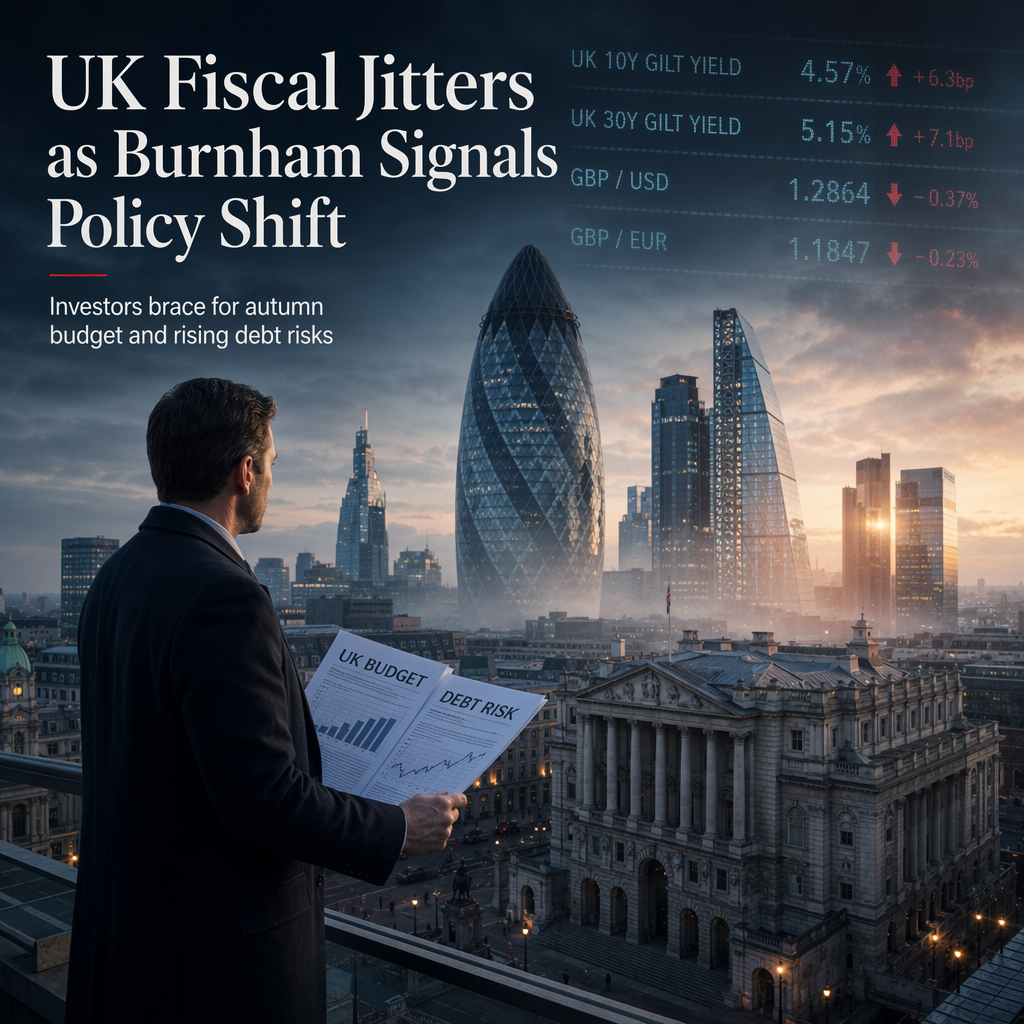
ING economists highlight that the United Kingdom's public finances are under strain due to rising spending pressures in areas such as defence, health, and social care, as well as high and increasing debt interest costs. These challenges are exacerbated by the UK's significant stock of index-linked bonds and a growing reliance on foreign investors, particularly hedge funds, to finance government debt [1].
Despite these pressures, the UK has been implementing fiscal consolidation, notably through the freezing of tax thresholds since 2021. This policy, combined with recent inflation, has resulted in more individuals being pushed into higher tax brackets, thereby increasing tax revenues as a share of GDP [1].
Recently, investors had become more comfortable with Prime Minister Burnham's appointment, following his commitment to adhere to existing fiscal rules. This stance was seen as reducing the likelihood of a stimulus package in the upcoming autumn budget that would significantly increase gilt issuance or alter the Bank of England's policy outlook [1].
However, ING warns that Burnham's recent openness to more substantial policy changes—including raising the tax-free allowance and increasing funding for social care—could unsettle investors. The possibility of adjustments to fiscal rules or tax allowances in the lead-up to Burnham's first budget, expected in October or November, may refocus market attention on UK fiscal risks [1].
CONCLUSION
The outlook for UK public finances remains uncertain, with investors closely monitoring potential policy shifts under Prime Minister Burnham. Any significant changes to fiscal rules or spending plans in the autumn budget could heighten market concerns about fiscal sustainability.