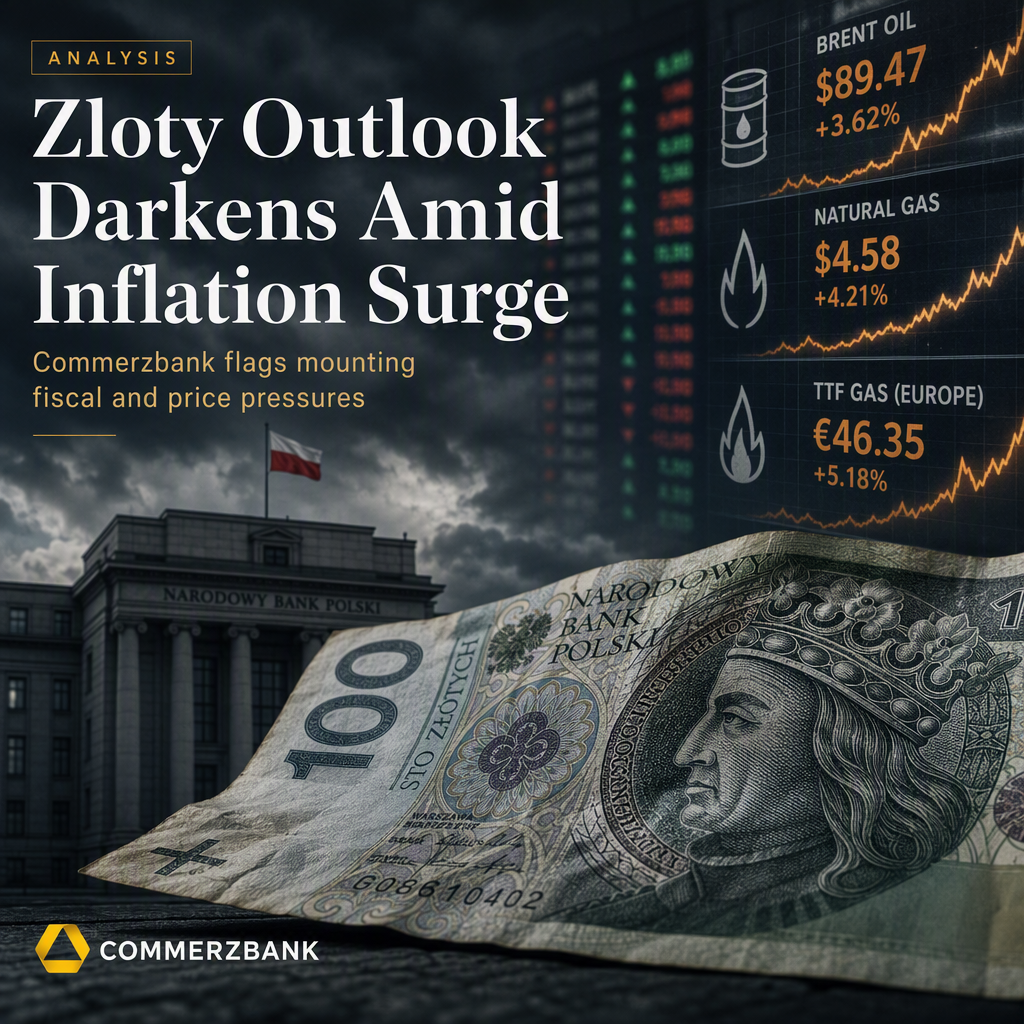
Commerzbank analyst Tatha Ghose has highlighted mounting challenges for Polish monetary policymakers, citing both stretched fiscal plans and accelerating underlying inflation as key concerns [1]. According to Ghose, producer price index (PPI) inflation in Poland surged to 2.8% year-on-year in July, up from 1.9% in June, and exceeded the consensus estimate of 2.5% [1]. This uptick is attributed to broader energy and commodity shocks, particularly renewed US-Iran hostilities that have pushed oil and natural gas prices higher, with a poor outlook for August as oil prices continue to rise [1]. Wage growth has also picked up sharply since the onset of the Iran war, further fueling inflationary pressures [1].
Ghose notes that the preferred seasonally-adjusted month-on-month data shows inflation drivers such as PPI and wages are accelerating, with PPI reversing from a deflationary trend to sharply inflationary since the start of the Iran conflict [1]. These developments are seen as ruling out further rate cuts by Poland’s National Bank (NBP) for the foreseeable future, despite earlier indications from NBP governor Adam Glapinski that rate cuts might soon follow, which Ghose now considers obsolete information [1].
With the NBP likely to remain non-committal about future rate moves, the accelerating inflation data is viewed as negative for the Polish Zloty (PLN), as the central bank is unlikely to turn hawkish quickly enough to counteract the inflationary pressures [1].
CONCLUSION
Commerzbank's analysis points to a deteriorating outlook for the Polish Zloty, driven by accelerating inflation and fiscal strain. The likelihood of further rate cuts by the National Bank of Poland is now seen as remote, with policymakers expected to remain cautious. These factors are expected to weigh negatively on the PLN in the near term.