
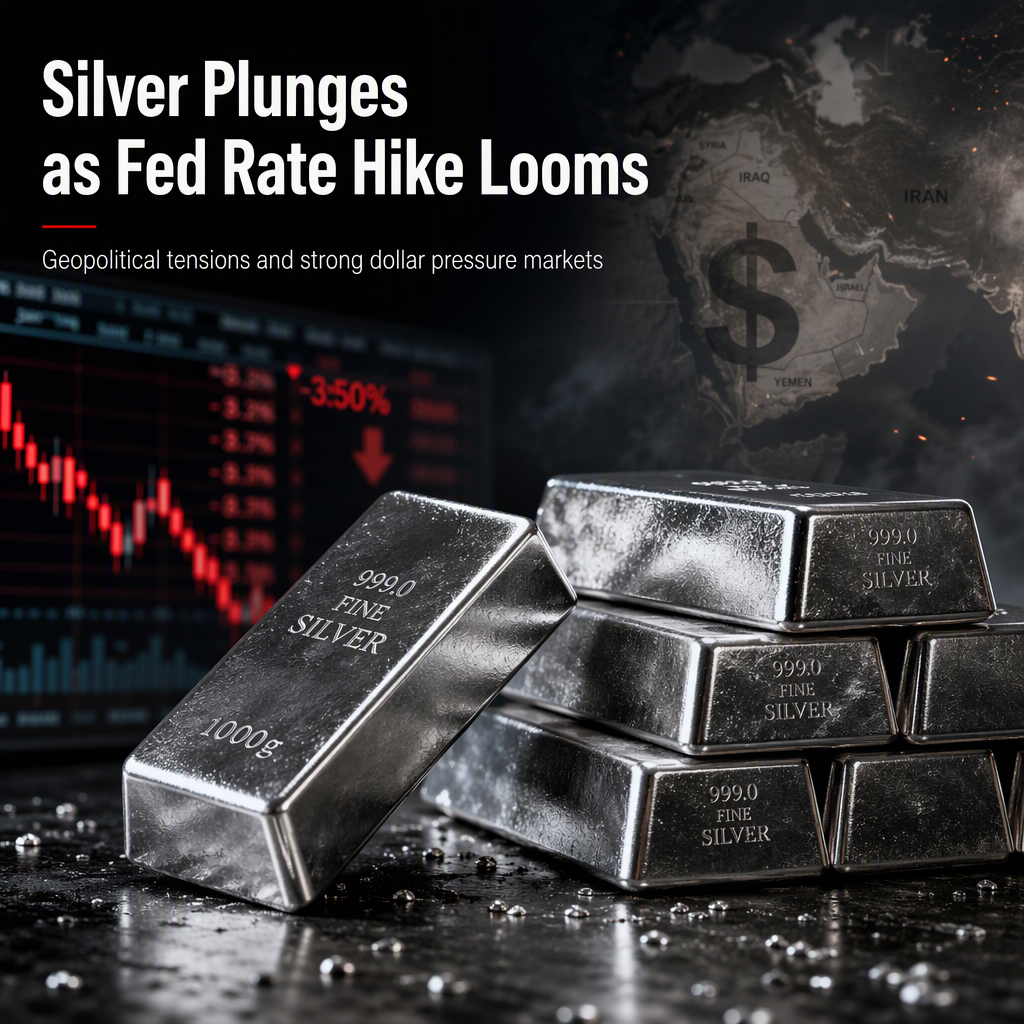
Silver (XAG/USD) experienced a sharp decline of nearly 3.5%, trading around $62.00 per troy ounce during Asian hours on Monday, following modest gains the previous day [1]. The drop is attributed to heightened expectations of further monetary tightening by the Federal Reserve, as persistent inflation and elevated oil prices—driven by stalled US-Iran negotiations—continue to weigh on non-yielding assets like silver [1]. The geopolitical situation remains tense, with US President Donald Trump rejecting Iran's proposal to reopen the Strait of Hormuz, stating that Tehran had overplayed its hand, though discussions are expected to resume this week. Trump also expressed confidence that the conflict would conclude soon but left open the possibility of further military strikes before the upcoming midterm elections [1].
The Federal Reserve's recent decision to raise its target funds rate range has strengthened the US dollar against the Canadian dollar. Money markets now price in a 65.9% probability of another benchmark interest rate hike at the October Fed meeting, a significant increase from 57.6% a week ago and just 9.4% a month ago [1]. Market participants are closely watching upcoming US employment figures and the Fed’s preferred inflation metric for further clues on monetary policy direction. Recent hawkish remarks from Fed officials, including Cleveland Fed President Beth Hammack and Philadelphia Fed President Anna Paulson, reinforce expectations for additional tightening, with Hammack warning against normalizing elevated prices and Paulson suggesting modest further tightening may be necessary [1].
Strategists at OCBC highlight that resilient US economic data, elevated energy prices, and persistent inflation concerns are driving Treasury yields higher, supporting the USD while pressuring rate-sensitive and carry-oriented assets such as silver [1]. The combination of firm growth signals and sticky price pressures is keeping US rates biased higher, reinforcing dollar strength and posing challenges for markets reliant on low funding costs and stable volatility [1].
CONCLUSION
Silver's sharp decline reflects mounting expectations for further Fed rate hikes amid persistent inflation and geopolitical tensions, particularly in the Middle East. The strengthening US dollar and rising Treasury yields are exerting downward pressure on rate-sensitive assets like silver. Market participants are now focused on upcoming US economic data and Fed communications for further direction.