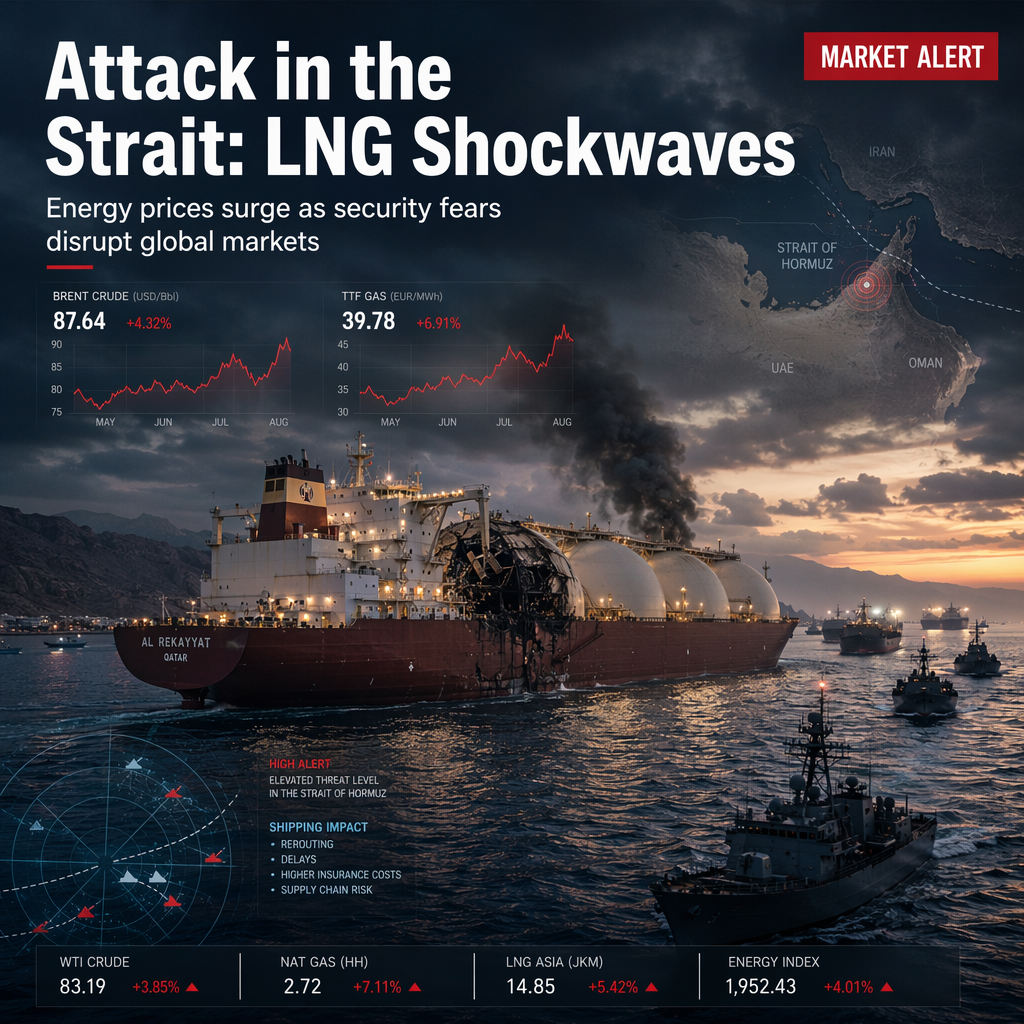
A Qatari LNG carrier, the Al Rekayyat, was struck by a projectile near the Omani coast as it exited the Strait of Hormuz, reigniting security concerns in this critical shipping lane and impacting global energy markets [1]. The incident has led to increased anxiety among shipowners, with shipping routes through the Strait becoming fragmented as operators are forced to choose between an Iran-approved northern corridor and a U.S.-managed Oman route [1].
The attack has resulted in higher European gas prices and a rise in Brent, WTI, Omani, and Dubai crude benchmarks, reflecting the renewed energy risk premium [1]. Additionally, bond yields have moved higher due to concerns about inflation pass-through stemming from elevated energy prices [1]. The event also threatens QatarEnergy’s LNG export plans, as the security of shipments from the region comes under scrutiny [1].
Geoff Yu of BNY notes that the vessel may have been sailing with its transponders off, further complicating the security situation and highlighting the operational risks faced by commercial shipping in the area [1]. The attack has also placed additional pressure on already fragile U.S.–Iran peace discussions, as both sides seek to prevent further escalation and maintain stability in the region [1].
CONCLUSION
The attack on the Qatari LNG carrier near the Strait of Hormuz has heightened energy market volatility, pushing up Brent and European gas prices while raising inflation concerns. The incident underscores persistent geopolitical risks in a vital shipping corridor and threatens both regional stability and Qatar’s LNG export plans.