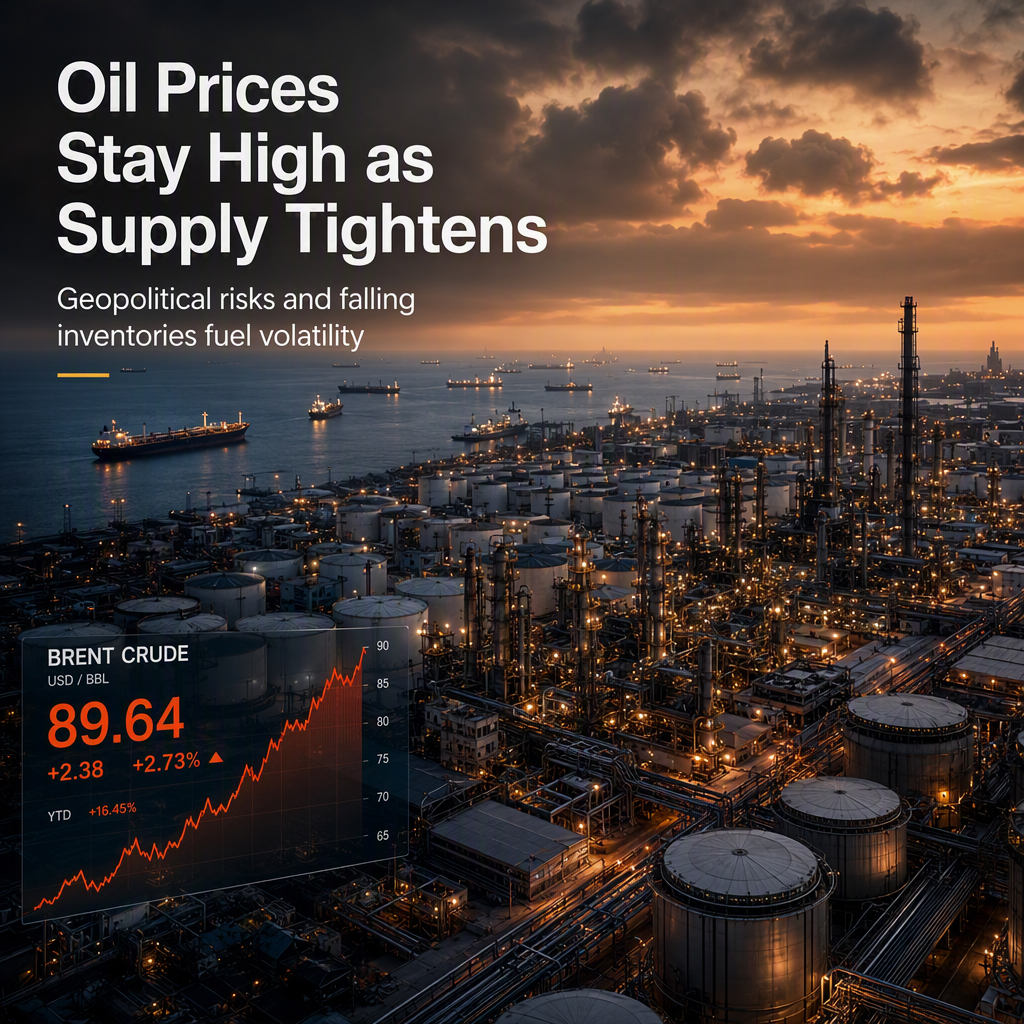
Crude oil prices have remained elevated as concerns over a potential US–Iran deal have intensified supply uncertainties, according to BNY. The International Energy Agency (IEA) reported that global oil markets experienced further tightening in July, with key factors such as demand, supply, refining activity, and inventories all impacted by ongoing geopolitical disruptions and persistently high fuel prices [1].
The IEA revised its 2026 oil demand outlook downward, now projecting a decline of 1.6 million barrels per day (b/d), which is 510,000 b/d lower than the previous month's estimate. This revision is attributed to the closure of the Strait of Hormuz and elevated prices, both of which are expected to dampen consumption [1].
On the supply side, global oil supply rose to 101.5 million b/d in July; however, this figure remains well below levels seen a year earlier, as Gulf output continues to be largely shut in. The IEA also noted that supply for the third quarter was down substantially compared to the previous year [1]. Refinery crude throughputs increased to 80.9 million b/d in July but were still nearly 5 million b/d below last year's levels, with further reductions in Q3 runs anticipated [1].
Observed inventories saw a sharp decline, falling by 69 million barrels in July. This tightening in inventories, combined with backwardation and tighter product markets, led to significant upward swings in Brent and WTI crude prices [1].
CONCLUSION
The IEA's latest data highlights a tightening oil market driven by geopolitical disruptions, lower supply, and falling inventories. Elevated prices are expected to persist as supply remains constrained and demand projections are revised downward. Market participants should remain alert to ongoing volatility and potential further price increases.